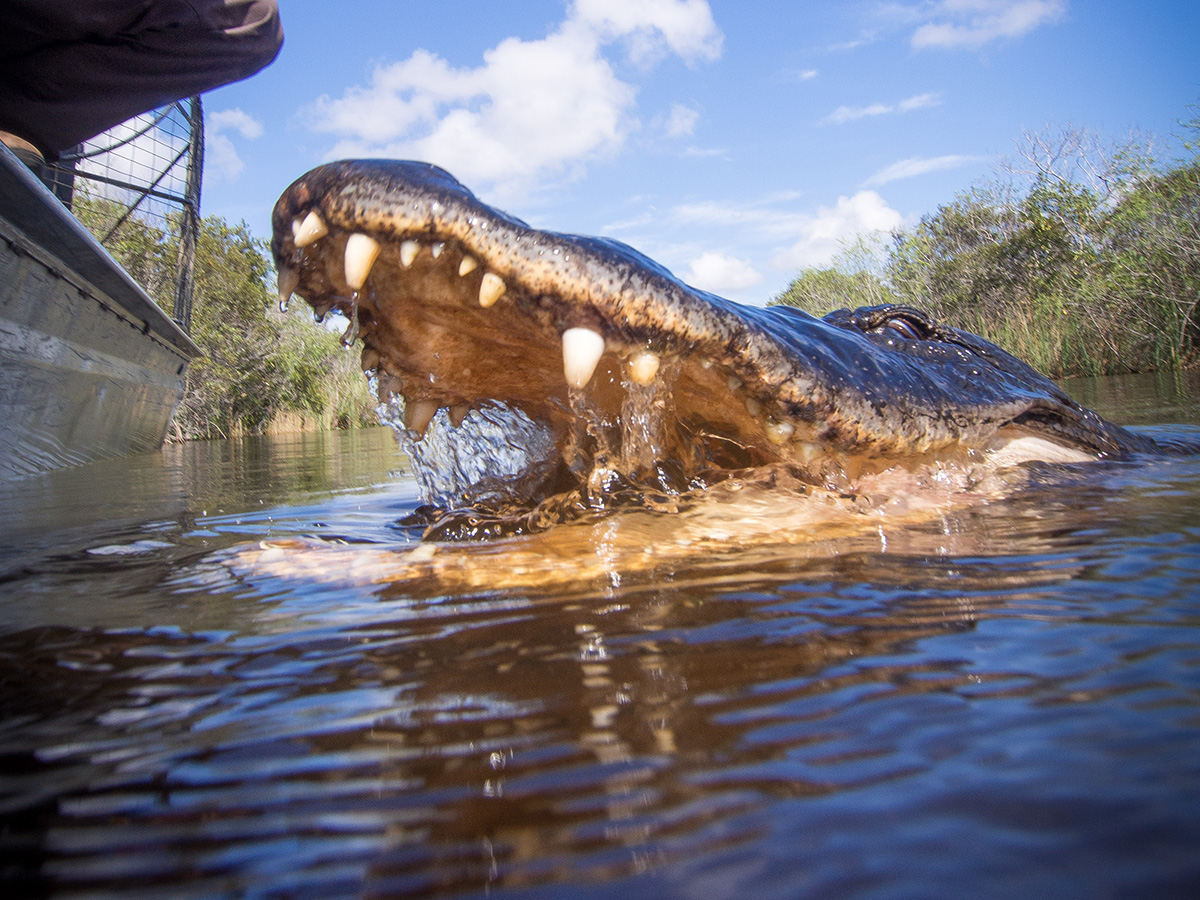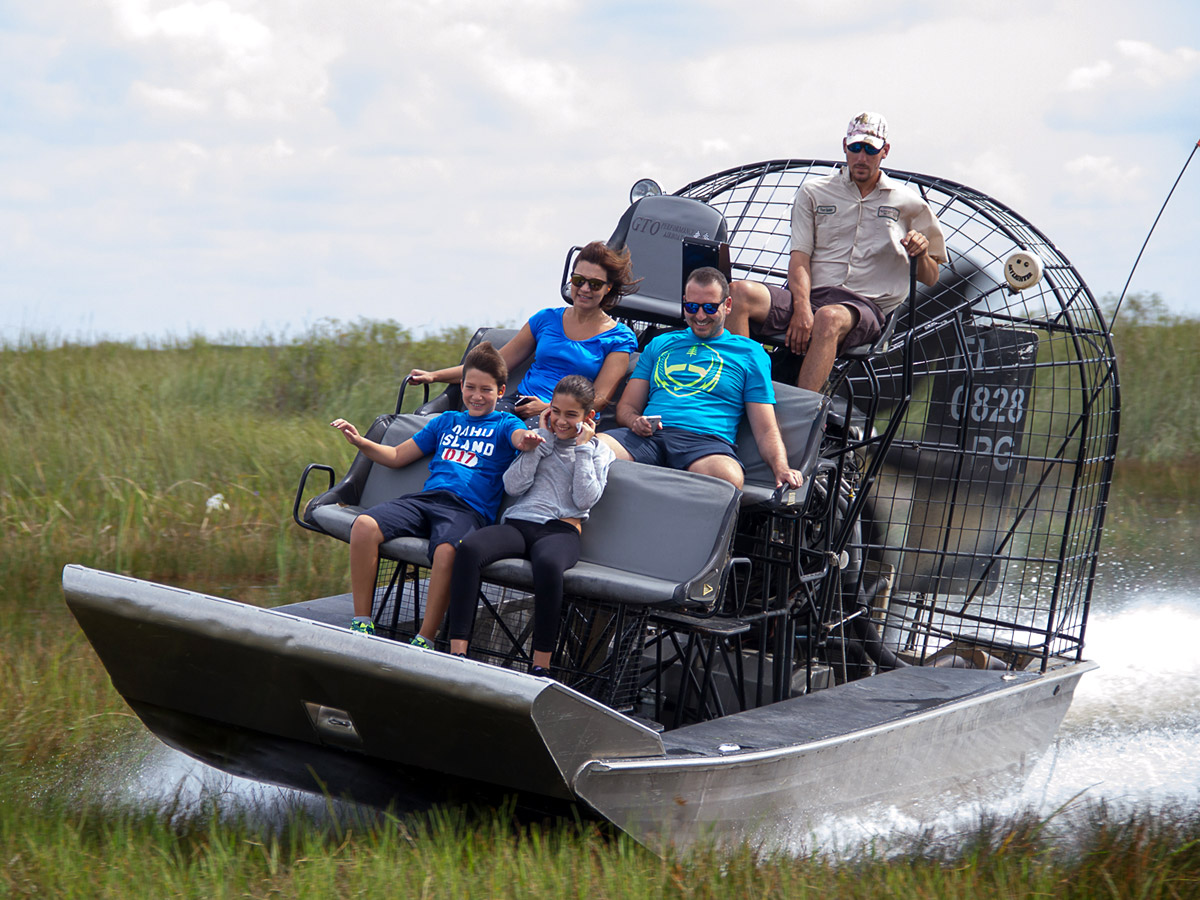




Welcome to Gator Park.If you are able to read this, it is because you have disabled javascript. Javaxcript must be turned onand the Adove Flash player must be installed to view our enahnced site.
If you would like to continue and view a version of the site that is optimized for screen-readers and people with reading disabilities that does not require the Flash Player, Click Here.
If you would like to view our enhanced Flash site, please install Adobe's Flash Player by Clicking Here.
Gator Park - Airboats, Everglades, Airboat tours, Everglades Wildlife Shows, Airboat Rides, Everglades. Alligators, Florida, Miami Airboats, Everglades, Airboat tours, Everglades Alligator Park Come visit us deep in the Everglades - At Gator Park you’ll see all sorts of wildlife such as alligators, turtles, snakes, fish and exotic birds as you take one of our famous Airboat Rides deep into the Everglades National Park. All our tours are narrated by professional guides so you’ll have the opportunity to learn about the unique wetlands and its native inhabitants. We will also show you how to wrestle a large alligator at our exciting Wildlife Show. And if you are brave enough, you can even hold a baby gator in your arms! At Gator Park, you’ll also have the chance to walk around and visit with our resident turtles, macaws and peacocks. Be sure not to miss our great display of snakes, such as the Blackpine, Brooks Kingsnake, Florida Kingsnake and Red Ratsnake. Remember to bring your camera as our tours provide you with many opportunities to capture the natural beauty of The Everglades! Airboat Tours The Gator Park Airboat Tour begins slowly down the canal with plenty of opportunity to observe wildlife in its natural habitat. Our experienced and professional guides will help you spot alligators, both large adult and small immature alligators, soft-shelled turtles and numerous birds (be sure to have your camera ready). One of the first alligators you are likely to spot is Jumbo. An impressive 6 feet in length, Jumbo likes to play host and greet Gator Park’s guests. We’ll also pass a replica of a common fishing camp used by Indians, a structure made of palm and cypress wood, called a chickee. Then, we’ll pick up speed and head for the river of grass. We’ll take you where the saw grass grows tall, giving the appearance of an open prairie stretching for miles on end. Out here there is no dry land, except for the tree covered islands called hammocks. On these hammocks you can find mammals such as raccoons, whitetail deer and wild boar. The Everglades was coined "The River of Grass" by Marjory Stoneman Douglas in 1969 because the water is not stagnant like that in swamps, but instead travels very slowly from north to south. The Everglades is one of the world's largest and slowest flowing rivers. The water isn’t too deep, averaging only eight to twelve inches, depending on the rainfall. It is also as warm as bath water, about 85-90 degrees at high noon during the summer. Because the water pertains to a wetland system, you’ll notice that is also clean and odorless. Gator Park's Airboats, Everglades, Airboat tours, Everglades all sport Cadillac engines and high performance airplane propellors. Tours depart from our docks every 20 - 30 thourghout the day!. The Animals The Everglades National Park is known for its vast wildlife. There are hundreds of bird species, many of which are on the endangered or threatened list. You’ll see lots of large wading birds, such as the roseate spoonbill, great blue heron, white ibis and a variety of egrets, as well as the osprey. The Everglades’ marine life includes more than 200,000 alligators as well as American crocodiles. In abundance are fish such as large mouth bass, redfish, snapper, blue gil and catfish. Other wildlife in the Everglades includes the white-tailed deer, more than 28 different snakes a few which are venomous and let us not forget, the endangered Florida panther. The Videos Although we have tried to capture the essence of Gator Park and the Everglades on our website, the only way to truly appreciate it is first-hand. We have prepared several videos to give you an idea of how much fun visiting Gator Park would be. Enjoy and come visit us soon to see for yourself!” Airboat racing through the Everglades. View from racing airboat on the Everglades. Alligator approaching side of Airboat. Smile for the camera little Alligator! He's not so little! Meet the famous Everglades lily walker. Souvenirs and Indian Crafts Take home a souvenir of your trip to the Everglades. Stop by our fully stocked gift shop and find all sorts of mementos. We sell everything from T-shirts, postcards, hats, beaded belts and moccasins to replicas of alligator heads, videotapes and books about the Everglades, alligators and the famous Florida panther. If you like the taste of alligator, be sure to take home the Gourmet Gator Cookbook! Pics of souvenirs We also sell beautiful Indian crafts, such as pottery, jewelry and giant-sized dream catchers that make terrific gifts for special people back home. Wildlife Show Attend Gator Park’s famous wildlife show and see the barehanded technique used by the Indians to capture alligators. If you are brave enough, you’ll also have the opportunity to hold a smaller gator in your hands. Be sure to bring your camera so you can share your Gator Park adventure with all your friends back home! The Seminole Indians Seminole Indian history began with bands of Lower Creek Indians from British-ruled southern Georgia who migrated to northern and central Florida in the mid-1700s, after entering into conflicts with Europeans and Upper Creek tribes. They were joined by other groups of Indians from Alabama and Southern Carolina. Florida at that time was ruled by Spain and they soon became collectively known as Seminole, a name derived from the Spanish word cimmarones, meaning wild people or runaways. In the early 1800s, American troops entered the picture and were fighting the British in the War of 1812. In order to free new land for white settlers, the US government authorized the raiding of Seminole villages with the intent of displacing the Indians and re-enslaving Black fugitives who were known to be harbored by the Seminoles. Between 1817 and 1858, the United States waged three Seminole Wars, nearly extinguishing the Indians and shipping survivors to Oklahoma. There were only a few hundred who managed to escape capture by moving south and hiding in the Everglades. Today, slightly more than 2,000 Seminoles live on six reservations in the state located in Big Cypress, Brighton, Fort Pierce, Hollywood, Immokalee and Tampa. RV Park & Camping Gator Park also provides for camping in the heart of Everglades. Full hookups and R/V storage are available. Prices are: $25.OO daily; $125.00 weekly; $350.00 monthly. Special Events Gator Park is available for private functions, corporate events and special parties. For your next birthday party consider Gator Park. We offer an educational and entertaining afternoon.with airboat rides and wildlife shows as well as a special birthday lunch starting at $10.00 per person. Gator Park also Caters! For special occasions and corporate events Gator Park offers a full kitchen with unlimited catering abilities. For your event, try our southern barbecue or Everglades lunch or call us with your special menu requests. For reservations, contact John at 1-800-559-2205. The Miccosukee Miccosukee Indians, just as the Seminoles, were originally part of the Lower Creek Indians that inhabited parts of Alabama and Georgia. They settled in Florida around 1715 and lived by hunting, fishing and growing crops, mainly corn. The Miccosukees were also targeted by the US Government for relocation to Oklahoma during the three Seminole Wars occurring between 1817 and 1858. An approximate fifty Miccosukees managed to avoid capture by fleeing south and hiding in the Everglades. At first, the Miccosukee Indians were self-reliant, trading fish, game, and alligator skin for necessities such as food, clothing, guns and ammunition. However, their independence was compromised when the government began draining the Everglades and building canals for agricultural purposes in the early 1900’s. This greatly reduced the fish and game populations that were the basis for the Miccosukee economy. At the same time, Miami experienced a large increase in its population, becoming a major metropolitan area. And in 1928, the Tamiami Trail was built providing non-Indians access to the abundant fish and game in the Everglades previously reserved for the Miccosukees. In 1947, The US Department of the Interior declared that the majority of the land pertaining to Miccosukee ancestral land was to become part of the Everglades National Park. Consequently, the Miccosukees were thrown into modern living and forced to create an economy that provided for commerce and education. Nevertheless, the Miccosukees managed to retain their culture by keeping their clans, language and ways. To this day, some even prefer to live in chickees, the traditional Indian swamp dwelling. The basis for the Miccosukee economy now is tourism and gambling, which supports the approximate 550 Miccosukees that live in the Everglades. The MAP Overhead map of Gator Park will be available shortly. Make sure you visit our directions page which will give you directions from major departing points. Come visit us deep in the Everglades - just a short distance from the center of Miami and not far from Naples. Take one of our famous Airboat rides down the River of Grass and check out all the native wildlife. You'll see lots of alligators as well as turtles, fish, snakes and exotic wading birds. Also join us for our Wildlife Show and learn how the Indians wrestled the alligators. We may even ask you to lend a hand (we promise you'll get it back)! Before you leave, be sure to stop by our Souvenir and Indian Crafts store so you can take home mementos of your trip to the Everglades. And don't pass on the opportunity to try our famous gator sausage and fresh frog legs in our Restaurant. Park Hours and Rates Gator Park is open everyday! Rain or Shine! Hours: Monday Sunday from 9:00 am to 6:30 p.m. Last show begins at 5:00 pm. Rates: (includes park admission, airboat ride and wildlife show) Adults: $17.99 Children: $9.99 Tour Operators Please contact John at 1-800-559-2205 for group rates and wholesale pricing. We offer a variety of lunch packages that can be included in your ticket price. Transportion We work with some of Miami's best transportation companies. We will be happy to quote you pricing for round trip transportation to and from Gator Park. Dine either inside or outside in our restaurant. Our menu has something for everyone, from traditional fare, such as hamburgers, hotdogs and sandwiches to various Everglades’ specialities, such as alligator tail, alligator sausage, frogs legs and catfish. Fun Facts About Alligators Did you know that the Everglades is the only ecosystem in the world where alligators and crocodiles co-exist side by side? Although alligators only thrive in fresh water because they can’t digest salt, crocodiles can live in both fresh and salt water. The Everglades is unique because fresh water in the Florida Bay meets the salt water of the Gulf of Mexico! Other interesting facts about Gators include: There are over 200,000 alligators in the Everglades and 1.5 million in the state of Florida! Alligators live in the coastal plains of the southeastern United States and Central Americain both natural and man-made freshwater lakes, ponds, rivers, and wetland areas. Alligators do not eat human beings! However, they will protect and defend themselves, attacking and killing humans if they get too close or endanger their young. Alligators are territorial and frequently get into fights defending their space. As a result, you’ll often see alligators scarred on their head and body or with a missing body part such as a tail, leg or eye. Alligators are also solitary reptiles. You’ll only see them in large groups during mating season, in the spring. Usually 30-40 eggs incubate for approximately 60-65 days and hatchlings are usually 8-10 inches long. Alligators have 68 percent muscle and the male alligator can grow up to 12 feet and weigh 400-500 pounds while the female alligator usually grows to 8-9 feet. Alligator jaws have over 1,000 pounds of closing pressure! Yikes! Alligators have approximately 80 teeth. When they wear down or are lost in battle, they are replaced with new teeth. An alligator can go through 2,000 to 3,000 teeth in a lifetime! A lifetime for an alligator is approximately 30-35 years in the wild and they can live past 50 years in captivity. Alligators’ main diet consists primarily of fish but they also feed on turtles, mammals, snakes and birds. Often you’ll see only the gator’s head in the water, not its body. This way they can more easily strike their prey, such as fish, without being detected. Alligators regulate their temperatures, not by perspiring, but by moving out of the sun and into the shade. There they rest with their mouths open to release stored heat. They also cool off by going to the water. Because of legal protection, alligators are no longer endangered. They are, however, still classified as threatened to insure their continued protection and that of the endangered American crocodile. The alligator is the mascot of the University of Florida at Gainesville. Go Gators! Directions From Miami & the Beaches: Take 836 West (Dolphin Expressway) past Miami International Airport. 836 will merge with Florida Turnpike (821) South. Take Exit 25, which is SW 8th Street/US 41. Travel west on SW 8th Street for exactly 12 miles. On your left, you will see a large Coca-cola can with an Airboat on top, and that’s Gator Park. From Ft. Lauderdale: Take Florida Turnpike (821) South to Exit 25, which is SW 8th Street/US 41. Travel west on SW 8th Street for exactly 12 miles. On your left, you will see a large Coca-cola can with an Airboat on top, and that’s Gator Park. From Florida Keys: Take US 1 north to Florida City and take Florida Turnpike (821) North to Exit 25, which is SW 8th Street/US 41. Travel west on SW 8th Street for exactly 12 miles. On your left, you will see a large Coca-cola can with an Airboat on top, and that’s Gator Park. From Naples: Travel east on Tamiami Trail East/FL-90E/US-41S until you see a large Coca-cola can with an Airboat on top. That’s when you’ll know you’re at GatorPark. Gator Park In the Heart of the Everglades National Park. john@gatorpark.com 12 miles west of the Florida Turnpike on SW 8th Street Gator Park Inc. 24050 SW 8th Street Miami, Florida 33187 1-800-559-2205 305-559-2255 Webmaster: I-volutions, Inc. About The Everglades River of Grass The Everglades is a unique wetland ecosystem in southern Florida. It was formed over thousands of years from the overflow of heavy rainfall into Lake Okeechobee. The Everglades extends southwest from Lake Okeechobee to the shores of the Florida Bay and the Gulf of Mexico, covering 5,000 square miles and lying in a shallow basin of limestone. Its slow flow of water supports grasslands, thick forests and diverse groups of animal, marine and bird life. The swampy Everglades is often referred to as the “River of Grass” because of its endless prairies of sawgrass that rise 3 to 10 feet above the surface of the water. The sawgrass is often so dense that travel is possible only through traversing natural water passages. Other than sawgrass, the lush vegetation of the Everglades also consists of mangrove, cypress, palms, pines and hardwood hammocks. The Everglades are also known for its rich bird life, particularly large wading birds, such as the roseate spoonbill, great blue heron and a variety of egrets. Marine life includes alligators, American crocodiles, soft shelled turtles and fish such as red teriera, large mouth bass, redfish, and catfish. Other wildlife in the Everglades includes deer, more than 28 different snakes, a few which are venomous, and also, the endangered Florida panther. The Everglades have been inhabited by native people for thousands of years. During much of the 19th century, the marsh was a hiding place for the Seminole people during their conflicts with the United States government who was intent on displacing them to Oklahoma. Today, the Miccosukee and Seminole people are the primary residents of the Everglades. Agriculture, the leading economic activity in the region, is confined to the northern area of the Everglades just south of Lake Okeechobee. Here on rich, drained land, farmers grow sugarcane, fruit and vegetables. To the south and west of Lake Okeechobee, tourism is the main economic activity where visitors are drawn to places, such as Gator Park, to observe the unique and natural beauty of the Everglades. Open every day 9 AM to 6 PM (Rain or Shine) (800)-559-2205 or (305)-559-2255 GATORPARK INC. 24050 S.W. 8th St. Miami, Fl 33187 (12 Miles West of The Turnpike on S.W.8th Street) © 2003 Gator Park, Inc. All Rights Reserved. Gator Park - Airboats, Everglades, Airboat tours, Everglades Wildlife Shows, Airboat Rides, Everglades. Alligators, Florida, Miami Airboats, Everglades, Airboat tours, Everglades Alligator Park Gator Park - Airboats, Everglades, Airboat tours, Everglades Wildlife Shows, Airboat Rides, Everglades. Alligators, Florida, Miami Airboats, Everglades, Airboat tours, Everglades Alligator Park Come visit us deep in the Everglades - At Gator Park you’ll see all sorts of wildlife such as alligators, turtles, snakes, fish and exotic birds as you take one of our famous Airboat Rides deep into the Everglades National Park. All our tours are narrated by professional guides so you’ll have the opportunity to learn about the unique wetlands and its native inhabitants. We will also show you how to wrestle a large alligator at our exciting Wildlife Show. And if you are brave enough, you can even hold a baby gator in your arms! At Gator Park, you’ll also have the chance to walk around and visit with our resident turtles, macaws and peacocks. Be sure not to miss our great display of snakes, such as the Blackpine, Brooks Kingsnake, Florida Kingsnake and Red Ratsnake. Remember to bring your camera as our tours provide you with many opportunities to capture the natural beauty of The Everglades! Airboat Tours The Gator Park Airboat Tour begins slowly down the canal with plenty of opportunity to observe wildlife in its natural habitat. Our experienced and professional guides will help you spot alligators, both large adult and small immature alligators, soft-shelled turtles and numerous birds (be sure to have your camera ready). One of the first alligators you are likely to spot is Jumbo. An impressive 6 feet in length, Jumbo likes to play host and greet Gator Park’s guests. We’ll also pass a replica of a common fishing camp used by Indians, a structure made of palm and cypress wood, called a chickee. Then, we’ll pick up speed and head for the river of grass. We’ll take you where the saw grass grows tall, giving the appearance of an open prairie stretching for miles on end. Out here there is no dry land, except for the tree covered islands called hammocks. On these hammocks you can find mammals such as raccoons, whitetail deer and wild boar. The Everglades was coined "The River of Grass" by Marjory Stoneman Douglas in 1969 because the water is not stagnant like that in swamps, but instead travels very slowly from north to south. The Everglades is one of the world's largest and slowest flowing rivers. The water isn’t too deep, averaging only eight to twelve inches, depending on the rainfall. It is also as warm as bath water, about 85-90 degrees at high noon during the summer. Because the water pertains to a wetland system, you’ll notice that is also clean and odorless. Gator Park's Airboats, Everglades, Airboat tours, Everglades all sport Cadillac engines and high performance airplane propellors. Tours depart from our docks every 20 - 30 thourghout the day!. The Animals The Everglades National Park is known for its vast wildlife. There are hundreds of bird species, many of which are on the endangered or threatened list. You’ll see lots of large wading birds, such as the roseate spoonbill, great blue heron, white ibis and a variety of egrets, as well as the osprey. The Everglades’ marine life includes more than 200,000 alligators as well as American crocodiles. In abundance are fish such as large mouth bass, redfish, snapper, blue gil and catfish. Other wildlife in the Everglades includes the white-tailed deer, more than 28 different snakes a few which are venomous and let us not forget, the endangered Florida panther. The Videos Although we have tried to capture the essence of Gator Park and the Everglades on our website, the only way to truly appreciate it is first-hand. We have prepared several videos to give you an idea of how much fun visiting Gator Park would be. Enjoy and come visit us soon to see for yourself!” Airboat racing through the Everglades. View from racing airboat on the Everglades. Alligator approaching side of Airboat. Smile for the camera little Alligator! He's not so little! Meet the famous Everglades lily walker. Souvenirs and Indian Crafts Take home a souvenir of your trip to the Everglades. Stop by our fully stocked gift shop and find all sorts of mementos. We sell everything from T-shirts, postcards, hats, beaded belts and moccasins to replicas of alligator heads, videotapes and books about the Everglades, alligators and the famous Florida panther. If you like the taste of alligator, be sure to take home the Gourmet Gator Cookbook! Pics of souvenirs We also sell beautiful Indian crafts, such as pottery, jewelry and giant-sized dream catchers that make terrific gifts for special people back home. Wildlife Show Attend Gator Park’s famous wildlife show and see the barehanded technique used by the Indians to capture alligators. If you are brave enough, you’ll also have the opportunity to hold a smaller gator in your hands. Be sure to bring your camera so you can share your Gator Park adventure with all your friends back home! The Seminole Indians Seminole Indian history began with bands of Lower Creek Indians from British-ruled southern Georgia who migrated to northern and central Florida in the mid-1700s, after entering into conflicts with Europeans and Upper Creek tribes. They were joined by other groups of Indians from Alabama and Southern Carolina. Florida at that time was ruled by Spain and they soon became collectively known as Seminole, a name derived from the Spanish word cimmarones, meaning wild people or runaways. In the early 1800s, American troops entered the picture and were fighting the British in the War of 1812. In order to free new land for white settlers, the US government authorized the raiding of Seminole villages with the intent of displacing the Indians and re-enslaving Black fugitives who were known to be harbored by the Seminoles. Between 1817 and 1858, the United States waged three Seminole Wars, nearly extinguishing the Indians and shipping survivors to Oklahoma. There were only a few hundred who managed to escape capture by moving south and hiding in the Everglades. Today, slightly more than 2,000 Seminoles live on six reservations in the state located in Big Cypress, Brighton, Fort Pierce, Hollywood, Immokalee and Tampa. RV Park & Camping Gator Park also provides for camping in the heart of Everglades. Full hookups and R/V storage are available. Prices are: $25.OO daily; $125.00 weekly; $350.00 monthly. Special Events Gator Park is available for private functions, corporate events and special parties. For your next birthday party consider Gator Park. We offer an educational and entertaining afternoon.with airboat rides and wildlife shows as well as a special birthday lunch starting at $10.00 per person. Gator Park also Caters! For special occasions and corporate events Gator Park offers a full kitchen with unlimited catering abilities. For your event, try our southern barbecue or Everglades lunch or call us with your special menu requests. For reservations, contact John at 1-800-559-2205. The Miccosukee Miccosukee Indians, just as the Seminoles, were originally part of the Lower Creek Indians that inhabited parts of Alabama and Georgia. They settled in Florida around 1715 and lived by hunting, fishing and growing crops, mainly corn. The Miccosukees were also targeted by the US Government for relocation to Oklahoma during the three Seminole Wars occurring between 1817 and 1858. An approximate fifty Miccosukees managed to avoid capture by fleeing south and hiding in the Everglades. At first, the Miccosukee Indians were self-reliant, trading fish, game, and alligator skin for necessities such as food, clothing, guns and ammunition. However, their independence was compromised when the government began draining the Everglades and building canals for agricultural purposes in the early 1900’s. This greatly reduced the fish and game populations that were the basis for the Miccosukee economy. At the same time, Miami experienced a large increase in its population, becoming a major metropolitan area. And in 1928, the Tamiami Trail was built providing non-Indians access to the abundant fish and game in the Everglades previously reserved for the Miccosukees. In 1947, The US Department of the Interior declared that the majority of the land pertaining to Miccosukee ancestral land was to become part of the Everglades National Park. Consequently, the Miccosukees were thrown into modern living and forced to create an economy that provided for commerce and education. Nevertheless, the Miccosukees managed to retain their culture by keeping their clans, language and ways. To this day, some even prefer to live in chickees, the traditional Indian swamp dwelling. The basis for the Miccosukee economy now is tourism and gambling, which supports the approximate 550 Miccosukees that live in the Everglades. The MAP Overhead map of Gator Park will be available shortly. Make sure you visit our directions page which will give you directions from major departing points. Come visit us deep in the Everglades - just a short distance from the center of Miami and not far from Naples. Take one of our famous Airboat rides down the River of Grass and check out all the native wildlife. You'll see lots of alligators as well as turtles, fish, snakes and exotic wading birds. Also join us for our Wildlife Show and learn how the Indians wrestled the alligators. We may even ask you to lend a hand (we promise you'll get it back)! Before you leave, be sure to stop by our Souvenir and Indian Crafts store so you can take home mementos of your trip to the Everglades. And don't pass on the opportunity to try our famous gator sausage and fresh frog legs in our Restaurant. Park Hours and Rates Gator Park is open everyday! Rain or Shine! Hours: Monday Sunday from 9:00 am to 6:30 p.m. Last show begins at 5:00 pm. Rates: (includes park admission, airboat ride and wildlife show) Adults: $17.99 Children: $9.99 Tour Operators Please contact John at 1-800-559-2205 for group rates and wholesale pricing. We offer a variety of lunch packages that can be included in your ticket price. Transportion We work with some of Miami's best transportation companies. We will be happy to quote you pricing for round trip transportation to and from Gator Park. Dine either inside or outside in our restaurant. Our menu has something for everyone, from traditional fare, such as hamburgers, hotdogs and sandwiches to various Everglades’ specialities, such as alligator tail, alligator sausage, frogs legs and catfish. Fun Facts About Alligators Did you know that the Everglades is the only ecosystem in the world where alligators and crocodiles co-exist side by side? Although alligators only thrive in fresh water because they can’t digest salt, crocodiles can live in both fresh and salt water. The Everglades is unique because fresh water in the Florida Bay meets the salt water of the Gulf of Mexico! Other interesting facts about Gators include: There are over 200,000 alligators in the Everglades and 1.5 million in the state of Florida! Alligators live in the coastal plains of the southeastern United States and Central Americain both natural and man-made freshwater lakes, ponds, rivers, and wetland areas. Alligators do not eat human beings! However, they will protect and defend themselves, attacking and killing humans if they get too close or endanger their young. Alligators are territorial and frequently get into fights defending their space. As a result, you’ll often see alligators scarred on their head and body or with a missing body part such as a tail, leg or eye. Alligators are also solitary reptiles. You’ll only see them in large groups during mating season, in the spring. Usually 30-40 eggs incubate for approximately 60-65 days and hatchlings are usually 8-10 inches long. Alligators have 68 percent muscle and the male alligator can grow up to 12 feet and weigh 400-500 pounds while the female alligator usually grows to 8-9 feet. Alligator jaws have over 1,000 pounds of closing pressure! Yikes! Alligators have approximately 80 teeth. When they wear down or are lost in battle, they are replaced with new teeth. An alligator can go through 2,000 to 3,000 teeth in a lifetime! A lifetime for an alligator is approximately 30-35 years in the wild and they can live past 50 years in captivity. Alligators’ main diet consists primarily of fish but they also feed on turtles, mammals, snakes and birds. Often you’ll see only the gator’s head in the water, not its body. This way they can more easily strike their prey, such as fish, without being detected. Alligators regulate their temperatures, not by perspiring, but by moving out of the sun and into the shade. There they rest with their mouths open to release stored heat. They also cool off by going to the water. Because of legal protection, alligators are no longer endangered. They are, however, still classified as threatened to insure their continued protection and that of the endangered American crocodile. The alligator is the mascot of the University of Florida at Gainesville. Go Gators! Directions From Miami & the Beaches: Take 836 West (Dolphin Expressway) past Miami International Airport. 836 will merge with Florida Turnpike (821) South. Take Exit 25, which is SW 8th Street/US 41. Travel west on SW 8th Street for exactly 12 miles. On your left, you will see a large Coca-cola can with an Airboat on top, and that’s Gator Park. From Ft. Lauderdale: Take Florida Turnpike (821) South to Exit 25, which is SW 8th Street/US 41. Travel west on SW 8th Street for exactly 12 miles. On your left, you will see a large Coca-cola can with an Airboat on top, and that’s Gator Park. From Florida Keys: Take US 1 north to Florida City and take Florida Turnpike (821) North to Exit 25, which is SW 8th Street/US 41. Travel west on SW 8th Street for exactly 12 miles. On your left, you will see a large Coca-cola can with an Airboat on top, and that’s Gator Park. From Naples: Travel east on Tamiami Trail East/FL-90E/US-41S until you see a large Coca-cola can with an Airboat on top. That’s when you’ll know you’re at GatorPark. Gator Park In the Heart of the Everglades National Park. john@gatorpark.com 12 miles west of the Florida Turnpike on SW 8th Street Gator Park Inc. 24050 SW 8th Street Miami, Florida 33187 1-800-559-2205 305-559-2255 Webmaster: I-volutions, Inc. About The Everglades River of Grass The Everglades is a unique wetland ecosystem in southern Florida. It was formed over thousands of years from the overflow of heavy rainfall into Lake Okeechobee. The Everglades extends southwest from Lake Okeechobee to the shores of the Florida Bay and the Gulf of Mexico, covering 5,000 square miles and lying in a shallow basin of limestone. Its slow flow of water supports grasslands, thick forests and diverse groups of animal, marine and bird life. The swampy Everglades is often referred to as the “River of Grass” because of its endless prairies of sawgrass that rise 3 to 10 feet above the surface of the water. The sawgrass is often so dense that travel is possible only through traversing natural water passages. Other than sawgrass, the lush vegetation of the Everglades also consists of mangrove, cypress, palms, pines and hardwood hammocks. The Everglades are also known for its rich bird life, particularly large wading birds, such as the roseate spoonbill, great blue heron and a variety of egrets. Marine life includes alligators, American crocodiles, soft shelled turtles and fish such as red teriera, large mouth bass, redfish, and catfish. Other wildlife in the Everglades includes deer, more than 28 different snakes, a few which are venomous, and also, the endangered Florida panther. The Everglades have been inhabited by native people for thousands of years. During much of the 19th century, the marsh was a hiding place for the Seminole people during their conflicts with the United States government who was intent on displacing them to Oklahoma. Today, the Miccosukee and Seminole people are the primary residents of the Everglades. Agriculture, the leading economic activity in the region, is confined to the northern area of the Everglades just south of Lake Okeechobee. Here on rich, drained land, farmers grow sugarcane, fruit and vegetables. To the south and west of Lake Okeechobee, tourism is the main economic activity where visitors are drawn to places, such as Gator Park, to observe the unique and natural beauty of the Everglades. Open every day 9 AM to 6 PM (Rain or Shine) (800)-559-2205 or (305)-559-2255 GATORPARK INC. 24050 S.W. 8th St. Miami, Fl 33187 (12 Miles West of The Turnpike on S.W.8th Street) © 2003 Gator Park, Inc. All Rights Reserved. Gator Park - Airboats, Everglades, Airboat tours, Everglades Wildlife Shows, Airboat Rides, Everglades. Alligators, Florida, Miami Airboats, Everglades, Airboat tours, Everglades Alligator Park Gator Park - Airboats, Everglades, Airboat tours, Everglades Wildlife Shows, Airboat Rides, Everglades. Alligators, Florida, Miami Airboats, Everglades, Airboat tours, Everglades Alligator Park Come visit us deep in the Everglades - At Gator Park you’ll see all sorts of wildlife such as alligators, turtles, snakes, fish and exotic birds as you take one of our famous Airboat Rides deep into the Everglades National Park. All our tours are narrated by professional guides so you’ll have the opportunity to learn about the unique wetlands and its native inhabitants. We will also show you how to wrestle a large alligator at our exciting Wildlife Show. And if you are brave enough, you can even hold a baby gator in your arms! At Gator Park, you’ll also have the chance to walk around and visit with our resident turtles, macaws and peacocks. Be sure not to miss our great display of snakes, such as the Blackpine, Brooks Kingsnake, Florida Kingsnake and Red Ratsnake. Remember to bring your camera as our tours provide you with many opportunities to capture the natural beauty of The Everglades! Airboat Tours The Gator Park Airboat Tour begins slowly down the canal with plenty of opportunity to observe wildlife in its natural habitat. Our experienced and professional guides will help you spot alligators, both large adult and small immature alligators, soft-shelled turtles and numerous birds (be sure to have your camera ready). One of the first alligators you are likely to spot is Jumbo. An impressive 6 feet in length, Jumbo likes to play host and greet Gator Park’s guests. We’ll also pass a replica of a common fishing camp used by Indians, a structure made of palm and cypress wood, called a chickee. Then, we’ll pick up speed and head for the river of grass. We’ll take you where the saw grass grows tall, giving the appearance of an open prairie stretching for miles on end. Out here there is no dry land, except for the tree covered islands called hammocks. On these hammocks you can find mammals such as raccoons, whitetail deer and wild boar. The Everglades was coined "The River of Grass" by Marjory Stoneman Douglas in 1969 because the water is not stagnant like that in swamps, but instead travels very slowly from north to south. The Everglades is one of the world's largest and slowest flowing rivers. The water isn’t too deep, averaging only eight to twelve inches, depending on the rainfall. It is also as warm as bath water, about 85-90 degrees at high noon during the summer. Because the water pertains to a wetland system, you’ll notice that is also clean and odorless. Gator Park's Airboats, Everglades, Airboat tours, Everglades all sport Cadillac engines and high performance airplane propellors. Tours depart from our docks every 20 - 30 thourghout the day!. The Animals The Everglades National Park is known for its vast wildlife. There are hundreds of bird species, many of which are on the endangered or threatened list. You’ll see lots of large wading birds, such as the roseate spoonbill, great blue heron, white ibis and a variety of egrets, as well as the osprey. The Everglades’ marine life includes more than 200,000 alligators as well as American crocodiles. In abundance are fish such as large mouth bass, redfish, snapper, blue gil and catfish. Other wildlife in the Everglades includes the white-tailed deer, more than 28 different snakes a few which are venomous and let us not forget, the endangered Florida panther. The Videos Although we have tried to capture the essence of Gator Park and the Everglades on our website, the only way to truly appreciate it is first-hand. We have prepared several videos to give you an idea of how much fun visiting Gator Park would be. Enjoy and come visit us soon to see for yourself!” Airboat racing through the Everglades. View from racing airboat on the Everglades. Alligator approaching side of Airboat. Smile for the camera little Alligator! He's not so little! Meet the famous Everglades lily walker. Souvenirs and Indian Crafts Take home a souvenir of your trip to the Everglades. Stop by our fully stocked gift shop and find all sorts of mementos. We sell everything from T-shirts, postcards, hats, beaded belts and moccasins to replicas of alligator heads, videotapes and books about the Everglades, alligators and the famous Florida panther. If you like the taste of alligator, be sure to take home the Gourmet Gator Cookbook! Pics of souvenirs We also sell beautiful Indian crafts, such as pottery, jewelry and giant-sized dream catchers that make terrific gifts for special people back home. Wildlife Show Attend Gator Park’s famous wildlife show and see the barehanded technique used by the Indians to capture alligators. If you are brave enough, you’ll also have the opportunity to hold a smaller gator in your hands. Be sure to bring your camera so you can share your Gator Park adventure with all your friends back home! The Seminole Indians Seminole Indian history began with bands of Lower Creek Indians from British-ruled southern Georgia who migrated to northern and central Florida in the mid-1700s, after entering into conflicts with Europeans and Upper Creek tribes. They were joined by other groups of Indians from Alabama and Southern Carolina. Florida at that time was ruled by Spain and they soon became collectively known as Seminole, a name derived from the Spanish word cimmarones, meaning wild people or runaways. In the early 1800s, American troops entered the picture and were fighting the British in the War of 1812. In order to free new land for white settlers, the US government authorized the raiding of Seminole villages with the intent of displacing the Indians and re-enslaving Black fugitives who were known to be harbored by the Seminoles. Between 1817 and 1858, the United States waged three Seminole Wars, nearly extinguishing the Indians and shipping survivors to Oklahoma. There were only a few hundred who managed to escape capture by moving south and hiding in the Everglades. Today, slightly more than 2,000 Seminoles live on six reservations in the state located in Big Cypress, Brighton, Fort Pierce, Hollywood, Immokalee and Tampa. RV Park & Camping Gator Park also provides for camping in the heart of Everglades. Full hookups and R/V storage are available. Prices are: $25.OO daily; $125.00 weekly; $350.00 monthly. Special Events Gator Park is available for private functions, corporate events and special parties. For your next birthday party consider Gator Park. We offer an educational and entertaining afternoon.with airboat rides and wildlife shows as well as a special birthday lunch starting at $10.00 per person. Gator Park also Caters! For special occasions and corporate events Gator Park offers a full kitchen with unlimited catering abilities. For your event, try our southern barbecue or Everglades lunch or call us with your special menu requests. For reservations, contact John at 1-800-559-2205. The Miccosukee Miccosukee Indians, just as the Seminoles, were originally part of the Lower Creek Indians that inhabited parts of Alabama and Georgia. They settled in Florida around 1715 and lived by hunting, fishing and growing crops, mainly corn. The Miccosukees were also targeted by the US Government for relocation to Oklahoma during the three Seminole Wars occurring between 1817 and 1858. An approximate fifty Miccosukees managed to avoid capture by fleeing south and hiding in the Everglades. At first, the Miccosukee Indians were self-reliant, trading fish, game, and alligator skin for necessities such as food, clothing, guns and ammunition. However, their independence was compromised when the government began draining the Everglades and building canals for agricultural purposes in the early 1900’s. This greatly reduced the fish and game populations that were the basis for the Miccosukee economy. At the same time, Miami experienced a large increase in its population, becoming a major metropolitan area. And in 1928, the Tamiami Trail was built providing non-Indians access to the abundant fish and game in the Everglades previously reserved for the Miccosukees. In 1947, The US Department of the Interior declared that the majority of the land pertaining to Miccosukee ancestral land was to become part of the Everglades National Park. Consequently, the Miccosukees were thrown into modern living and forced to create an economy that provided for commerce and education. Nevertheless, the Miccosukees managed to retain their culture by keeping their clans, language and ways. To this day, some even prefer to live in chickees, the traditional Indian swamp dwelling. The basis for the Miccosukee economy now is tourism and gambling, which supports the approximate 550 Miccosukees that live in the Everglades. The MAP Overhead map of Gator Park will be available shortly. Make sure you visit our directions page which will give you directions from major departing points. Come visit us deep in the Everglades - just a short distance from the center of Miami and not far from Naples. Take one of our famous Airboat rides down the River of Grass and check out all the native wildlife. You'll see lots of alligators as well as turtles, fish, snakes and exotic wading birds. Also join us for our Wildlife Show and learn how the Indians wrestled the alligators. We may even ask you to lend a hand (we promise you'll get it back)! Before you leave, be sure to stop by our Souvenir and Indian Crafts store so you can take home mementos of your trip to the Everglades. And don't pass on the opportunity to try our famous gator sausage and fresh frog legs in our Restaurant. Park Hours and Rates Gator Park is open everyday! Rain or Shine! Hours: Monday Sunday from 9:00 am to 6:30 p.m. Last show begins at 5:00 pm. Rates: (includes park admission, airboat ride and wildlife show) Adults: $17.99 Children: $9.99 Tour Operators Please contact John at 1-800-559-2205 for group rates and wholesale pricing. We offer a variety of lunch packages that can be included in your ticket price. Transportion We work with some of Miami's best transportation companies. We will be happy to quote you pricing for round trip transportation to and from Gator Park. Dine either inside or outside in our restaurant. Our menu has something for everyone, from traditional fare, such as hamburgers, hotdogs and sandwiches to various Everglades’ specialities, such as alligator tail, alligator sausage, frogs legs and catfish. Fun Facts About Alligators Did you know that the Everglades is the only ecosystem in the world where alligators and crocodiles co-exist side by side? Although alligators only thrive in fresh water because they can’t digest salt, crocodiles can live in both fresh and salt water. The Everglades is unique because fresh water in the Florida Bay meets the salt water of the Gulf of Mexico! Other interesting facts about Gators include: There are over 200,000 alligators in the Everglades and 1.5 million in the state of Florida! Alligators live in the coastal plains of the southeastern United States and Central Americain both natural and man-made freshwater lakes, ponds, rivers, and wetland areas. Alligators do not eat human beings! However, they will protect and defend themselves, attacking and killing humans if they get too close or endanger their young. Alligators are territorial and frequently get into fights defending their space. As a result, you’ll often see alligators scarred on their head and body or with a missing body part such as a tail, leg or eye. Alligators are also solitary reptiles. You’ll only see them in large groups during mating season, in the spring. Usually 30-40 eggs incubate for approximately 60-65 days and hatchlings are usually 8-10 inches long. Alligators have 68 percent muscle and the male alligator can grow up to 12 feet and weigh 400-500 pounds while the female alligator usually grows to 8-9 feet. Alligator jaws have over 1,000 pounds of closing pressure! Yikes! Alligators have approximately 80 teeth. When they wear down or are lost in battle, they are replaced with new teeth. An alligator can go through 2,000 to 3,000 teeth in a lifetime! A lifetime for an alligator is approximately 30-35 years in the wild and they can live past 50 years in captivity. Alligators’ main diet consists primarily of fish but they also feed on turtles, mammals, snakes and birds. Often you’ll see only the gator’s head in the water, not its body. This way they can more easily strike their prey, such as fish, without being detected. Alligators regulate their temperatures, not by perspiring, but by moving out of the sun and into the shade. There they rest with their mouths open to release stored heat. They also cool off by going to the water. Because of legal protection, alligators are no longer endangered. They are, however, still classified as threatened to insure their continued protection and that of the endangered American crocodile. The alligator is the mascot of the University of Florida at Gainesville. Go Gators! Directions From Miami & the Beaches: Take 836 West (Dolphin Expressway) past Miami International Airport. 836 will merge with Florida Turnpike (821) South. Take Exit 25, which is SW 8th Street/US 41. Travel west on SW 8th Street for exactly 12 miles. On your left, you will see a large Coca-cola can with an Airboat on top, and that’s Gator Park. From Ft. Lauderdale: Take Florida Turnpike (821) South to Exit 25, which is SW 8th Street/US 41. Travel west on SW 8th Street for exactly 12 miles. On your left, you will see a large Coca-cola can with an Airboat on top, and that’s Gator Park. From Florida Keys: Take US 1 north to Florida City and take Florida Turnpike (821) North to Exit 25, which is SW 8th Street/US 41. Travel west on SW 8th Street for exactly 12 miles. On your left, you will see a large Coca-cola can with an Airboat on top, and that’s Gator Park. From Naples: Travel east on Tamiami Trail East/FL-90E/US-41S until you see a large Coca-cola can with an Airboat on top. That’s when you’ll know you’re at GatorPark. Gator Park In the Heart of the Everglades National Park. john@gatorpark.com 12 miles west of the Florida Turnpike on SW 8th Street Gator Park Inc. 24050 SW 8th Street Miami, Florida 33187 1-800-559-2205 305-559-2255 Webmaster: I-volutions, Inc. About The Everglades River of Grass The Everglades is a unique wetland ecosystem in southern Florida. It was formed over thousands of years from the overflow of heavy rainfall into Lake Okeechobee. The Everglades extends southwest from Lake Okeechobee to the shores of the Florida Bay and the Gulf of Mexico, covering 5,000 square miles and lying in a shallow basin of limestone. Its slow flow of water supports grasslands, thick forests and diverse groups of animal, marine and bird life. The swampy Everglades is often referred to as the “River of Grass” because of its endless prairies of sawgrass that rise 3 to 10 feet above the surface of the water. The sawgrass is often so dense that travel is possible only through traversing natural water passages. Other than sawgrass, the lush vegetation of the Everglades also consists of mangrove, cypress, palms, pines and hardwood hammocks. The Everglades are also known for its rich bird life, particularly large wading birds, such as the roseate spoonbill, great blue heron and a variety of egrets. Marine life includes alligators, American crocodiles, soft shelled turtles and fish such as red teriera, large mouth bass, redfish, and catfish. Other wildlife in the Everglades includes deer, more than 28 different snakes, a few which are venomous, and also, the endangered Florida panther. The Everglades have been inhabited by native people for thousands of years. During much of the 19th century, the marsh was a hiding place for the Seminole people during their conflicts with the United States government who was intent on displacing them to Oklahoma. Today, the Miccosukee and Seminole people are the primary residents of the Everglades. Agriculture, the leading economic activity in the region, is confined to the northern area of the Everglades just south of Lake Okeechobee. Here on rich, drained land, farmers grow sugarcane, fruit and vegetables. To the south and west of Lake Okeechobee, tourism is the main economic activity where visitors are drawn to places, such as Gator Park, to observe the unique and natural beauty of the Everglades. Open every day 9 AM to 6 PM (Rain or Shine) (800)-559-2205 or (305)-559-2255 GATORPARK INC. 24050 S.W. 8th St. Miami, Fl 33187 (12 Miles West of The Turnpike on S.W.8th Street) © 2003 Gator Park, Inc. All Rights Reserved. Gator Park - Airboats, Everglades, Airboat tours, Everglades Wildlife Shows, Airboat Rides, Everglades. Alligators, Florida, Miami Airboats, Everglades, Airboat tours, Everglades Alligator Park Gator Park - Airboats, Everglades, Airboat tours, Everglades Wildlife Shows, Airboat Rides, Everglades. Alligators, Florida, Miami Airboats, Everglades, Airboat tours, Everglades Alligator Park Come visit us deep in the Everglades - At Gator Park you’ll see all sorts of wildlife such as alligators, turtles, snakes, fish and exotic birds as you take one of our famous Airboat Rides deep into the Everglades National Park. All our tours are narrated by professional guides so you’ll have the opportunity to learn about the unique wetlands and its native inhabitants. We will also show you how to wrestle a large alligator at our exciting Wildlife Show. And if you are brave enough, you can even hold a baby gator in your arms! At Gator Park, you’ll also have the chance to walk around and visit with our resident turtles, macaws and peacocks. Be sure not to miss our great display of snakes, such as the Blackpine, Brooks Kingsnake, Florida Kingsnake and Red Ratsnake. Remember to bring your camera as our tours provide you with many opportunities to capture the natural beauty of The Everglades! Airboat Tours The Gator Park Airboat Tour begins slowly down the canal with plenty of opportunity to observe wildlife in its natural habitat. Our experienced and professional guides will help you spot alligators, both large adult and small immature alligators, soft-shelled turtles and numerous birds (be sure to have your camera ready). One of the first alligators you are likely to spot is Jumbo. An impressive 6 feet in length, Jumbo likes to play host and greet Gator Park’s guests. We’ll also pass a replica of a common fishing camp used by Indians, a structure made of palm and cypress wood, called a chickee. Then, we’ll pick up speed and head for the river of grass. We’ll take you where the saw grass grows tall, giving the appearance of an open prairie stretching for miles on end. Out here there is no dry land, except for the tree covered islands called hammocks. On these hammocks you can find mammals such as raccoons, whitetail deer and wild boar. The Everglades was coined "The River of Grass" by Marjory Stoneman Douglas in 1969 because the water is not stagnant like that in swamps, but instead travels very slowly from north to south. The Everglades is one of the world's largest and slowest flowing rivers. The water isn’t too deep, averaging only eight to twelve inches, depending on the rainfall. It is also as warm as bath water, about 85-90 degrees at high noon during the summer. Because the water pertains to a wetland system, you’ll notice that is also clean and odorless. Gator Park's Airboats, Everglades, Airboat tours, Everglades all sport Cadillac engines and high performance airplane propellors. Tours depart from our docks every 20 - 30 thourghout the day!. The Animals The Everglades National Park is known for its vast wildlife. There are hundreds of bird species, many of which are on the endangered or threatened list. You’ll see lots of large wading birds, such as the roseate spoonbill, great blue heron, white ibis and a variety of egrets, as well as the osprey. The Everglades’ marine life includes more than 200,000 alligators as well as American crocodiles. In abundance are fish such as large mouth bass, redfish, snapper, blue gil and catfish. Other wildlife in the Everglades includes the white-tailed deer, more than 28 different snakes a few which are venomous and let us not forget, the endangered Florida panther. The Videos Although we have tried to capture the essence of Gator Park and the Everglades on our website, the only way to truly appreciate it is first-hand. We have prepared several videos to give you an idea of how much fun visiting Gator Park would be. Enjoy and come visit us soon to see for yourself!” Airboat racing through the Everglades. View from racing airboat on the Everglades. Alligator approaching side of Airboat. Smile for the camera little Alligator! He's not so little! Meet the famous Everglades lily walker. Souvenirs and Indian Crafts Take home a souvenir of your trip to the Everglades. Stop by our fully stocked gift shop and find all sorts of mementos. We sell everything from T-shirts, postcards, hats, beaded belts and moccasins to replicas of alligator heads, videotapes and books about the Everglades, alligators and the famous Florida panther. If you like the taste of alligator, be sure to take home the Gourmet Gator Cookbook! Pics of souvenirs We also sell beautiful Indian crafts, such as pottery, jewelry and giant-sized dream catchers that make terrific gifts for special people back home. Wildlife Show Attend Gator Park’s famous wildlife show and see the barehanded technique used by the Indians to capture alligators. If you are brave enough, you’ll also have the opportunity to hold a smaller gator in your hands. Be sure to bring your camera so you can share your Gator Park adventure with all your friends back home! The Seminole Indians Seminole Indian history began with bands of Lower Creek Indians from British-ruled southern Georgia who migrated to northern and central Florida in the mid-1700s, after entering into conflicts with Europeans and Upper Creek tribes. They were joined by other groups of Indians from Alabama and Southern Carolina. Florida at that time was ruled by Spain and they soon became collectively known as Seminole, a name derived from the Spanish word cimmarones, meaning wild people or runaways. In the early 1800s, American troops entered the picture and were fighting the British in the War of 1812. In order to free new land for white settlers, the US government authorized the raiding of Seminole villages with the intent of displacing the Indians and re-enslaving Black fugitives who were known to be harbored by the Seminoles. Between 1817 and 1858, the United States waged three Seminole Wars, nearly extinguishing the Indians and shipping survivors to Oklahoma. There were only a few hundred who managed to escape capture by moving south and hiding in the Everglades. Today, slightly more than 2,000 Seminoles live on six reservations in the state located in Big Cypress, Brighton, Fort Pierce, Hollywood, Immokalee and Tampa. RV Park & Camping Gator Park also provides for camping in the heart of Everglades. Full hookups and R/V storage are available. Prices are: $25.OO daily; $125.00 weekly; $350.00 monthly. Special Events Gator Park is available for private functions, corporate events and special parties. For your next birthday party consider Gator Park. We offer an educational and entertaining afternoon.with airboat rides and wildlife shows as well as a special birthday lunch starting at $10.00 per person. Gator Park also Caters! For special occasions and corporate events Gator Park offers a full kitchen with unlimited catering abilities. For your event, try our southern barbecue or Everglades lunch or call us with your special menu requests. For reservations, contact John at 1-800-559-2205. The Miccosukee Miccosukee Indians, just as the Seminoles, were originally part of the Lower Creek Indians that inhabited parts of Alabama and Georgia. They settled in Florida around 1715 and lived by hunting, fishing and growing crops, mainly corn. The Miccosukees were also targeted by the US Government for relocation to Oklahoma during the three Seminole Wars occurring between 1817 and 1858. An approximate fifty Miccosukees managed to avoid capture by fleeing south and hiding in the Everglades. At first, the Miccosukee Indians were self-reliant, trading fish, game, and alligator skin for necessities such as food, clothing, guns and ammunition. However, their independence was compromised when the government began draining the Everglades and building canals for agricultural purposes in the early 1900’s. This greatly reduced the fish and game populations that were the basis for the Miccosukee economy. At the same time, Miami experienced a large increase in its population, becoming a major metropolitan area. And in 1928, the Tamiami Trail was built providing non-Indians access to the abundant fish and game in the Everglades previously reserved for the Miccosukees. In 1947, The US Department of the Interior declared that the majority of the land pertaining to Miccosukee ancestral land was to become part of the Everglades National Park. Consequently, the Miccosukees were thrown into modern living and forced to create an economy that provided for commerce and education. Nevertheless, the Miccosukees managed to retain their culture by keeping their clans, language and ways. To this day, some even prefer to live in chickees, the traditional Indian swamp dwelling. The basis for the Miccosukee economy now is tourism and gambling, which supports the approximate 550 Miccosukees that live in the Everglades. The MAP Overhead map of Gator Park will be available shortly. Make sure you visit our directions page which will give you directions from major departing points. Come visit us deep in the Everglades - just a short distance from the center of Miami and not far from Naples. Take one of our famous Airboat rides down the River of Grass and check out all the native wildlife. You'll see lots of alligators as well as turtles, fish, snakes and exotic wading birds. Also join us for our Wildlife Show and learn how the Indians wrestled the alligators. We may even ask you to lend a hand (we promise you'll get it back)! Before you leave, be sure to stop by our Souvenir and Indian Crafts store so you can take home mementos of your trip to the Everglades. And don't pass on the opportunity to try our famous gator sausage and fresh frog legs in our Restaurant. Park Hours and Rates Gator Park is open everyday! Rain or Shine! Hours: Monday Sunday from 9:00 am to 6:30 p.m. Last show begins at 5:00 pm. Rates: (includes park admission, airboat ride and wildlife show) Adults: $17.99 Children: $9.99 Tour Operators Please contact John at 1-800-559-2205 for group rates and wholesale pricing. We offer a variety of lunch packages that can be included in your ticket price. Transportion We work with some of Miami's best transportation companies. We will be happy to quote you pricing for round trip transportation to and from Gator Park. Dine either inside or outside in our restaurant. Our menu has something for everyone, from traditional fare, such as hamburgers, hotdogs and sandwiches to various Everglades’ specialities, such as alligator tail, alligator sausage, frogs legs and catfish. Fun Facts About Alligators Did you know that the Everglades is the only ecosystem in the world where alligators and crocodiles co-exist side by side? Although alligators only thrive in fresh water because they can’t digest salt, crocodiles can live in both fresh and salt water. The Everglades is unique because fresh water in the Florida Bay meets the salt water of the Gulf of Mexico! Other interesting facts about Gators include: There are over 200,000 alligators in the Everglades and 1.5 million in the state of Florida! Alligators live in the coastal plains of the southeastern United States and Central Americain both natural and man-made freshwater lakes, ponds, rivers, and wetland areas. Alligators do not eat human beings! However, they will protect and defend themselves, attacking and killing humans if they get too close or endanger their young. Alligators are territorial and frequently get into fights defending their space. As a result, you’ll often see alligators scarred on their head and body or with a missing body part such as a tail, leg or eye. Alligators are also solitary reptiles. You’ll only see them in large groups during mating season, in the spring. Usually 30-40 eggs incubate for approximately 60-65 days and hatchlings are usually 8-10 inches long. Alligators have 68 percent muscle and the male alligator can grow up to 12 feet and weigh 400-500 pounds while the female alligator usually grows to 8-9 feet. Alligator jaws have over 1,000 pounds of closing pressure! Yikes! Alligators have approximately 80 teeth. When they wear down or are lost in battle, they are replaced with new teeth. An alligator can go through 2,000 to 3,000 teeth in a lifetime! A lifetime for an alligator is approximately 30-35 years in the wild and they can live past 50 years in captivity. Alligators’ main diet consists primarily of fish but they also feed on turtles, mammals, snakes and birds. Often you’ll see only the gator’s head in the water, not its body. This way they can more easily strike their prey, such as fish, without being detected. Alligators regulate their temperatures, not by perspiring, but by moving out of the sun and into the shade. There they rest with their mouths open to release stored heat. They also cool off by going to the water. Because of legal protection, alligators are no longer endangered. They are, however, still classified as threatened to insure their continued protection and that of the endangered American crocodile. The alligator is the mascot of the University of Florida at Gainesville. Go Gators! Directions From Miami & the Beaches: Take 836 West (Dolphin Expressway) past Miami International Airport. 836 will merge with Florida Turnpike (821) South. Take Exit 25, which is SW 8th Street/US 41. Travel west on SW 8th Street for exactly 12 miles. On your left, you will see a large Coca-cola can with an Airboat on top, and that’s Gator Park. From Ft. Lauderdale: Take Florida Turnpike (821) South to Exit 25, which is SW 8th Street/US 41. Travel west on SW 8th Street for exactly 12 miles. On your left, you will see a large Coca-cola can with an Airboat on top, and that’s Gator Park. From Florida Keys: Take US 1 north to Florida City and take Florida Turnpike (821) North to Exit 25, which is SW 8th Street/US 41. Travel west on SW 8th Street for exactly 12 miles. On your left, you will see a large Coca-cola can with an Airboat on top, and that’s Gator Park. From Naples: Travel east on Tamiami Trail East/FL-90E/US-41S until you see a large Coca-cola can with an Airboat on top. That’s when you’ll know you’re at GatorPark. Gator Park In the Heart of the Everglades National Park. john@gatorpark.com 12 miles west of the Florida Turnpike on SW 8th Street Gator Park Inc. 24050 SW 8th Street Miami, Florida 33187 1-800-559-2205 305-559-2255 Webmaster: I-volutions, Inc. About The Everglades River of Grass The Everglades is a unique wetland ecosystem in southern Florida. It was formed over thousands of years from the overflow of heavy rainfall into Lake Okeechobee. The Everglades extends southwest from Lake Okeechobee to the shores of the Florida Bay and the Gulf of Mexico, covering 5,000 square miles and lying in a shallow basin of limestone. Its slow flow of water supports grasslands, thick forests and diverse groups of animal, marine and bird life. The swampy Everglades is often referred to as the “River of Grass” because of its endless prairies of sawgrass that rise 3 to 10 feet above the surface of the water. The sawgrass is often so dense that travel is possible only through traversing natural water passages. Other than sawgrass, the lush vegetation of the Everglades also consists of mangrove, cypress, palms, pines and hardwood hammocks. The Everglades are also known for its rich bird life, particularly large wading birds, such as the roseate spoonbill, great blue heron and a variety of egrets. Marine life includes alligators, American crocodiles, soft shelled turtles and fish such as red teriera, large mouth bass, redfish, and catfish. Other wildlife in the Everglades includes deer, more than 28 different snakes, a few which are venomous, and also, the endangered Florida panther. The Everglades have been inhabited by native people for thousands of years. During much of the 19th century, the marsh was a hiding place for the Seminole people during their conflicts with the United States government who was intent on displacing them to Oklahoma. Today, the Miccosukee and Seminole people are the primary residents of the Everglades. Agriculture, the leading economic activity in the region, is confined to the northern area of the Everglades just south of Lake Okeechobee. Here on rich, drained land, farmers grow sugarcane, fruit and vegetables. To the south and west of Lake Okeechobee, tourism is the main economic activity where visitors are drawn to places, such as Gator Park, to observe the unique and natural beauty of the Everglades. Open every day 9 AM to 6 PM (Rain or Shine) (800)-559-2205 or (305)-559-2255 GATORPARK INC. 24050 S.W. 8th St. Miami, Fl 33187 (12 Miles West of The Turnpike on S.W.8th Street) © 2003 Gator Park, Inc. All Rights Reserved. Gator Park - Airboats, Everglades, Airboat tours, Everglades Wildlife Shows, Airboat Rides, Everglades. Alligators, Florida, Miami Airboats, Everglades, Airboat tours, Everglades Alligator Park Gator Park - Airboats, Everglades, Airboat tours, Everglades Wildlife Shows, Airboat Rides, Everglades. Alligators, Florida, Miami Airboats, Everglades, Airboat tours, Everglades Alligator Park Come visit us deep in the Everglades - At Gator Park you’ll see all sorts of wildlife such as alligators, turtles, snakes, fish and exotic birds as you take one of our famous Airboat Rides deep into the Everglades National Park. All our tours are narrated by professional guides so you’ll have the opportunity to learn about the unique wetlands and its native inhabitants. We will also show you how to wrestle a large alligator at our exciting Wildlife Show. And if you are brave enough, you can even hold a baby gator in your arms! At Gator Park, you’ll also have the chance to walk around and visit with our resident turtles, macaws and peacocks. Be sure not to miss our great display of snakes, such as the Blackpine, Brooks Kingsnake, Florida Kingsnake and Red Ratsnake. Remember to bring your camera as our tours provide you with many opportunities to capture the natural beauty of The Everglades! Airboat Tours The Gator Park Airboat Tour begins slowly down the canal with plenty of opportunity to observe wildlife in its natural habitat. Our experienced and professional guides will help you spot alligators, both large adult and small immature alligators, soft-shelled turtles and numerous birds (be sure to have your camera ready). One of the first alligators you are likely to spot is Jumbo. An impressive 6 feet in length, Jumbo likes to play host and greet Gator Park’s guests. We’ll also pass a replica of a common fishing camp used by Indians, a structure made of palm and cypress wood, called a chickee. Then, we’ll pick up speed and head for the river of grass. We’ll take you where the saw grass grows tall, giving the appearance of an open prairie stretching for miles on end. Out here there is no dry land, except for the tree covered islands called hammocks. On these hammocks you can find mammals such as raccoons, whitetail deer and wild boar. The Everglades was coined "The River of Grass" by Marjory Stoneman Douglas in 1969 because the water is not stagnant like that in swamps, but instead travels very slowly from north to south. The Everglades is one of the world's largest and slowest flowing rivers. The water isn’t too deep, averaging only eight to twelve inches, depending on the rainfall. It is also as warm as bath water, about 85-90 degrees at high noon during the summer. Because the water pertains to a wetland system, you’ll notice that is also clean and odorless. Gator Park's Airboats, Everglades, Airboat tours, Everglades all sport Cadillac engines and high performance airplane propellors. Tours depart from our docks every 20 - 30 thourghout the day!. The Animals The Everglades National Park is known for its vast wildlife. There are hundreds of bird species, many of which are on the endangered or threatened list. You’ll see lots of large wading birds, such as the roseate spoonbill, great blue heron, white ibis and a variety of egrets, as well as the osprey. The Everglades’ marine life includes more than 200,000 alligators as well as American crocodiles. In abundance are fish such as large mouth bass, redfish, snapper, blue gil and catfish. Other wildlife in the Everglades includes the white-tailed deer, more than 28 different snakes a few which are venomous and let us not forget, the endangered Florida panther. The Videos Although we have tried to capture the essence of Gator Park and the Everglades on our website, the only way to truly appreciate it is first-hand. We have prepared several videos to give you an idea of how much fun visiting Gator Park would be. Enjoy and come visit us soon to see for yourself!” Airboat racing through the Everglades. View from racing airboat on the Everglades. Alligator approaching side of Airboat. Smile for the camera little Alligator! He's not so little! Meet the famous Everglades lily walker. Souvenirs and Indian Crafts Take home a souvenir of your trip to the Everglades. Stop by our fully stocked gift shop and find all sorts of mementos. We sell everything from T-shirts, postcards, hats, beaded belts and moccasins to replicas of alligator heads, videotapes and books about the Everglades, alligators and the famous Florida panther. If you like the taste of alligator, be sure to take home the Gourmet Gator Cookbook! Pics of souvenirs We also sell beautiful Indian crafts, such as pottery, jewelry and giant-sized dream catchers that make terrific gifts for special people back home. Wildlife Show Attend Gator Park’s famous wildlife show and see the barehanded technique used by the Indians to capture alligators. If you are brave enough, you’ll also have the opportunity to hold a smaller gator in your hands. Be sure to bring your camera so you can share your Gator Park adventure with all your friends back home! The Seminole Indians Seminole Indian history began with bands of Lower Creek Indians from British-ruled southern Georgia who migrated to northern and central Florida in the mid-1700s, after entering into conflicts with Europeans and Upper Creek tribes. They were joined by other groups of Indians from Alabama and Southern Carolina. Florida at that time was ruled by Spain and they soon became collectively known as Seminole, a name derived from the Spanish word cimmarones, meaning wild people or runaways. In the early 1800s, American troops entered the picture and were fighting the British in the War of 1812. In order to free new land for white settlers, the US government authorized the raiding of Seminole villages with the intent of displacing the Indians and re-enslaving Black fugitives who were known to be harbored by the Seminoles. Between 1817 and 1858, the United States waged three Seminole Wars, nearly extinguishing the Indians and shipping survivors to Oklahoma. There were only a few hundred who managed to escape capture by moving south and hiding in the Everglades. Today, slightly more than 2,000 Seminoles live on six reservations in the state located in Big Cypress, Brighton, Fort Pierce, Hollywood, Immokalee and Tampa. RV Park & Camping Gator Park also provides for camping in the heart of Everglades. Full hookups and R/V storage are available. Prices are: $25.OO daily; $125.00 weekly; $350.00 monthly. Special Events Gator Park is available for private functions, corporate events and special parties. For your next birthday party consider Gator Park. We offer an educational and entertaining afternoon.with airboat rides and wildlife shows as well as a special birthday lunch starting at $10.00 per person. Gator Park also Caters! For special occasions and corporate events Gator Park offers a full kitchen with unlimited catering abilities. For your event, try our southern barbecue or Everglades lunch or call us with your special menu requests. For reservations, contact John at 1-800-559-2205. The Miccosukee Miccosukee Indians, just as the Seminoles, were originally part of the Lower Creek Indians that inhabited parts of Alabama and Georgia. They settled in Florida around 1715 and lived by hunting, fishing and growing crops, mainly corn. The Miccosukees were also targeted by the US Government for relocation to Oklahoma during the three Seminole Wars occurring between 1817 and 1858. An approximate fifty Miccosukees managed to avoid capture by fleeing south and hiding in the Everglades. At first, the Miccosukee Indians were self-reliant, trading fish, game, and alligator skin for necessities such as food, clothing, guns and ammunition. However, their independence was compromised when the government began draining the Everglades and building canals for agricultural purposes in the early 1900’s. This greatly reduced the fish and game populations that were the basis for the Miccosukee economy. At the same time, Miami experienced a large increase in its population, becoming a major metropolitan area. And in 1928, the Tamiami Trail was built providing non-Indians access to the abundant fish and game in the Everglades previously reserved for the Miccosukees. In 1947, The US Department of the Interior declared that the majority of the land pertaining to Miccosukee ancestral land was to become part of the Everglades National Park. Consequently, the Miccosukees were thrown into modern living and forced to create an economy that provided for commerce and education. Nevertheless, the Miccosukees managed to retain their culture by keeping their clans, language and ways. To this day, some even prefer to live in chickees, the traditional Indian swamp dwelling. The basis for the Miccosukee economy now is tourism and gambling, which supports the approximate 550 Miccosukees that live in the Everglades. The MAP Overhead map of Gator Park will be available shortly. Make sure you visit our directions page which will give you directions from major departing points. Come visit us deep in the Everglades - just a short distance from the center of Miami and not far from Naples. Take one of our famous Airboat rides down the River of Grass and check out all the native wildlife. You'll see lots of alligators as well as turtles, fish, snakes and exotic wading birds. Also join us for our Wildlife Show and learn how the Indians wrestled the alligators. We may even ask you to lend a hand (we promise you'll get it back)! Before you leave, be sure to stop by our Souvenir and Indian Crafts store so you can take home mementos of your trip to the Everglades. And don't pass on the opportunity to try our famous gator sausage and fresh frog legs in our Restaurant. Park Hours and Rates Gator Park is open everyday! Rain or Shine! Hours: Monday Sunday from 9:00 am to 6:30 p.m. Last show begins at 5:00 pm. Rates: (includes park admission, airboat ride and wildlife show) Adults: $17.99 Children: $9.99 Tour Operators Please contact John at 1-800-559-2205 for group rates and wholesale pricing. We offer a variety of lunch packages that can be included in your ticket price. Transportion We work with some of Miami's best transportation companies. We will be happy to quote you pricing for round trip transportation to and from Gator Park. Dine either inside or outside in our restaurant. Our menu has something for everyone, from traditional fare, such as hamburgers, hotdogs and sandwiches to various Everglades’ specialities, such as alligator tail, alligator sausage, frogs legs and catfish. Fun Facts About Alligators Did you know that the Everglades is the only ecosystem in the world where alligators and crocodiles co-exist side by side? Although alligators only thrive in fresh water because they can’t digest salt, crocodiles can live in both fresh and salt water. The Everglades is unique because fresh water in the Florida Bay meets the salt water of the Gulf of Mexico! Other interesting facts about Gators include: There are over 200,000 alligators in the Everglades and 1.5 million in the state of Florida! Alligators live in the coastal plains of the southeastern United States and Central Americain both natural and man-made freshwater lakes, ponds, rivers, and wetland areas. Alligators do not eat human beings! However, they will protect and defend themselves, attacking and killing humans if they get too close or endanger their young. Alligators are territorial and frequently get into fights defending their space. As a result, you’ll often see alligators scarred on their head and body or with a missing body part such as a tail, leg or eye. Alligators are also solitary reptiles. You’ll only see them in large groups during mating season, in the spring. Usually 30-40 eggs incubate for approximately 60-65 days and hatchlings are usually 8-10 inches long. Alligators have 68 percent muscle and the male alligator can grow up to 12 feet and weigh 400-500 pounds while the female alligator usually grows to 8-9 feet. Alligator jaws have over 1,000 pounds of closing pressure! Yikes! Alligators have approximately 80 teeth. When they wear down or are lost in battle, they are replaced with new teeth. An alligator can go through 2,000 to 3,000 teeth in a lifetime! A lifetime for an alligator is approximately 30-35 years in the wild and they can live past 50 years in captivity. Alligators’ main diet consists primarily of fish but they also feed on turtles, mammals, snakes and birds. Often you’ll see only the gator’s head in the water, not its body. This way they can more easily strike their prey, such as fish, without being detected. Alligators regulate their temperatures, not by perspiring, but by moving out of the sun and into the shade. There they rest with their mouths open to release stored heat. They also cool off by going to the water. Because of legal protection, alligators are no longer endangered. They are, however, still classified as threatened to insure their continued protection and that of the endangered American crocodile. The alligator is the mascot of the University of Florida at Gainesville. Go Gators! Directions From Miami & the Beaches: Take 836 West (Dolphin Expressway) past Miami International Airport. 836 will merge with Florida Turnpike (821) South. Take Exit 25, which is SW 8th Street/US 41. Travel west on SW 8th Street for exactly 12 miles. On your left, you will see a large Coca-cola can with an Airboat on top, and that’s Gator Park. From Ft. Lauderdale: Take Florida Turnpike (821) South to Exit 25, which is SW 8th Street/US 41. Travel west on SW 8th Street for exactly 12 miles. On your left, you will see a large Coca-cola can with an Airboat on top, and that’s Gator Park. From Florida Keys: Take US 1 north to Florida City and take Florida Turnpike (821) North to Exit 25, which is SW 8th Street/US 41. Travel west on SW 8th Street for exactly 12 miles. On your left, you will see a large Coca-cola can with an Airboat on top, and that’s Gator Park. From Naples: Travel east on Tamiami Trail East/FL-90E/US-41S until you see a large Coca-cola can with an Airboat on top. That’s when you’ll know you’re at GatorPark. Gator Park In the Heart of the Everglades National Park. john@gatorpark.com 12 miles west of the Florida Turnpike on SW 8th Street Gator Park Inc. 24050 SW 8th Street Miami, Florida 33187 1-800-559-2205 305-559-2255 Webmaster: I-volutions, Inc. About The Everglades River of Grass The Everglades is a unique wetland ecosystem in southern Florida. It was formed over thousands of years from the overflow of heavy rainfall into Lake Okeechobee. The Everglades extends southwest from Lake Okeechobee to the shores of the Florida Bay and the Gulf of Mexico, covering 5,000 square miles and lying in a shallow basin of limestone. Its slow flow of water supports grasslands, thick forests and diverse groups of animal, marine and bird life. The swampy Everglades is often referred to as the “River of Grass” because of its endless prairies of sawgrass that rise 3 to 10 feet above the surface of the water. The sawgrass is often so dense that travel is possible only through traversing natural water passages. Other than sawgrass, the lush vegetation of the Everglades also consists of mangrove, cypress, palms, pines and hardwood hammocks. The Everglades are also known for its rich bird life, particularly large wading birds, such as the roseate spoonbill, great blue heron and a variety of egrets. Marine life includes alligators, American crocodiles, soft shelled turtles and fish such as red teriera, large mouth bass, redfish, and catfish. Other wildlife in the Everglades includes deer, more than 28 different snakes, a few which are venomous, and also, the endangered Florida panther. The Everglades have been inhabited by native people for thousands of years. During much of the 19th century, the marsh was a hiding place for the Seminole people during their conflicts with the United States government who was intent on displacing them to Oklahoma. Today, the Miccosukee and Seminole people are the primary residents of the Everglades. Agriculture, the leading economic activity in the region, is confined to the northern area of the Everglades just south of Lake Okeechobee. Here on rich, drained land, farmers grow sugarcane, fruit and vegetables. To the south and west of Lake Okeechobee, tourism is the main economic activity where visitors are drawn to places, such as Gator Park, to observe the unique and natural beauty of the Everglades. Open every day 9 AM to 6 PM (Rain or Shine) (800)-559-2205 or (305)-559-2255 GATORPARK INC. 24050 S.W. 8th St. Miami, Fl 33187 (12 Miles West of The Turnpike on S.W.8th Street) © 2003 Gator Park, Inc. All Rights Reserved. Gator Park - Airboats, Everglades, Airboat tours, Everglades Wildlife Shows, Airboat Rides, Everglades. Alligators, Florida, Miami Airboats, Everglades, Airboat tours, Everglades Alligator Park Gator Park - Airboats, Everglades, Airboat tours, Everglades Wildlife Shows, Airboat Rides, Everglades. Alligators, Florida, Miami Airboats, Everglades, Airboat tours, Everglades Alligator Park Come visit us deep in the Everglades - At Gator Park you’ll see all sorts of wildlife such as alligators, turtles, snakes, fish and exotic birds as you take one of our famous Airboat Rides deep into the Everglades National Park. All our tours are narrated by professional guides so you’ll have the opportunity to learn about the unique wetlands and its native inhabitants. We will also show you how to wrestle a large alligator at our exciting Wildlife Show. And if you are brave enough, you can even hold a baby gator in your arms! At Gator Park, you’ll also have the chance to walk around and visit with our resident turtles, macaws and peacocks. Be sure not to miss our great display of snakes, such as the Blackpine, Brooks Kingsnake, Florida Kingsnake and Red Ratsnake. Remember to bring your camera as our tours provide you with many opportunities to capture the natural beauty of The Everglades! Airboat Tours The Gator Park Airboat Tour begins slowly down the canal with plenty of opportunity to observe wildlife in its natural habitat. Our experienced and professional guides will help you spot alligators, both large adult and small immature alligators, soft-shelled turtles and numerous birds (be sure to have your camera ready). One of the first alligators you are likely to spot is Jumbo. An impressive 6 feet in length, Jumbo likes to play host and greet Gator Park’s guests. We’ll also pass a replica of a common fishing camp used by Indians, a structure made of palm and cypress wood, called a chickee. Then, we’ll pick up speed and head for the river of grass. We’ll take you where the saw grass grows tall, giving the appearance of an open prairie stretching for miles on end. Out here there is no dry land, except for the tree covered islands called hammocks. On these hammocks you can find mammals such as raccoons, whitetail deer and wild boar. The Everglades was coined "The River of Grass" by Marjory Stoneman Douglas in 1969 because the water is not stagnant like that in swamps, but instead travels very slowly from north to south. The Everglades is one of the world's largest and slowest flowing rivers. The water isn’t too deep, averaging only eight to twelve inches, depending on the rainfall. It is also as warm as bath water, about 85-90 degrees at high noon during the summer. Because the water pertains to a wetland system, you’ll notice that is also clean and odorless. Gator Park's Airboats, Everglades, Airboat tours, Everglades all sport Cadillac engines and high performance airplane propellors. Tours depart from our docks every 20 - 30 thourghout the day!. The Animals The Everglades National Park is known for its vast wildlife. There are hundreds of bird species, many of which are on the endangered or threatened list. You’ll see lots of large wading birds, such as the roseate spoonbill, great blue heron, white ibis and a variety of egrets, as well as the osprey. The Everglades’ marine life includes more than 200,000 alligators as well as American crocodiles. In abundance are fish such as large mouth bass, redfish, snapper, blue gil and catfish. Other wildlife in the Everglades includes the white-tailed deer, more than 28 different snakes a few which are venomous and let us not forget, the endangered Florida panther. The Videos Although we have tried to capture the essence of Gator Park and the Everglades on our website, the only way to truly appreciate it is first-hand. We have prepared several videos to give you an idea of how much fun visiting Gator Park would be. Enjoy and come visit us soon to see for yourself!” Airboat racing through the Everglades. View from racing airboat on the Everglades. Alligator approaching side of Airboat. Smile for the camera little Alligator! He's not so little! Meet the famous Everglades lily walker. Souvenirs and Indian Crafts Take home a souvenir of your trip to the Everglades. Stop by our fully stocked gift shop and find all sorts of mementos. We sell everything from T-shirts, postcards, hats, beaded belts and moccasins to replicas of alligator heads, videotapes and books about the Everglades, alligators and the famous Florida panther. If you like the taste of alligator, be sure to take home the Gourmet Gator Cookbook! Pics of souvenirs We also sell beautiful Indian crafts, such as pottery, jewelry and giant-sized dream catchers that make terrific gifts for special people back home. Wildlife Show Attend Gator Park’s famous wildlife show and see the barehanded technique used by the Indians to capture alligators. If you are brave enough, you’ll also have the opportunity to hold a smaller gator in your hands. Be sure to bring your camera so you can share your Gator Park adventure with all your friends back home! The Seminole Indians Seminole Indian history began with bands of Lower Creek Indians from British-ruled southern Georgia who migrated to northern and central Florida in the mid-1700s, after entering into conflicts with Europeans and Upper Creek tribes. They were joined by other groups of Indians from Alabama and Southern Carolina. Florida at that time was ruled by Spain and they soon became collectively known as Seminole, a name derived from the Spanish word cimmarones, meaning wild people or runaways. In the early 1800s, American troops entered the picture and were fighting the British in the War of 1812. In order to free new land for white settlers, the US government authorized the raiding of Seminole villages with the intent of displacing the Indians and re-enslaving Black fugitives who were known to be harbored by the Seminoles. Between 1817 and 1858, the United States waged three Seminole Wars, nearly extinguishing the Indians and shipping survivors to Oklahoma. There were only a few hundred who managed to escape capture by moving south and hiding in the Everglades. Today, slightly more than 2,000 Seminoles live on six reservations in the state located in Big Cypress, Brighton, Fort Pierce, Hollywood, Immokalee and Tampa. RV Park & Camping Gator Park also provides for camping in the heart of Everglades. Full hookups and R/V storage are available. Prices are: $25.OO daily; $125.00 weekly; $350.00 monthly. Special Events Gator Park is available for private functions, corporate events and special parties. For your next birthday party consider Gator Park. We offer an educational and entertaining afternoon.with airboat rides and wildlife shows as well as a special birthday lunch starting at $10.00 per person. Gator Park also Caters! For special occasions and corporate events Gator Park offers a full kitchen with unlimited catering abilities. For your event, try our southern barbecue or Everglades lunch or call us with your special menu requests. For reservations, contact John at 1-800-559-2205. The Miccosukee Miccosukee Indians, just as the Seminoles, were originally part of the Lower Creek Indians that inhabited parts of Alabama and Georgia. They settled in Florida around 1715 and lived by hunting, fishing and growing crops, mainly corn. The Miccosukees were also targeted by the US Government for relocation to Oklahoma during the three Seminole Wars occurring between 1817 and 1858. An approximate fifty Miccosukees managed to avoid capture by fleeing south and hiding in the Everglades. At first, the Miccosukee Indians were self-reliant, trading fish, game, and alligator skin for necessities such as food, clothing, guns and ammunition. However, their independence was compromised when the government began draining the Everglades and building canals for agricultural purposes in the early 1900’s. This greatly reduced the fish and game populations that were the basis for the Miccosukee economy. At the same time, Miami experienced a large increase in its population, becoming a major metropolitan area. And in 1928, the Tamiami Trail was built providing non-Indians access to the abundant fish and game in the Everglades previously reserved for the Miccosukees. In 1947, The US Department of the Interior declared that the majority of the land pertaining to Miccosukee ancestral land was to become part of the Everglades National Park. Consequently, the Miccosukees were thrown into modern living and forced to create an economy that provided for commerce and education. Nevertheless, the Miccosukees managed to retain their culture by keeping their clans, language and ways. To this day, some even prefer to live in chickees, the traditional Indian swamp dwelling. The basis for the Miccosukee economy now is tourism and gambling, which supports the approximate 550 Miccosukees that live in the Everglades. The MAP Overhead map of Gator Park will be available shortly. Make sure you visit our directions page which will give you directions from major departing points. Come visit us deep in the Everglades - just a short distance from the center of Miami and not far from Naples. Take one of our famous Airboat rides down the River of Grass and check out all the native wildlife. You'll see lots of alligators as well as turtles, fish, snakes and exotic wading birds. Also join us for our Wildlife Show and learn how the Indians wrestled the alligators. We may even ask you to lend a hand (we promise you'll get it back)! Before you leave, be sure to stop by our Souvenir and Indian Crafts store so you can take home mementos of your trip to the Everglades. And don't pass on the opportunity to try our famous gator sausage and fresh frog legs in our Restaurant. Park Hours and Rates Gator Park is open everyday! Rain or Shine! Hours: Monday Sunday from 9:00 am to 6:30 p.m. Last show begins at 5:00 pm. Rates: (includes park admission, airboat ride and wildlife show) Adults: $17.99 Children: $9.99 Tour Operators Please contact John at 1-800-559-2205 for group rates and wholesale pricing. We offer a variety of lunch packages that can be included in your ticket price. Transportion We work with some of Miami's best transportation companies. We will be happy to quote you pricing for round trip transportation to and from Gator Park. Dine either inside or outside in our restaurant. Our menu has something for everyone, from traditional fare, such as hamburgers, hotdogs and sandwiches to various Everglades’ specialities, such as alligator tail, alligator sausage, frogs legs and catfish. Fun Facts About Alligators Did you know that the Everglades is the only ecosystem in the world where alligators and crocodiles co-exist side by side? Although alligators only thrive in fresh water because they can’t digest salt, crocodiles can live in both fresh and salt water. The Everglades is unique because fresh water in the Florida Bay meets the salt water of the Gulf of Mexico! Other interesting facts about Gators include: There are over 200,000 alligators in the Everglades and 1.5 million in the state of Florida! Alligators live in the coastal plains of the southeastern United States and Central Americain both natural and man-made freshwater lakes, ponds, rivers, and wetland areas. Alligators do not eat human beings! However, they will protect and defend themselves, attacking and killing humans if they get too close or endanger their young. Alligators are territorial and frequently get into fights defending their space. As a result, you’ll often see alligators scarred on their head and body or with a missing body part such as a tail, leg or eye. Alligators are also solitary reptiles. You’ll only see them in large groups during mating season, in the spring. Usually 30-40 eggs incubate for approximately 60-65 days and hatchlings are usually 8-10 inches long. Alligators have 68 percent muscle and the male alligator can grow up to 12 feet and weigh 400-500 pounds while the female alligator usually grows to 8-9 feet. Alligator jaws have over 1,000 pounds of closing pressure! Yikes! Alligators have approximately 80 teeth. When they wear down or are lost in battle, they are replaced with new teeth. An alligator can go through 2,000 to 3,000 teeth in a lifetime! A lifetime for an alligator is approximately 30-35 years in the wild and they can live past 50 years in captivity. Alligators’ main diet consists primarily of fish but they also feed on turtles, mammals, snakes and birds. Often you’ll see only the gator’s head in the water, not its body. This way they can more easily strike their prey, such as fish, without being detected. Alligators regulate their temperatures, not by perspiring, but by moving out of the sun and into the shade. There they rest with their mouths open to release stored heat. They also cool off by going to the water. Because of legal protection, alligators are no longer endangered. They are, however, still classified as threatened to insure their continued protection and that of the endangered American crocodile. The alligator is the mascot of the University of Florida at Gainesville. Go Gators! Directions From Miami & the Beaches: Take 836 West (Dolphin Expressway) past Miami International Airport. 836 will merge with Florida Turnpike (821) South. Take Exit 25, which is SW 8th Street/US 41. Travel west on SW 8th Street for exactly 12 miles. On your left, you will see a large Coca-cola can with an Airboat on top, and that’s Gator Park. From Ft. Lauderdale: Take Florida Turnpike (821) South to Exit 25, which is SW 8th Street/US 41. Travel west on SW 8th Street for exactly 12 miles. On your left, you will see a large Coca-cola can with an Airboat on top, and that’s Gator Park. From Florida Keys: Take US 1 north to Florida City and take Florida Turnpike (821) North to Exit 25, which is SW 8th Street/US 41. Travel west on SW 8th Street for exactly 12 miles. On your left, you will see a large Coca-cola can with an Airboat on top, and that’s Gator Park. From Naples: Travel east on Tamiami Trail East/FL-90E/US-41S until you see a large Coca-cola can with an Airboat on top. That’s when you’ll know you’re at GatorPark. Gator Park In the Heart of the Everglades National Park. john@gatorpark.com 12 miles west of the Florida Turnpike on SW 8th Street Gator Park Inc. 24050 SW 8th Street Miami, Florida 33187 1-800-559-2205 305-559-2255 Webmaster: I-volutions, Inc. About The Everglades River of Grass The Everglades is a unique wetland ecosystem in southern Florida. It was formed over thousands of years from the overflow of heavy rainfall into Lake Okeechobee. The Everglades extends southwest from Lake Okeechobee to the shores of the Florida Bay and the Gulf of Mexico, covering 5,000 square miles and lying in a shallow basin of limestone. Its slow flow of water supports grasslands, thick forests and diverse groups of animal, marine and bird life. The swampy Everglades is often referred to as the “River of Grass” because of its endless prairies of sawgrass that rise 3 to 10 feet above the surface of the water. The sawgrass is often so dense that travel is possible only through traversing natural water passages. Other than sawgrass, the lush vegetation of the Everglades also consists of mangrove, cypress, palms, pines and hardwood hammocks. The Everglades are also known for its rich bird life, particularly large wading birds, such as the roseate spoonbill, great blue heron and a variety of egrets. Marine life includes alligators, American crocodiles, soft shelled turtles and fish such as red teriera, large mouth bass, redfish, and catfish. Other wildlife in the Everglades includes deer, more than 28 different snakes, a few which are venomous, and also, the endangered Florida panther. The Everglades have been inhabited by native people for thousands of years. During much of the 19th century, the marsh was a hiding place for the Seminole people during their conflicts with the United States government who was intent on displacing them to Oklahoma. Today, the Miccosukee and Seminole people are the primary residents of the Everglades. Agriculture, the leading economic activity in the region, is confined to the northern area of the Everglades just south of Lake Okeechobee. Here on rich, drained land, farmers grow sugarcane, fruit and vegetables. To the south and west of Lake Okeechobee, tourism is the main economic activity where visitors are drawn to places, such as Gator Park, to observe the unique and natural beauty of the Everglades. Open every day 9 AM to 6 PM (Rain or Shine) (800)-559-2205 or (305)-559-2255 GATORPARK INC. 24050 S.W. 8th St. Miami, Fl 33187 (12 Miles West of The Turnpike on S.W.8th Street) © 2003 Gator Park, Inc. All Rights Reserved. Gator Park - Airboats, Everglades, Airboat tours, Everglades Wildlife Shows, Airboat Rides, Everglades. Alligators, Florida, Miami Airboats, Everglades, Airboat tours, Everglades Alligator Park Gator Park - Airboats, Everglades, Airboat tours, Everglades Wildlife Shows, Airboat Rides, Everglades. Alligators, Florida, Miami Airboats, Everglades, Airboat tours, Everglades Alligator Park Come visit us deep in the Everglades - At Gator Park you’ll see all sorts of wildlife such as alligators, turtles, snakes, fish and exotic birds as you take one of our famous Airboat Rides deep into the Everglades National Park. All our tours are narrated by professional guides so you’ll have the opportunity to learn about the unique wetlands and its native inhabitants. We will also show you how to wrestle a large alligator at our exciting Wildlife Show. And if you are brave enough, you can even hold a baby gator in your arms! At Gator Park, you’ll also have the chance to walk around and visit with our resident turtles, macaws and peacocks. Be sure not to miss our great display of snakes, such as the Blackpine, Brooks Kingsnake, Florida Kingsnake and Red Ratsnake. Remember to bring your camera as our tours provide you with many opportunities to capture the natural beauty of The Everglades! Airboat Tours The Gator Park Airboat Tour begins slowly down the canal with plenty of opportunity to observe wildlife in its natural habitat. Our experienced and professional guides will help you spot alligators, both large adult and small immature alligators, soft-shelled turtles and numerous birds (be sure to have your camera ready). One of the first alligators you are likely to spot is Jumbo. An impressive 6 feet in length, Jumbo likes to play host and greet Gator Park’s guests. We’ll also pass a replica of a common fishing camp used by Indians, a structure made of palm and cypress wood, called a chickee. Then, we’ll pick up speed and head for the river of grass. We’ll take you where the saw grass grows tall, giving the appearance of an open prairie stretching for miles on end. Out here there is no dry land, except for the tree covered islands called hammocks. On these hammocks you can find mammals such as raccoons, whitetail deer and wild boar. The Everglades was coined "The River of Grass" by Marjory Stoneman Douglas in 1969 because the water is not stagnant like that in swamps, but instead travels very slowly from north to south. The Everglades is one of the world's largest and slowest flowing rivers. The water isn’t too deep, averaging only eight to twelve inches, depending on the rainfall. It is also as warm as bath water, about 85-90 degrees at high noon during the summer. Because the water pertains to a wetland system, you’ll notice that is also clean and odorless. Gator Park's Airboats, Everglades, Airboat tours, Everglades all sport Cadillac engines and high performance airplane propellors. Tours depart from our docks every 20 - 30 thourghout the day!. The Animals The Everglades National Park is known for its vast wildlife. There are hundreds of bird species, many of which are on the endangered or threatened list. You’ll see lots of large wading birds, such as the roseate spoonbill, great blue heron, white ibis and a variety of egrets, as well as the osprey. The Everglades’ marine life includes more than 200,000 alligators as well as American crocodiles. In abundance are fish such as large mouth bass, redfish, snapper, blue gil and catfish. Other wildlife in the Everglades includes the white-tailed deer, more than 28 different snakes a few which are venomous and let us not forget, the endangered Florida panther. The Videos Although we have tried to capture the essence of Gator Park and the Everglades on our website, the only way to truly appreciate it is first-hand. We have prepared several videos to give you an idea of how much fun visiting Gator Park would be. Enjoy and come visit us soon to see for yourself!” Airboat racing through the Everglades. View from racing airboat on the Everglades. Alligator approaching side of Airboat. Smile for the camera little Alligator! He's not so little! Meet the famous Everglades lily walker. Souvenirs and Indian Crafts Take home a souvenir of your trip to the Everglades. Stop by our fully stocked gift shop and find all sorts of mementos. We sell everything from T-shirts, postcards, hats, beaded belts and moccasins to replicas of alligator heads, videotapes and books about the Everglades, alligators and the famous Florida panther. If you like the taste of alligator, be sure to take home the Gourmet Gator Cookbook! Pics of souvenirs We also sell beautiful Indian crafts, such as pottery, jewelry and giant-sized dream catchers that make terrific gifts for special people back home. Wildlife Show Attend Gator Park’s famous wildlife show and see the barehanded technique used by the Indians to capture alligators. If you are brave enough, you’ll also have the opportunity to hold a smaller gator in your hands. Be sure to bring your camera so you can share your Gator Park adventure with all your friends back home! The Seminole Indians Seminole Indian history began with bands of Lower Creek Indians from British-ruled southern Georgia who migrated to northern and central Florida in the mid-1700s, after entering into conflicts with Europeans and Upper Creek tribes. They were joined by other groups of Indians from Alabama and Southern Carolina. Florida at that time was ruled by Spain and they soon became collectively known as Seminole, a name derived from the Spanish word cimmarones, meaning wild people or runaways. In the early 1800s, American troops entered the picture and were fighting the British in the War of 1812. In order to free new land for white settlers, the US government authorized the raiding of Seminole villages with the intent of displacing the Indians and re-enslaving Black fugitives who were known to be harbored by the Seminoles. Between 1817 and 1858, the United States waged three Seminole Wars, nearly extinguishing the Indians and shipping survivors to Oklahoma. There were only a few hundred who managed to escape capture by moving south and hiding in the Everglades. Today, slightly more than 2,000 Seminoles live on six reservations in the state located in Big Cypress, Brighton, Fort Pierce, Hollywood, Immokalee and Tampa. RV Park & Camping Gator Park also provides for camping in the heart of Everglades. Full hookups and R/V storage are available. Prices are: $25.OO daily; $125.00 weekly; $350.00 monthly. Special Events Gator Park is available for private functions, corporate events and special parties. For your next birthday party consider Gator Park. We offer an educational and entertaining afternoon.with airboat rides and wildlife shows as well as a special birthday lunch starting at $10.00 per person. Gator Park also Caters! For special occasions and corporate events Gator Park offers a full kitchen with unlimited catering abilities. For your event, try our southern barbecue or Everglades lunch or call us with your special menu requests. For reservations, contact John at 1-800-559-2205. The Miccosukee Miccosukee Indians, just as the Seminoles, were originally part of the Lower Creek Indians that inhabited parts of Alabama and Georgia. They settled in Florida around 1715 and lived by hunting, fishing and growing crops, mainly corn. The Miccosukees were also targeted by the US Government for relocation to Oklahoma during the three Seminole Wars occurring between 1817 and 1858. An approximate fifty Miccosukees managed to avoid capture by fleeing south and hiding in the Everglades. At first, the Miccosukee Indians were self-reliant, trading fish, game, and alligator skin for necessities such as food, clothing, guns and ammunition. However, their independence was compromised when the government began draining the Everglades and building canals for agricultural purposes in the early 1900’s. This greatly reduced the fish and game populations that were the basis for the Miccosukee economy. At the same time, Miami experienced a large increase in its population, becoming a major metropolitan area. And in 1928, the Tamiami Trail was built providing non-Indians access to the abundant fish and game in the Everglades previously reserved for the Miccosukees. In 1947, The US Department of the Interior declared that the majority of the land pertaining to Miccosukee ancestral land was to become part of the Everglades National Park. Consequently, the Miccosukees were thrown into modern living and forced to create an economy that provided for commerce and education. Nevertheless, the Miccosukees managed to retain their culture by keeping their clans, language and ways. To this day, some even prefer to live in chickees, the traditional Indian swamp dwelling. The basis for the Miccosukee economy now is tourism and gambling, which supports the approximate 550 Miccosukees that live in the Everglades. The MAP Overhead map of Gator Park will be available shortly. Make sure you visit our directions page which will give you directions from major departing points. Come visit us deep in the Everglades - just a short distance from the center of Miami and not far from Naples. Take one of our famous Airboat rides down the River of Grass and check out all the native wildlife. You'll see lots of alligators as well as turtles, fish, snakes and exotic wading birds. Also join us for our Wildlife Show and learn how the Indians wrestled the alligators. We may even ask you to lend a hand (we promise you'll get it back)! Before you leave, be sure to stop by our Souvenir and Indian Crafts store so you can take home mementos of your trip to the Everglades. And don't pass on the opportunity to try our famous gator sausage and fresh frog legs in our Restaurant. Park Hours and Rates Gator Park is open everyday! Rain or Shine! Hours: Monday Sunday from 9:00 am to 6:30 p.m. Last show begins at 5:00 pm. Rates: (includes park admission, airboat ride and wildlife show) Adults: $17.99 Children: $9.99 Tour Operators Please contact John at 1-800-559-2205 for group rates and wholesale pricing. We offer a variety of lunch packages that can be included in your ticket price. Transportion We work with some of Miami's best transportation companies. We will be happy to quote you pricing for round trip transportation to and from Gator Park. Dine either inside or outside in our restaurant. Our menu has something for everyone, from traditional fare, such as hamburgers, hotdogs and sandwiches to various Everglades’ specialities, such as alligator tail, alligator sausage, frogs legs and catfish. Fun Facts About Alligators Did you know that the Everglades is the only ecosystem in the world where alligators and crocodiles co-exist side by side? Although alligators only thrive in fresh water because they can’t digest salt, crocodiles can live in both fresh and salt water. The Everglades is unique because fresh water in the Florida Bay meets the salt water of the Gulf of Mexico! Other interesting facts about Gators include: There are over 200,000 alligators in the Everglades and 1.5 million in the state of Florida! Alligators live in the coastal plains of the southeastern United States and Central Americain both natural and man-made freshwater lakes, ponds, rivers, and wetland areas. Alligators do not eat human beings! However, they will protect and defend themselves, attacking and killing humans if they get too close or endanger their young. Alligators are territorial and frequently get into fights defending their space. As a result, you’ll often see alligators scarred on their head and body or with a missing body part such as a tail, leg or eye. Alligators are also solitary reptiles. You’ll only see them in large groups during mating season, in the spring. Usually 30-40 eggs incubate for approximately 60-65 days and hatchlings are usually 8-10 inches long. Alligators have 68 percent muscle and the male alligator can grow up to 12 feet and weigh 400-500 pounds while the female alligator usually grows to 8-9 feet. Alligator jaws have over 1,000 pounds of closing pressure! Yikes! Alligators have approximately 80 teeth. When they wear down or are lost in battle, they are replaced with new teeth. An alligator can go through 2,000 to 3,000 teeth in a lifetime! A lifetime for an alligator is approximately 30-35 years in the wild and they can live past 50 years in captivity. Alligators’ main diet consists primarily of fish but they also feed on turtles, mammals, snakes and birds. Often you’ll see only the gator’s head in the water, not its body. This way they can more easily strike their prey, such as fish, without being detected. Alligators regulate their temperatures, not by perspiring, but by moving out of the sun and into the shade. There they rest with their mouths open to release stored heat. They also cool off by going to the water. Because of legal protection, alligators are no longer endangered. They are, however, still classified as threatened to insure their continued protection and that of the endangered American crocodile. The alligator is the mascot of the University of Florida at Gainesville. Go Gators! Directions From Miami & the Beaches: Take 836 West (Dolphin Expressway) past Miami International Airport. 836 will merge with Florida Turnpike (821) South. Take Exit 25, which is SW 8th Street/US 41. Travel west on SW 8th Street for exactly 12 miles. On your left, you will see a large Coca-cola can with an Airboat on top, and that’s Gator Park. From Ft. Lauderdale: Take Florida Turnpike (821) South to Exit 25, which is SW 8th Street/US 41. Travel west on SW 8th Street for exactly 12 miles. On your left, you will see a large Coca-cola can with an Airboat on top, and that’s Gator Park. From Florida Keys: Take US 1 north to Florida City and take Florida Turnpike (821) North to Exit 25, which is SW 8th Street/US 41. Travel west on SW 8th Street for exactly 12 miles. On your left, you will see a large Coca-cola can with an Airboat on top, and that’s Gator Park. From Naples: Travel east on Tamiami Trail East/FL-90E/US-41S until you see a large Coca-cola can with an Airboat on top. That’s when you’ll know you’re at GatorPark. Gator Park In the Heart of the Everglades National Park. john@gatorpark.com 12 miles west of the Florida Turnpike on SW 8th Street Gator Park Inc. 24050 SW 8th Street Miami, Florida 33187 1-800-559-2205 305-559-2255 Webmaster: I-volutions, Inc. About The Everglades River of Grass The Everglades is a unique wetland ecosystem in southern Florida. It was formed over thousands of years from the overflow of heavy rainfall into Lake Okeechobee. The Everglades extends southwest from Lake Okeechobee to the shores of the Florida Bay and the Gulf of Mexico, covering 5,000 square miles and lying in a shallow basin of limestone. Its slow flow of water supports grasslands, thick forests and diverse groups of animal, marine and bird life. The swampy Everglades is often referred to as the “River of Grass” because of its endless prairies of sawgrass that rise 3 to 10 feet above the surface of the water. The sawgrass is often so dense that travel is possible only through traversing natural water passages. Other than sawgrass, the lush vegetation of the Everglades also consists of mangrove, cypress, palms, pines and hardwood hammocks. The Everglades are also known for its rich bird life, particularly large wading birds, such as the roseate spoonbill, great blue heron and a variety of egrets. Marine life includes alligators, American crocodiles, soft shelled turtles and fish such as red teriera, large mouth bass, redfish, and catfish. Other wildlife in the Everglades includes deer, more than 28 different snakes, a few which are venomous, and also, the endangered Florida panther. The Everglades have been inhabited by native people for thousands of years. During much of the 19th century, the marsh was a hiding place for the Seminole people during their conflicts with the United States government who was intent on displacing them to Oklahoma. Today, the Miccosukee and Seminole people are the primary residents of the Everglades. Agriculture, the leading economic activity in the region, is confined to the northern area of the Everglades just south of Lake Okeechobee. Here on rich, drained land, farmers grow sugarcane, fruit and vegetables. To the south and west of Lake Okeechobee, tourism is the main economic activity where visitors are drawn to places, such as Gator Park, to observe the unique and natural beauty of the Everglades. Open every day 9 AM to 6 PM (Rain or Shine) (800)-559-2205 or (305)-559-2255 GATORPARK INC. 24050 S.W. 8th St. Miami, Fl 33187 (12 Miles West of The Turnpike on S.W.8th Street) © 2003 Gator Park, Inc. All Rights Reserved. Gator Park - Airboats, Everglades, Airboat tours, Everglades Wildlife Shows, Airboat Rides, Everglades. Alligators, Florida, Miami Airboats, Everglades, Airboat tours, Everglades Alligator Park Gator Park - Airboats, Everglades, Airboat tours, Everglades Wildlife Shows, Airboat Rides, Everglades. Alligators, Florida, Miami Airboats, Everglades, Airboat tours, Everglades Alligator Park Come visit us deep in the Everglades - At Gator Park you’ll see all sorts of wildlife such as alligators, turtles, snakes, fish and exotic birds as you take one of our famous Airboat Rides deep into the Everglades National Park. All our tours are narrated by professional guides so you’ll have the opportunity to learn about the unique wetlands and its native inhabitants. We will also show you how to wrestle a large alligator at our exciting Wildlife Show. And if you are brave enough, you can even hold a baby gator in your arms! At Gator Park, you’ll also have the chance to walk around and visit with our resident turtles, macaws and peacocks. Be sure not to miss our great display of snakes, such as the Blackpine, Brooks Kingsnake, Florida Kingsnake and Red Ratsnake. Remember to bring your camera as our tours provide you with many opportunities to capture the natural beauty of The Everglades! Airboat Tours The Gator Park Airboat Tour begins slowly down the canal with plenty of opportunity to observe wildlife in its natural habitat. Our experienced and professional guides will help you spot alligators, both large adult and small immature alligators, soft-shelled turtles and numerous birds (be sure to have your camera ready). One of the first alligators you are likely to spot is Jumbo. An impressive 6 feet in length, Jumbo likes to play host and greet Gator Park’s guests. We’ll also pass a replica of a common fishing camp used by Indians, a structure made of palm and cypress wood, called a chickee. Then, we’ll pick up speed and head for the river of grass. We’ll take you where the saw grass grows tall, giving the appearance of an open prairie stretching for miles on end. Out here there is no dry land, except for the tree covered islands called hammocks. On these hammocks you can find mammals such as raccoons, whitetail deer and wild boar. The Everglades was coined "The River of Grass" by Marjory Stoneman Douglas in 1969 because the water is not stagnant like that in swamps, but instead travels very slowly from north to south. The Everglades is one of the world's largest and slowest flowing rivers. The water isn’t too deep, averaging only eight to twelve inches, depending on the rainfall. It is also as warm as bath water, about 85-90 degrees at high noon during the summer. Because the water pertains to a wetland system, you’ll notice that is also clean and odorless. Gator Park's Airboats, Everglades, Airboat tours, Everglades all sport Cadillac engines and high performance airplane propellors. Tours depart from our docks every 20 - 30 thourghout the day!. The Animals The Everglades National Park is known for its vast wildlife. There are hundreds of bird species, many of which are on the endangered or threatened list. You’ll see lots of large wading birds, such as the roseate spoonbill, great blue heron, white ibis and a variety of egrets, as well as the osprey. The Everglades’ marine life includes more than 200,000 alligators as well as American crocodiles. In abundance are fish such as large mouth bass, redfish, snapper, blue gil and catfish. Other wildlife in the Everglades includes the white-tailed deer, more than 28 different snakes a few which are venomous and let us not forget, the endangered Florida panther. The Videos Although we have tried to capture the essence of Gator Park and the Everglades on our website, the only way to truly appreciate it is first-hand. We have prepared several videos to give you an idea of how much fun visiting Gator Park would be. Enjoy and come visit us soon to see for yourself!” Airboat racing through the Everglades. View from racing airboat on the Everglades. Alligator approaching side of Airboat. Smile for the camera little Alligator! He's not so little! Meet the famous Everglades lily walker. Souvenirs and Indian Crafts Take home a souvenir of your trip to the Everglades. Stop by our fully stocked gift shop and find all sorts of mementos. We sell everything from T-shirts, postcards, hats, beaded belts and moccasins to replicas of alligator heads, videotapes and books about the Everglades, alligators and the famous Florida panther. If you like the taste of alligator, be sure to take home the Gourmet Gator Cookbook! Pics of souvenirs We also sell beautiful Indian crafts, such as pottery, jewelry and giant-sized dream catchers that make terrific gifts for special people back home. Wildlife Show Attend Gator Park’s famous wildlife show and see the barehanded technique used by the Indians to capture alligators. If you are brave enough, you’ll also have the opportunity to hold a smaller gator in your hands. Be sure to bring your camera so you can share your Gator Park adventure with all your friends back home! The Seminole Indians Seminole Indian history began with bands of Lower Creek Indians from British-ruled southern Georgia who migrated to northern and central Florida in the mid-1700s, after entering into conflicts with Europeans and Upper Creek tribes. They were joined by other groups of Indians from Alabama and Southern Carolina. Florida at that time was ruled by Spain and they soon became collectively known as Seminole, a name derived from the Spanish word cimmarones, meaning wild people or runaways. In the early 1800s, American troops entered the picture and were fighting the British in the War of 1812. In order to free new land for white settlers, the US government authorized the raiding of Seminole villages with the intent of displacing the Indians and re-enslaving Black fugitives who were known to be harbored by the Seminoles. Between 1817 and 1858, the United States waged three Seminole Wars, nearly extinguishing the Indians and shipping survivors to Oklahoma. There were only a few hundred who managed to escape capture by moving south and hiding in the Everglades. Today, slightly more than 2,000 Seminoles live on six reservations in the state located in Big Cypress, Brighton, Fort Pierce, Hollywood, Immokalee and Tampa. RV Park & Camping Gator Park also provides for camping in the heart of Everglades. Full hookups and R/V storage are available. Prices are: $25.OO daily; $125.00 weekly; $350.00 monthly. Special Events Gator Park is available for private functions, corporate events and special parties. For your next birthday party consider Gator Park. We offer an educational and entertaining afternoon.with airboat rides and wildlife shows as well as a special birthday lunch starting at $10.00 per person. Gator Park also Caters! For special occasions and corporate events Gator Park offers a full kitchen with unlimited catering abilities. For your event, try our southern barbecue or Everglades lunch or call us with your special menu requests. For reservations, contact John at 1-800-559-2205. The Miccosukee Miccosukee Indians, just as the Seminoles, were originally part of the Lower Creek Indians that inhabited parts of Alabama and Georgia. They settled in Florida around 1715 and lived by hunting, fishing and growing crops, mainly corn. The Miccosukees were also targeted by the US Government for relocation to Oklahoma during the three Seminole Wars occurring between 1817 and 1858. An approximate fifty Miccosukees managed to avoid capture by fleeing south and hiding in the Everglades. At first, the Miccosukee Indians were self-reliant, trading fish, game, and alligator skin for necessities such as food, clothing, guns and ammunition. However, their independence was compromised when the government began draining the Everglades and building canals for agricultural purposes in the early 1900’s. This greatly reduced the fish and game populations that were the basis for the Miccosukee economy. At the same time, Miami experienced a large increase in its population, becoming a major metropolitan area. And in 1928, the Tamiami Trail was built providing non-Indians access to the abundant fish and game in the Everglades previously reserved for the Miccosukees. In 1947, The US Department of the Interior declared that the majority of the land pertaining to Miccosukee ancestral land was to become part of the Everglades National Park. Consequently, the Miccosukees were thrown into modern living and forced to create an economy that provided for commerce and education. Nevertheless, the Miccosukees managed to retain their culture by keeping their clans, language and ways. To this day, some even prefer to live in chickees, the traditional Indian swamp dwelling. The basis for the Miccosukee economy now is tourism and gambling, which supports the approximate 550 Miccosukees that live in the Everglades. The MAP Overhead map of Gator Park will be available shortly. Make sure you visit our directions page which will give you directions from major departing points. Come visit us deep in the Everglades - just a short distance from the center of Miami and not far from Naples. Take one of our famous Airboat rides down the River of Grass and check out all the native wildlife. You'll see lots of alligators as well as turtles, fish, snakes and exotic wading birds. Also join us for our Wildlife Show and learn how the Indians wrestled the alligators. We may even ask you to lend a hand (we promise you'll get it back)! Before you leave, be sure to stop by our Souvenir and Indian Crafts store so you can take home mementos of your trip to the Everglades. And don't pass on the opportunity to try our famous gator sausage and fresh frog legs in our Restaurant. Park Hours and Rates Gator Park is open everyday! Rain or Shine! Hours: Monday Sunday from 9:00 am to 6:30 p.m. Last show begins at 5:00 pm. Rates: (includes park admission, airboat ride and wildlife show) Adults: $17.99 Children: $9.99 Tour Operators Please contact John at 1-800-559-2205 for group rates and wholesale pricing. We offer a variety of lunch packages that can be included in your ticket price. Transportion We work with some of Miami's best transportation companies. We will be happy to quote you pricing for round trip transportation to and from Gator Park. Dine either inside or outside in our restaurant. Our menu has something for everyone, from traditional fare, such as hamburgers, hotdogs and sandwiches to various Everglades’ specialities, such as alligator tail, alligator sausage, frogs legs and catfish. Fun Facts About Alligators Did you know that the Everglades is the only ecosystem in the world where alligators and crocodiles co-exist side by side? Although alligators only thrive in fresh water because they can’t digest salt, crocodiles can live in both fresh and salt water. The Everglades is unique because fresh water in the Florida Bay meets the salt water of the Gulf of Mexico! Other interesting facts about Gators include: There are over 200,000 alligators in the Everglades and 1.5 million in the state of Florida! Alligators live in the coastal plains of the southeastern United States and Central Americain both natural and man-made freshwater lakes, ponds, rivers, and wetland areas. Alligators do not eat human beings! However, they will protect and defend themselves, attacking and killing humans if they get too close or endanger their young. Alligators are territorial and frequently get into fights defending their space. As a result, you’ll often see alligators scarred on their head and body or with a missing body part such as a tail, leg or eye. Alligators are also solitary reptiles. You’ll only see them in large groups during mating season, in the spring. Usually 30-40 eggs incubate for approximately 60-65 days and hatchlings are usually 8-10 inches long. Alligators have 68 percent muscle and the male alligator can grow up to 12 feet and weigh 400-500 pounds while the female alligator usually grows to 8-9 feet. Alligator jaws have over 1,000 pounds of closing pressure! Yikes! Alligators have approximately 80 teeth. When they wear down or are lost in battle, they are replaced with new teeth. An alligator can go through 2,000 to 3,000 teeth in a lifetime! A lifetime for an alligator is approximately 30-35 years in the wild and they can live past 50 years in captivity. Alligators’ main diet consists primarily of fish but they also feed on turtles, mammals, snakes and birds. Often you’ll see only the gator’s head in the water, not its body. This way they can more easily strike their prey, such as fish, without being detected. Alligators regulate their temperatures, not by perspiring, but by moving out of the sun and into the shade. There they rest with their mouths open to release stored heat. They also cool off by going to the water. Because of legal protection, alligators are no longer endangered. They are, however, still classified as threatened to insure their continued protection and that of the endangered American crocodile. The alligator is the mascot of the University of Florida at Gainesville. Go Gators! Directions From Miami & the Beaches: Take 836 West (Dolphin Expressway) past Miami International Airport. 836 will merge with Florida Turnpike (821) South. Take Exit 25, which is SW 8th Street/US 41. Travel west on SW 8th Street for exactly 12 miles. On your left, you will see a large Coca-cola can with an Airboat on top, and that’s Gator Park. From Ft. Lauderdale: Take Florida Turnpike (821) South to Exit 25, which is SW 8th Street/US 41. Travel west on SW 8th Street for exactly 12 miles. On your left, you will see a large Coca-cola can with an Airboat on top, and that’s Gator Park. From Florida Keys: Take US 1 north to Florida City and take Florida Turnpike (821) North to Exit 25, which is SW 8th Street/US 41. Travel west on SW 8th Street for exactly 12 miles. On your left, you will see a large Coca-cola can with an Airboat on top, and that’s Gator Park. From Naples: Travel east on Tamiami Trail East/FL-90E/US-41S until you see a large Coca-cola can with an Airboat on top. That’s when you’ll know you’re at GatorPark. Gator Park In the Heart of the Everglades National Park. john@gatorpark.com 12 miles west of the Florida Turnpike on SW 8th Street Gator Park Inc. 24050 SW 8th Street Miami, Florida 33187 1-800-559-2205 305-559-2255 Webmaster: I-volutions, Inc. About The Everglades River of Grass The Everglades is a unique wetland ecosystem in southern Florida. It was formed over thousands of years from the overflow of heavy rainfall into Lake Okeechobee. The Everglades extends southwest from Lake Okeechobee to the shores of the Florida Bay and the Gulf of Mexico, covering 5,000 square miles and lying in a shallow basin of limestone. Its slow flow of water supports grasslands, thick forests and diverse groups of animal, marine and bird life. The swampy Everglades is often referred to as the “River of Grass” because of its endless prairies of sawgrass that rise 3 to 10 feet above the surface of the water. The sawgrass is often so dense that travel is possible only through traversing natural water passages. Other than sawgrass, the lush vegetation of the Everglades also consists of mangrove, cypress, palms, pines and hardwood hammocks. The Everglades are also known for its rich bird life, particularly large wading birds, such as the roseate spoonbill, great blue heron and a variety of egrets. Marine life includes alligators, American crocodiles, soft shelled turtles and fish such as red teriera, large mouth bass, redfish, and catfish. Other wildlife in the Everglades includes deer, more than 28 different snakes, a few which are venomous, and also, the endangered Florida panther. The Everglades have been inhabited by native people for thousands of years. During much of the 19th century, the marsh was a hiding place for the Seminole people during their conflicts with the United States government who was intent on displacing them to Oklahoma. Today, the Miccosukee and Seminole people are the primary residents of the Everglades. Agriculture, the leading economic activity in the region, is confined to the northern area of the Everglades just south of Lake Okeechobee. Here on rich, drained land, farmers grow sugarcane, fruit and vegetables. To the south and west of Lake Okeechobee, tourism is the main economic activity where visitors are drawn to places, such as Gator Park, to observe the unique and natural beauty of the Everglades. Open every day 9 AM to 6 PM (Rain or Shine) (800)-559-2205 or (305)-559-2255 GATORPARK INC. 24050 S.W. 8th St. Miami, Fl 33187 (12 Miles West of The Turnpike on S.W.8th Street) © 2003 Gator Park, Inc. All Rights Reserved. Gator Park - Airboats, Everglades, Airboat tours, Everglades Wildlife Shows, Airboat Rides, Everglades. Alligators, Florida, Miami Airboats, Everglades, Airboat tours, Everglades Alligator Park Gator Park - Airboats, Everglades, Airboat tours, Everglades Wildlife Shows, Airboat Rides, Everglades. Alligators, Florida, Miami Airboats, Everglades, Airboat tours, Everglades Alligator Park Come visit us deep in the Everglades - At Gator Park you’ll see all sorts of wildlife such as alligators, turtles, snakes, fish and exotic birds as you take one of our famous Airboat Rides deep into the Everglades National Park. All our tours are narrated by professional guides so you’ll have the opportunity to learn about the unique wetlands and its native inhabitants. We will also show you how to wrestle a large alligator at our exciting Wildlife Show. And if you are brave enough, you can even hold a baby gator in your arms! At Gator Park, you’ll also have the chance to walk around and visit with our resident turtles, macaws and peacocks. Be sure not to miss our great display of snakes, such as the Blackpine, Brooks Kingsnake, Florida Kingsnake and Red Ratsnake. Remember to bring your camera as our tours provide you with many opportunities to capture the natural beauty of The Everglades! Airboat Tours The Gator Park Airboat Tour begins slowly down the canal with plenty of opportunity to observe wildlife in its natural habitat. Our experienced and professional guides will help you spot alligators, both large adult and small immature alligators, soft-shelled turtles and numerous birds (be sure to have your camera ready). One of the first alligators you are likely to spot is Jumbo. An impressive 6 feet in length, Jumbo likes to play host and greet Gator Park’s guests. We’ll also pass a replica of a common fishing camp used by Indians, a structure made of palm and cypress wood, called a chickee. Then, we’ll pick up speed and head for the river of grass. We’ll take you where the saw grass grows tall, giving the appearance of an open prairie stretching for miles on end. Out here there is no dry land, except for the tree covered islands called hammocks. On these hammocks you can find mammals such as raccoons, whitetail deer and wild boar. The Everglades was coined "The River of Grass" by Marjory Stoneman Douglas in 1969 because the water is not stagnant like that in swamps, but instead travels very slowly from north to south. The Everglades is one of the world's largest and slowest flowing rivers. The water isn’t too deep, averaging only eight to twelve inches, depending on the rainfall. It is also as warm as bath water, about 85-90 degrees at high noon during the summer. Because the water pertains to a wetland system, you’ll notice that is also clean and odorless. Gator Park's Airboats, Everglades, Airboat tours, Everglades all sport Cadillac engines and high performance airplane propellors. Tours depart from our docks every 20 - 30 thourghout the day!. The Animals The Everglades National Park is known for its vast wildlife. There are hundreds of bird species, many of which are on the endangered or threatened list. You’ll see lots of large wading birds, such as the roseate spoonbill, great blue heron, white ibis and a variety of egrets, as well as the osprey. The Everglades’ marine life includes more than 200,000 alligators as well as American crocodiles. In abundance are fish such as large mouth bass, redfish, snapper, blue gil and catfish. Other wildlife in the Everglades includes the white-tailed deer, more than 28 different snakes a few which are venomous and let us not forget, the endangered Florida panther. The Videos Although we have tried to capture the essence of Gator Park and the Everglades on our website, the only way to truly appreciate it is first-hand. We have prepared several videos to give you an idea of how much fun visiting Gator Park would be. Enjoy and come visit us soon to see for yourself!” Airboat racing through the Everglades. View from racing airboat on the Everglades. Alligator approaching side of Airboat. Smile for the camera little Alligator! He's not so little! Meet the famous Everglades lily walker. Souvenirs and Indian Crafts Take home a souvenir of your trip to the Everglades. Stop by our fully stocked gift shop and find all sorts of mementos. We sell everything from T-shirts, postcards, hats, beaded belts and moccasins to replicas of alligator heads, videotapes and books about the Everglades, alligators and the famous Florida panther. If you like the taste of alligator, be sure to take home the Gourmet Gator Cookbook! Pics of souvenirs We also sell beautiful Indian crafts, such as pottery, jewelry and giant-sized dream catchers that make terrific gifts for special people back home. Wildlife Show Attend Gator Park’s famous wildlife show and see the barehanded technique used by the Indians to capture alligators. If you are brave enough, you’ll also have the opportunity to hold a smaller gator in your hands. Be sure to bring your camera so you can share your Gator Park adventure with all your friends back home! The Seminole Indians Seminole Indian history began with bands of Lower Creek Indians from British-ruled southern Georgia who migrated to northern and central Florida in the mid-1700s, after entering into conflicts with Europeans and Upper Creek tribes. They were joined by other groups of Indians from Alabama and Southern Carolina. Florida at that time was ruled by Spain and they soon became collectively known as Seminole, a name derived from the Spanish word cimmarones, meaning wild people or runaways. In the early 1800s, American troops entered the picture and were fighting the British in the War of 1812. In order to free new land for white settlers, the US government authorized the raiding of Seminole villages with the intent of displacing the Indians and re-enslaving Black fugitives who were known to be harbored by the Seminoles. Between 1817 and 1858, the United States waged three Seminole Wars, nearly extinguishing the Indians and shipping survivors to Oklahoma. There were only a few hundred who managed to escape capture by moving south and hiding in the Everglades. Today, slightly more than 2,000 Seminoles live on six reservations in the state located in Big Cypress, Brighton, Fort Pierce, Hollywood, Immokalee and Tampa. RV Park & Camping Gator Park also provides for camping in the heart of Everglades. Full hookups and R/V storage are available. Prices are: $25.OO daily; $125.00 weekly; $350.00 monthly. Special Events Gator Park is available for private functions, corporate events and special parties. For your next birthday party consider Gator Park. We offer an educational and entertaining afternoon.with airboat rides and wildlife shows as well as a special birthday lunch starting at $10.00 per person. Gator Park also Caters! For special occasions and corporate events Gator Park offers a full kitchen with unlimited catering abilities. For your event, try our southern barbecue or Everglades lunch or call us with your special menu requests. For reservations, contact John at 1-800-559-2205. The Miccosukee Miccosukee Indians, just as the Seminoles, were originally part of the Lower Creek Indians that inhabited parts of Alabama and Georgia. They settled in Florida around 1715 and lived by hunting, fishing and growing crops, mainly corn. The Miccosukees were also targeted by the US Government for relocation to Oklahoma during the three Seminole Wars occurring between 1817 and 1858. An approximate fifty Miccosukees managed to avoid capture by fleeing south and hiding in the Everglades. At first, the Miccosukee Indians were self-reliant, trading fish, game, and alligator skin for necessities such as food, clothing, guns and ammunition. However, their independence was compromised when the government began draining the Everglades and building canals for agricultural purposes in the early 1900’s. This greatly reduced the fish and game populations that were the basis for the Miccosukee economy. At the same time, Miami experienced a large increase in its population, becoming a major metropolitan area. And in 1928, the Tamiami Trail was built providing non-Indians access to the abundant fish and game in the Everglades previously reserved for the Miccosukees. In 1947, The US Department of the Interior declared that the majority of the land pertaining to Miccosukee ancestral land was to become part of the Everglades National Park. Consequently, the Miccosukees were thrown into modern living and forced to create an economy that provided for commerce and education. Nevertheless, the Miccosukees managed to retain their culture by keeping their clans, language and ways. To this day, some even prefer to live in chickees, the traditional Indian swamp dwelling. The basis for the Miccosukee economy now is tourism and gambling, which supports the approximate 550 Miccosukees that live in the Everglades. The MAP Overhead map of Gator Park will be available shortly. Make sure you visit our directions page which will give you directions from major departing points. Come visit us deep in the Everglades - just a short distance from the center of Miami and not far from Naples. Take one of our famous Airboat rides down the River of Grass and check out all the native wildlife. You'll see lots of alligators as well as turtles, fish, snakes and exotic wading birds. Also join us for our Wildlife Show and learn how the Indians wrestled the alligators. We may even ask you to lend a hand (we promise you'll get it back)! Before you leave, be sure to stop by our Souvenir and Indian Crafts store so you can take home mementos of your trip to the Everglades. And don't pass on the opportunity to try our famous gator sausage and fresh frog legs in our Restaurant. Park Hours and Rates Gator Park is open everyday! Rain or Shine! Hours: Monday Sunday from 9:00 am to 6:30 p.m. Last show begins at 5:00 pm. Rates: (includes park admission, airboat ride and wildlife show) Adults: $17.99 Children: $9.99 Tour Operators Please contact John at 1-800-559-2205 for group rates and wholesale pricing. We offer a variety of lunch packages that can be included in your ticket price. Transportion We work with some of Miami's best transportation companies. We will be happy to quote you pricing for round trip transportation to and from Gator Park. Dine either inside or outside in our restaurant. Our menu has something for everyone, from traditional fare, such as hamburgers, hotdogs and sandwiches to various Everglades’ specialities, such as alligator tail, alligator sausage, frogs legs and catfish. Fun Facts About Alligators Did you know that the Everglades is the only ecosystem in the world where alligators and crocodiles co-exist side by side? Although alligators only thrive in fresh water because they can’t digest salt, crocodiles can live in both fresh and salt water. The Everglades is unique because fresh water in the Florida Bay meets the salt water of the Gulf of Mexico! Other interesting facts about Gators include: There are over 200,000 alligators in the Everglades and 1.5 million in the state of Florida! Alligators live in the coastal plains of the southeastern United States and Central Americain both natural and man-made freshwater lakes, ponds, rivers, and wetland areas. Alligators do not eat human beings! However, they will protect and defend themselves, attacking and killing humans if they get too close or endanger their young. Alligators are territorial and frequently get into fights defending their space. As a result, you’ll often see alligators scarred on their head and body or with a missing body part such as a tail, leg or eye. Alligators are also solitary reptiles. You’ll only see them in large groups during mating season, in the spring. Usually 30-40 eggs incubate for approximately 60-65 days and hatchlings are usually 8-10 inches long. Alligators have 68 percent muscle and the male alligator can grow up to 12 feet and weigh 400-500 pounds while the female alligator usually grows to 8-9 feet. Alligator jaws have over 1,000 pounds of closing pressure! Yikes! Alligators have approximately 80 teeth. When they wear down or are lost in battle, they are replaced with new teeth. An alligator can go through 2,000 to 3,000 teeth in a lifetime! A lifetime for an alligator is approximately 30-35 years in the wild and they can live past 50 years in captivity. Alligators’ main diet consists primarily of fish but they also feed on turtles, mammals, snakes and birds. Often you’ll see only the gator’s head in the water, not its body. This way they can more easily strike their prey, such as fish, without being detected. Alligators regulate their temperatures, not by perspiring, but by moving out of the sun and into the shade. There they rest with their mouths open to release stored heat. They also cool off by going to the water. Because of legal protection, alligators are no longer endangered. They are, however, still classified as threatened to insure their continued protection and that of the endangered American crocodile. The alligator is the mascot of the University of Florida at Gainesville. Go Gators! Directions From Miami & the Beaches: Take 836 West (Dolphin Expressway) past Miami International Airport. 836 will merge with Florida Turnpike (821) South. Take Exit 25, which is SW 8th Street/US 41. Travel west on SW 8th Street for exactly 12 miles. On your left, you will see a large Coca-cola can with an Airboat on top, and that’s Gator Park. From Ft. Lauderdale: Take Florida Turnpike (821) South to Exit 25, which is SW 8th Street/US 41. Travel west on SW 8th Street for exactly 12 miles. On your left, you will see a large Coca-cola can with an Airboat on top, and that’s Gator Park. From Florida Keys: Take US 1 north to Florida City and take Florida Turnpike (821) North to Exit 25, which is SW 8th Street/US 41. Travel west on SW 8th Street for exactly 12 miles. On your left, you will see a large Coca-cola can with an Airboat on top, and that’s Gator Park. From Naples: Travel east on Tamiami Trail East/FL-90E/US-41S until you see a large Coca-cola can with an Airboat on top. That’s when you’ll know you’re at GatorPark. Gator Park In the Heart of the Everglades National Park. john@gatorpark.com 12 miles west of the Florida Turnpike on SW 8th Street Gator Park Inc. 24050 SW 8th Street Miami, Florida 33187 1-800-559-2205 305-559-2255 Webmaster: I-volutions, Inc. About The Everglades River of Grass The Everglades is a unique wetland ecosystem in southern Florida. It was formed over thousands of years from the overflow of heavy rainfall into Lake Okeechobee. The Everglades extends southwest from Lake Okeechobee to the shores of the Florida Bay and the Gulf of Mexico, covering 5,000 square miles and lying in a shallow basin of limestone. Its slow flow of water supports grasslands, thick forests and diverse groups of animal, marine and bird life. The swampy Everglades is often referred to as the “River of Grass” because of its endless prairies of sawgrass that rise 3 to 10 feet above the surface of the water. The sawgrass is often so dense that travel is possible only through traversing natural water passages. Other than sawgrass, the lush vegetation of the Everglades also consists of mangrove, cypress, palms, pines and hardwood hammocks. The Everglades are also known for its rich bird life, particularly large wading birds, such as the roseate spoonbill, great blue heron and a variety of egrets. Marine life includes alligators, American crocodiles, soft shelled turtles and fish such as red teriera, large mouth bass, redfish, and catfish. Other wildlife in the Everglades includes deer, more than 28 different snakes, a few which are venomous, and also, the endangered Florida panther. The Everglades have been inhabited by native people for thousands of years. During much of the 19th century, the marsh was a hiding place for the Seminole people during their conflicts with the United States government who was intent on displacing them to Oklahoma. Today, the Miccosukee and Seminole people are the primary residents of the Everglades. Agriculture, the leading economic activity in the region, is confined to the northern area of the Everglades just south of Lake Okeechobee. Here on rich, drained land, farmers grow sugarcane, fruit and vegetables. To the south and west of Lake Okeechobee, tourism is the main economic activity where visitors are drawn to places, such as Gator Park, to observe the unique and natural beauty of the Everglades. Open every day 9 AM to 6 PM (Rain or Shine) (800)-559-2205 or (305)-559-2255 GATORPARK INC. 24050 S.W. 8th St. Miami, Fl 33187 (12 Miles West of The Turnpike on S.W.8th Street) © 2003 Gator Park, Inc. All Rights Reserved. Gator Park - Airboats, Everglades, Airboat tours, Everglades Wildlife Shows, Airboat Rides, Everglades. Alligators, Florida, Miami Airboats, Everglades, Airboat tours, Everglades Alligator Park Gator Park - Airboats, Everglades, Airboat tours, Everglades Wildlife Shows, Airboat Rides, Everglades. Alligators, Florida, Miami Airboats, Everglades, Airboat tours, Everglades Alligator Park Come visit us deep in the Everglades - At Gator Park you’ll see all sorts of wildlife such as alligators, turtles, snakes, fish and exotic birds as you take one of our famous Airboat Rides deep into the Everglades National Park. All our tours are narrated by professional guides so you’ll have the opportunity to learn about the unique wetlands and its native inhabitants. We will also show you how to wrestle a large alligator at our exciting Wildlife Show. And if you are brave enough, you can even hold a baby gator in your arms! At Gator Park, you’ll also have the chance to walk around and visit with our resident turtles, macaws and peacocks. Be sure not to miss our great display of snakes, such as the Blackpine, Brooks Kingsnake, Florida Kingsnake and Red Ratsnake. Remember to bring your camera as our tours provide you with many opportunities to capture the natural beauty of The Everglades! Airboat Tours The Gator Park Airboat Tour begins slowly down the canal with plenty of opportunity to observe wildlife in its natural habitat. Our experienced and professional guides will help you spot alligators, both large adult and small immature alligators, soft-shelled turtles and numerous birds (be sure to have your camera ready). One of the first alligators you are likely to spot is Jumbo. An impressive 6 feet in length, Jumbo likes to play host and greet Gator Park’s guests. We’ll also pass a replica of a common fishing camp used by Indians, a structure made of palm and cypress wood, called a chickee. Then, we’ll pick up speed and head for the river of grass. We’ll take you where the saw grass grows tall, giving the appearance of an open prairie stretching for miles on end. Out here there is no dry land, except for the tree covered islands called hammocks. On these hammocks you can find mammals such as raccoons, whitetail deer and wild boar. The Everglades was coined "The River of Grass" by Marjory Stoneman Douglas in 1969 because the water is not stagnant like that in swamps, but instead travels very slowly from north to south. The Everglades is one of the world's largest and slowest flowing rivers. The water isn’t too deep, averaging only eight to twelve inches, depending on the rainfall. It is also as warm as bath water, about 85-90 degrees at high noon during the summer. Because the water pertains to a wetland system, you’ll notice that is also clean and odorless. Gator Park's Airboats, Everglades, Airboat tours, Everglades all sport Cadillac engines and high performance airplane propellors. Tours depart from our docks every 20 - 30 thourghout the day!. The Animals The Everglades National Park is known for its vast wildlife. There are hundreds of bird species, many of which are on the endangered or threatened list. You’ll see lots of large wading birds, such as the roseate spoonbill, great blue heron, white ibis and a variety of egrets, as well as the osprey. The Everglades’ marine life includes more than 200,000 alligators as well as American crocodiles. In abundance are fish such as large mouth bass, redfish, snapper, blue gil and catfish. Other wildlife in the Everglades includes the white-tailed deer, more than 28 different snakes a few which are venomous and let us not forget, the endangered Florida panther. The Videos Although we have tried to capture the essence of Gator Park and the Everglades on our website, the only way to truly appreciate it is first-hand. We have prepared several videos to give you an idea of how much fun visiting Gator Park would be. Enjoy and come visit us soon to see for yourself!” Airboat racing through the Everglades. View from racing airboat on the Everglades. Alligator approaching side of Airboat. Smile for the camera little Alligator! He's not so little! Meet the famous Everglades lily walker. Souvenirs and Indian Crafts Take home a souvenir of your trip to the Everglades. Stop by our fully stocked gift shop and find all sorts of mementos. We sell everything from T-shirts, postcards, hats, beaded belts and moccasins to replicas of alligator heads, videotapes and books about the Everglades, alligators and the famous Florida panther. If you like the taste of alligator, be sure to take home the Gourmet Gator Cookbook! Pics of souvenirs We also sell beautiful Indian crafts, such as pottery, jewelry and giant-sized dream catchers that make terrific gifts for special people back home. Wildlife Show Attend Gator Park’s famous wildlife show and see the barehanded technique used by the Indians to capture alligators. If you are brave enough, you’ll also have the opportunity to hold a smaller gator in your hands. Be sure to bring your camera so you can share your Gator Park adventure with all your friends back home! The Seminole Indians Seminole Indian history began with bands of Lower Creek Indians from British-ruled southern Georgia who migrated to northern and central Florida in the mid-1700s, after entering into conflicts with Europeans and Upper Creek tribes. They were joined by other groups of Indians from Alabama and Southern Carolina. Florida at that time was ruled by Spain and they soon became collectively known as Seminole, a name derived from the Spanish word cimmarones, meaning wild people or runaways. In the early 1800s, American troops entered the picture and were fighting the British in the War of 1812. In order to free new land for white settlers, the US government authorized the raiding of Seminole villages with the intent of displacing the Indians and re-enslaving Black fugitives who were known to be harbored by the Seminoles. Between 1817 and 1858, the United States waged three Seminole Wars, nearly extinguishing the Indians and shipping survivors to Oklahoma. There were only a few hundred who managed to escape capture by moving south and hiding in the Everglades. Today, slightly more than 2,000 Seminoles live on six reservations in the state located in Big Cypress, Brighton, Fort Pierce, Hollywood, Immokalee and Tampa. RV Park & Camping Gator Park also provides for camping in the heart of Everglades. Full hookups and R/V storage are available. Prices are: $25.OO daily; $125.00 weekly; $350.00 monthly. Special Events Gator Park is available for private functions, corporate events and special parties. For your next birthday party consider Gator Park. We offer an educational and entertaining afternoon.with airboat rides and wildlife shows as well as a special birthday lunch starting at $10.00 per person. Gator Park also Caters! For special occasions and corporate events Gator Park offers a full kitchen with unlimited catering abilities. For your event, try our southern barbecue or Everglades lunch or call us with your special menu requests. For reservations, contact John at 1-800-559-2205. The Miccosukee Miccosukee Indians, just as the Seminoles, were originally part of the Lower Creek Indians that inhabited parts of Alabama and Georgia. They settled in Florida around 1715 and lived by hunting, fishing and growing crops, mainly corn. The Miccosukees were also targeted by the US Government for relocation to Oklahoma during the three Seminole Wars occurring between 1817 and 1858. An approximate fifty Miccosukees managed to avoid capture by fleeing south and hiding in the Everglades. At first, the Miccosukee Indians were self-reliant, trading fish, game, and alligator skin for necessities such as food, clothing, guns and ammunition. However, their independence was compromised when the government began draining the Everglades and building canals for agricultural purposes in the early 1900’s. This greatly reduced the fish and game populations that were the basis for the Miccosukee economy. At the same time, Miami experienced a large increase in its population, becoming a major metropolitan area. And in 1928, the Tamiami Trail was built providing non-Indians access to the abundant fish and game in the Everglades previously reserved for the Miccosukees. In 1947, The US Department of the Interior declared that the majority of the land pertaining to Miccosukee ancestral land was to become part of the Everglades National Park. Consequently, the Miccosukees were thrown into modern living and forced to create an economy that provided for commerce and education. Nevertheless, the Miccosukees managed to retain their culture by keeping their clans, language and ways. To this day, some even prefer to live in chickees, the traditional Indian swamp dwelling. The basis for the Miccosukee economy now is tourism and gambling, which supports the approximate 550 Miccosukees that live in the Everglades. The MAP Overhead map of Gator Park will be available shortly. Make sure you visit our directions page which will give you directions from major departing points. Come visit us deep in the Everglades - just a short distance from the center of Miami and not far from Naples. Take one of our famous Airboat rides down the River of Grass and check out all the native wildlife. You'll see lots of alligators as well as turtles, fish, snakes and exotic wading birds. Also join us for our Wildlife Show and learn how the Indians wrestled the alligators. We may even ask you to lend a hand (we promise you'll get it back)! Before you leave, be sure to stop by our Souvenir and Indian Crafts store so you can take home mementos of your trip to the Everglades. And don't pass on the opportunity to try our famous gator sausage and fresh frog legs in our Restaurant. Park Hours and Rates Gator Park is open everyday! Rain or Shine! Hours: Monday Sunday from 9:00 am to 6:30 p.m. Last show begins at 5:00 pm. Rates: (includes park admission, airboat ride and wildlife show) Adults: $17.99 Children: $9.99 Tour Operators Please contact John at 1-800-559-2205 for group rates and wholesale pricing. We offer a variety of lunch packages that can be included in your ticket price. Transportion We work with some of Miami's best transportation companies. We will be happy to quote you pricing for round trip transportation to and from Gator Park. Dine either inside or outside in our restaurant. Our menu has something for everyone, from traditional fare, such as hamburgers, hotdogs and sandwiches to various Everglades’ specialities, such as alligator tail, alligator sausage, frogs legs and catfish. Fun Facts About Alligators Did you know that the Everglades is the only ecosystem in the world where alligators and crocodiles co-exist side by side? Although alligators only thrive in fresh water because they can’t digest salt, crocodiles can live in both fresh and salt water. The Everglades is unique because fresh water in the Florida Bay meets the salt water of the Gulf of Mexico! Other interesting facts about Gators include: There are over 200,000 alligators in the Everglades and 1.5 million in the state of Florida! Alligators live in the coastal plains of the southeastern United States and Central Americain both natural and man-made freshwater lakes, ponds, rivers, and wetland areas. Alligators do not eat human beings! However, they will protect and defend themselves, attacking and killing humans if they get too close or endanger their young. Alligators are territorial and frequently get into fights defending their space. As a result, you’ll often see alligators scarred on their head and body or with a missing body part such as a tail, leg or eye. Alligators are also solitary reptiles. You’ll only see them in large groups during mating season, in the spring. Usually 30-40 eggs incubate for approximately 60-65 days and hatchlings are usually 8-10 inches long. Alligators have 68 percent muscle and the male alligator can grow up to 12 feet and weigh 400-500 pounds while the female alligator usually grows to 8-9 feet. Alligator jaws have over 1,000 pounds of closing pressure! Yikes! Alligators have approximately 80 teeth. When they wear down or are lost in battle, they are replaced with new teeth. An alligator can go through 2,000 to 3,000 teeth in a lifetime! A lifetime for an alligator is approximately 30-35 years in the wild and they can live past 50 years in captivity. Alligators’ main diet consists primarily of fish but they also feed on turtles, mammals, snakes and birds. Often you’ll see only the gator’s head in the water, not its body. This way they can more easily strike their prey, such as fish, without being detected. Alligators regulate their temperatures, not by perspiring, but by moving out of the sun and into the shade. There they rest with their mouths open to release stored heat. They also cool off by going to the water. Because of legal protection, alligators are no longer endangered. They are, however, still classified as threatened to insure their continued protection and that of the endangered American crocodile. The alligator is the mascot of the University of Florida at Gainesville. Go Gators! Directions From Miami & the Beaches: Take 836 West (Dolphin Expressway) past Miami International Airport. 836 will merge with Florida Turnpike (821) South. Take Exit 25, which is SW 8th Street/US 41. Travel west on SW 8th Street for exactly 12 miles. On your left, you will see a large Coca-cola can with an Airboat on top, and that’s Gator Park. From Ft. Lauderdale: Take Florida Turnpike (821) South to Exit 25, which is SW 8th Street/US 41. Travel west on SW 8th Street for exactly 12 miles. On your left, you will see a large Coca-cola can with an Airboat on top, and that’s Gator Park. From Florida Keys: Take US 1 north to Florida City and take Florida Turnpike (821) North to Exit 25, which is SW 8th Street/US 41. Travel west on SW 8th Street for exactly 12 miles. On your left, you will see a large Coca-cola can with an Airboat on top, and that’s Gator Park. From Naples: Travel east on Tamiami Trail East/FL-90E/US-41S until you see a large Coca-cola can with an Airboat on top. That’s when you’ll know you’re at GatorPark. Gator Park In the Heart of the Everglades National Park. john@gatorpark.com 12 miles west of the Florida Turnpike on SW 8th Street Gator Park Inc. 24050 SW 8th Street Miami, Florida 33187 1-800-559-2205 305-559-2255 Webmaster: I-volutions, Inc. About The Everglades River of Grass The Everglades is a unique wetland ecosystem in southern Florida. It was formed over thousands of years from the overflow of heavy rainfall into Lake Okeechobee. The Everglades extends southwest from Lake Okeechobee to the shores of the Florida Bay and the Gulf of Mexico, covering 5,000 square miles and lying in a shallow basin of limestone. Its slow flow of water supports grasslands, thick forests and diverse groups of animal, marine and bird life. The swampy Everglades is often referred to as the “River of Grass” because of its endless prairies of sawgrass that rise 3 to 10 feet above the surface of the water. The sawgrass is often so dense that travel is possible only through traversing natural water passages. Other than sawgrass, the lush vegetation of the Everglades also consists of mangrove, cypress, palms, pines and hardwood hammocks. The Everglades are also known for its rich bird life, particularly large wading birds, such as the roseate spoonbill, great blue heron and a variety of egrets. Marine life includes alligators, American crocodiles, soft shelled turtles and fish such as red teriera, large mouth bass, redfish, and catfish. Other wildlife in the Everglades includes deer, more than 28 different snakes, a few which are venomous, and also, the endangered Florida panther. The Everglades have been inhabited by native people for thousands of years. During much of the 19th century, the marsh was a hiding place for the Seminole people during their conflicts with the United States government who was intent on displacing them to Oklahoma. Today, the Miccosukee and Seminole people are the primary residents of the Everglades. Agriculture, the leading economic activity in the region, is confined to the northern area of the Everglades just south of Lake Okeechobee. Here on rich, drained land, farmers grow sugarcane, fruit and vegetables. To the south and west of Lake Okeechobee, tourism is the main economic activity where visitors are drawn to places, such as Gator Park, to observe the unique and natural beauty of the Everglades. Open every day 9 AM to 6 PM (Rain or Shine) (800)-559-2205 or (305)-559-2255 GATORPARK INC. 24050 S.W. 8th St. Miami, Fl 33187 (12 Miles West of The Turnpike on S.W.8th Street) © 2003 Gator Park, Inc. All Rights Reserved. Gator Park - Airboats, Everglades, Airboat tours, Everglades Wildlife Shows, Airboat Rides, Everglades. Alligators, Florida, Miami Airboats, Everglades, Airboat tours, Everglades Alligator Park Gator Park - Airboats, Everglades, Airboat tours, Everglades Wildlife Shows, Airboat Rides, Everglades. Alligators, Florida, Miami Airboats, Everglades, Airboat tours, Everglades Alligator Park Come visit us deep in the Everglades - At Gator Park you’ll see all sorts of wildlife such as alligators, turtles, snakes, fish and exotic birds as you take one of our famous Airboat Rides deep into the Everglades National Park. All our tours are narrated by professional guides so you’ll have the opportunity to learn about the unique wetlands and its native inhabitants. We will also show you how to wrestle a large alligator at our exciting Wildlife Show. And if you are brave enough, you can even hold a baby gator in your arms! At Gator Park, you’ll also have the chance to walk around and visit with our resident turtles, macaws and peacocks. Be sure not to miss our great display of snakes, such as the Blackpine, Brooks Kingsnake, Florida Kingsnake and Red Ratsnake. Remember to bring your camera as our tours provide you with many opportunities to capture the natural beauty of The Everglades! Airboat Tours The Gator Park Airboat Tour begins slowly down the canal with plenty of opportunity to observe wildlife in its natural habitat. Our experienced and professional guides will help you spot alligators, both large adult and small immature alligators, soft-shelled turtles and numerous birds (be sure to have your camera ready). One of the first alligators you are likely to spot is Jumbo. An impressive 6 feet in length, Jumbo likes to play host and greet Gator Park’s guests. We’ll also pass a replica of a common fishing camp used by Indians, a structure made of palm and cypress wood, called a chickee. Then, we’ll pick up speed and head for the river of grass. We’ll take you where the saw grass grows tall, giving the appearance of an open prairie stretching for miles on end. Out here there is no dry land, except for the tree covered islands called hammocks. On these hammocks you can find mammals such as raccoons, whitetail deer and wild boar. The Everglades was coined "The River of Grass" by Marjory Stoneman Douglas in 1969 because the water is not stagnant like that in swamps, but instead travels very slowly from north to south. The Everglades is one of the world's largest and slowest flowing rivers. The water isn’t too deep, averaging only eight to twelve inches, depending on the rainfall. It is also as warm as bath water, about 85-90 degrees at high noon during the summer. Because the water pertains to a wetland system, you’ll notice that is also clean and odorless. Gator Park's Airboats, Everglades, Airboat tours, Everglades all sport Cadillac engines and high performance airplane propellors. Tours depart from our docks every 20 - 30 thourghout the day!. The Animals The Everglades National Park is known for its vast wildlife. There are hundreds of bird species, many of which are on the endangered or threatened list. You’ll see lots of large wading birds, such as the roseate spoonbill, great blue heron, white ibis and a variety of egrets, as well as the osprey. The Everglades’ marine life includes more than 200,000 alligators as well as American crocodiles. In abundance are fish such as large mouth bass, redfish, snapper, blue gil and catfish. Other wildlife in the Everglades includes the white-tailed deer, more than 28 different snakes a few which are venomous and let us not forget, the endangered Florida panther. The Videos Although we have tried to capture the essence of Gator Park and the Everglades on our website, the only way to truly appreciate it is first-hand. We have prepared several videos to give you an idea of how much fun visiting Gator Park would be. Enjoy and come visit us soon to see for yourself!” Airboat racing through the Everglades. View from racing airboat on the Everglades. Alligator approaching side of Airboat. Smile for the camera little Alligator! He's not so little! Meet the famous Everglades lily walker. Souvenirs and Indian Crafts Take home a souvenir of your trip to the Everglades. Stop by our fully stocked gift shop and find all sorts of mementos. We sell everything from T-shirts, postcards, hats, beaded belts and moccasins to replicas of alligator heads, videotapes and books about the Everglades, alligators and the famous Florida panther. If you like the taste of alligator, be sure to take home the Gourmet Gator Cookbook! Pics of souvenirs We also sell beautiful Indian crafts, such as pottery, jewelry and giant-sized dream catchers that make terrific gifts for special people back home. Wildlife Show Attend Gator Park’s famous wildlife show and see the barehanded technique used by the Indians to capture alligators. If you are brave enough, you’ll also have the opportunity to hold a smaller gator in your hands. Be sure to bring your camera so you can share your Gator Park adventure with all your friends back home! The Seminole Indians Seminole Indian history began with bands of Lower Creek Indians from British-ruled southern Georgia who migrated to northern and central Florida in the mid-1700s, after entering into conflicts with Europeans and Upper Creek tribes. They were joined by other groups of Indians from Alabama and Southern Carolina. Florida at that time was ruled by Spain and they soon became collectively known as Seminole, a name derived from the Spanish word cimmarones, meaning wild people or runaways. In the early 1800s, American troops entered the picture and were fighting the British in the War of 1812. In order to free new land for white settlers, the US government authorized the raiding of Seminole villages with the intent of displacing the Indians and re-enslaving Black fugitives who were known to be harbored by the Seminoles. Between 1817 and 1858, the United States waged three Seminole Wars, nearly extinguishing the Indians and shipping survivors to Oklahoma. There were only a few hundred who managed to escape capture by moving south and hiding in the Everglades. Today, slightly more than 2,000 Seminoles live on six reservations in the state located in Big Cypress, Brighton, Fort Pierce, Hollywood, Immokalee and Tampa. RV Park & Camping Gator Park also provides for camping in the heart of Everglades. Full hookups and R/V storage are available. Prices are: $25.OO daily; $125.00 weekly; $350.00 monthly. Special Events Gator Park is available for private functions, corporate events and special parties. For your next birthday party consider Gator Park. We offer an educational and entertaining afternoon.with airboat rides and wildlife shows as well as a special birthday lunch starting at $10.00 per person. Gator Park also Caters! For special occasions and corporate events Gator Park offers a full kitchen with unlimited catering abilities. For your event, try our southern barbecue or Everglades lunch or call us with your special menu requests. For reservations, contact John at 1-800-559-2205. The Miccosukee Miccosukee Indians, just as the Seminoles, were originally part of the Lower Creek Indians that inhabited parts of Alabama and Georgia. They settled in Florida around 1715 and lived by hunting, fishing and growing crops, mainly corn. The Miccosukees were also targeted by the US Government for relocation to Oklahoma during the three Seminole Wars occurring between 1817 and 1858. An approximate fifty Miccosukees managed to avoid capture by fleeing south and hiding in the Everglades. At first, the Miccosukee Indians were self-reliant, trading fish, game, and alligator skin for necessities such as food, clothing, guns and ammunition. However, their independence was compromised when the government began draining the Everglades and building canals for agricultural purposes in the early 1900’s. This greatly reduced the fish and game populations that were the basis for the Miccosukee economy. At the same time, Miami experienced a large increase in its population, becoming a major metropolitan area. And in 1928, the Tamiami Trail was built providing non-Indians access to the abundant fish and game in the Everglades previously reserved for the Miccosukees. In 1947, The US Department of the Interior declared that the majority of the land pertaining to Miccosukee ancestral land was to become part of the Everglades National Park. Consequently, the Miccosukees were thrown into modern living and forced to create an economy that provided for commerce and education. Nevertheless, the Miccosukees managed to retain their culture by keeping their clans, language and ways. To this day, some even prefer to live in chickees, the traditional Indian swamp dwelling. The basis for the Miccosukee economy now is tourism and gambling, which supports the approximate 550 Miccosukees that live in the Everglades. The MAP Overhead map of Gator Park will be available shortly. Make sure you visit our directions page which will give you directions from major departing points. Come visit us deep in the Everglades - just a short distance from the center of Miami and not far from Naples. Take one of our famous Airboat rides down the River of Grass and check out all the native wildlife. You'll see lots of alligators as well as turtles, fish, snakes and exotic wading birds. Also join us for our Wildlife Show and learn how the Indians wrestled the alligators. We may even ask you to lend a hand (we promise you'll get it back)! Before you leave, be sure to stop by our Souvenir and Indian Crafts store so you can take home mementos of your trip to the Everglades. And don't pass on the opportunity to try our famous gator sausage and fresh frog legs in our Restaurant. Park Hours and Rates Gator Park is open everyday! Rain or Shine! Hours: Monday Sunday from 9:00 am to 6:30 p.m. Last show begins at 5:00 pm. Rates: (includes park admission, airboat ride and wildlife show) Adults: $17.99 Children: $9.99 Tour Operators Please contact John at 1-800-559-2205 for group rates and wholesale pricing. We offer a variety of lunch packages that can be included in your ticket price. Transportion We work with some of Miami's best transportation companies. We will be happy to quote you pricing for round trip transportation to and from Gator Park. Dine either inside or outside in our restaurant. Our menu has something for everyone, from traditional fare, such as hamburgers, hotdogs and sandwiches to various Everglades’ specialities, such as alligator tail, alligator sausage, frogs legs and catfish. Fun Facts About Alligators Did you know that the Everglades is the only ecosystem in the world where alligators and crocodiles co-exist side by side? Although alligators only thrive in fresh water because they can’t digest salt, crocodiles can live in both fresh and salt water. The Everglades is unique because fresh water in the Florida Bay meets the salt water of the Gulf of Mexico! Other interesting facts about Gators include: There are over 200,000 alligators in the Everglades and 1.5 million in the state of Florida! Alligators live in the coastal plains of the southeastern United States and Central Americain both natural and man-made freshwater lakes, ponds, rivers, and wetland areas. Alligators do not eat human beings! However, they will protect and defend themselves, attacking and killing humans if they get too close or endanger their young. Alligators are territorial and frequently get into fights defending their space. As a result, you’ll often see alligators scarred on their head and body or with a missing body part such as a tail, leg or eye. Alligators are also solitary reptiles. You’ll only see them in large groups during mating season, in the spring. Usually 30-40 eggs incubate for approximately 60-65 days and hatchlings are usually 8-10 inches long. Alligators have 68 percent muscle and the male alligator can grow up to 12 feet and weigh 400-500 pounds while the female alligator usually grows to 8-9 feet. Alligator jaws have over 1,000 pounds of closing pressure! Yikes! Alligators have approximately 80 teeth. When they wear down or are lost in battle, they are replaced with new teeth. An alligator can go through 2,000 to 3,000 teeth in a lifetime! A lifetime for an alligator is approximately 30-35 years in the wild and they can live past 50 years in captivity. Alligators’ main diet consists primarily of fish but they also feed on turtles, mammals, snakes and birds. Often you’ll see only the gator’s head in the water, not its body. This way they can more easily strike their prey, such as fish, without being detected. Alligators regulate their temperatures, not by perspiring, but by moving out of the sun and into the shade. There they rest with their mouths open to release stored heat. They also cool off by going to the water. Because of legal protection, alligators are no longer endangered. They are, however, still classified as threatened to insure their continued protection and that of the endangered American crocodile. The alligator is the mascot of the University of Florida at Gainesville. Go Gators! Directions From Miami & the Beaches: Take 836 West (Dolphin Expressway) past Miami International Airport. 836 will merge with Florida Turnpike (821) South. Take Exit 25, which is SW 8th Street/US 41. Travel west on SW 8th Street for exactly 12 miles. On your left, you will see a large Coca-cola can with an Airboat on top, and that’s Gator Park. From Ft. Lauderdale: Take Florida Turnpike (821) South to Exit 25, which is SW 8th Street/US 41. Travel west on SW 8th Street for exactly 12 miles. On your left, you will see a large Coca-cola can with an Airboat on top, and that’s Gator Park. From Florida Keys: Take US 1 north to Florida City and take Florida Turnpike (821) North to Exit 25, which is SW 8th Street/US 41. Travel west on SW 8th Street for exactly 12 miles. On your left, you will see a large Coca-cola can with an Airboat on top, and that’s Gator Park. From Naples: Travel east on Tamiami Trail East/FL-90E/US-41S until you see a large Coca-cola can with an Airboat on top. That’s when you’ll know you’re at GatorPark. Gator Park In the Heart of the Everglades National Park. john@gatorpark.com 12 miles west of the Florida Turnpike on SW 8th Street Gator Park Inc. 24050 SW 8th Street Miami, Florida 33187 1-800-559-2205 305-559-2255 Webmaster: I-volutions, Inc. About The Everglades River of Grass The Everglades is a unique wetland ecosystem in southern Florida. It was formed over thousands of years from the overflow of heavy rainfall into Lake Okeechobee. The Everglades extends southwest from Lake Okeechobee to the shores of the Florida Bay and the Gulf of Mexico, covering 5,000 square miles and lying in a shallow basin of limestone. Its slow flow of water supports grasslands, thick forests and diverse groups of animal, marine and bird life. The swampy Everglades is often referred to as the “River of Grass” because of its endless prairies of sawgrass that rise 3 to 10 feet above the surface of the water. The sawgrass is often so dense that travel is possible only through traversing natural water passages. Other than sawgrass, the lush vegetation of the Everglades also consists of mangrove, cypress, palms, pines and hardwood hammocks. The Everglades are also known for its rich bird life, particularly large wading birds, such as the roseate spoonbill, great blue heron and a variety of egrets. Marine life includes alligators, American crocodiles, soft shelled turtles and fish such as red teriera, large mouth bass, redfish, and catfish. Other wildlife in the Everglades includes deer, more than 28 different snakes, a few which are venomous, and also, the endangered Florida panther. The Everglades have been inhabited by native people for thousands of years. During much of the 19th century, the marsh was a hiding place for the Seminole people during their conflicts with the United States government who was intent on displacing them to Oklahoma. Today, the Miccosukee and Seminole people are the primary residents of the Everglades. Agriculture, the leading economic activity in the region, is confined to the northern area of the Everglades just south of Lake Okeechobee. Here on rich, drained land, farmers grow sugarcane, fruit and vegetables. To the south and west of Lake Okeechobee, tourism is the main economic activity where visitors are drawn to places, such as Gator Park, to observe the unique and natural beauty of the Everglades. Open every day 9 AM to 6 PM (Rain or Shine) (800)-559-2205 or (305)-559-2255 GATORPARK INC. 24050 S.W. 8th St. Miami, Fl 33187 (12 Miles West of The Turnpike on S.W.8th Street) © 2003 Gator Park, Inc. All Rights Reserved. Gator Park - Airboats, Everglades, Airboat tours, Everglades Wildlife Shows, Airboat Rides, Everglades. Alligators, Florida, Miami Airboats, Everglades, Airboat tours, Everglades Alligator Park Gator Park - Airboats, Everglades, Airboat tours, Everglades Wildlife Shows, Airboat Rides, Everglades. Alligators, Florida, Miami Airboats, Everglades, Airboat tours, Everglades Alligator Park Come visit us deep in the Everglades - At Gator Park you’ll see all sorts of wildlife such as alligators, turtles, snakes, fish and exotic birds as you take one of our famous Airboat Rides deep into the Everglades National Park. All our tours are narrated by professional guides so you’ll have the opportunity to learn about the unique wetlands and its native inhabitants. We will also show you how to wrestle a large alligator at our exciting Wildlife Show. And if you are brave enough, you can even hold a baby gator in your arms! At Gator Park, you’ll also have the chance to walk around and visit with our resident turtles, macaws and peacocks. Be sure not to miss our great display of snakes, such as the Blackpine, Brooks Kingsnake, Florida Kingsnake and Red Ratsnake. Remember to bring your camera as our tours provide you with many opportunities to capture the natural beauty of The Everglades! Airboat Tours The Gator Park Airboat Tour begins slowly down the canal with plenty of opportunity to observe wildlife in its natural habitat. Our experienced and professional guides will help you spot alligators, both large adult and small immature alligators, soft-shelled turtles and numerous birds (be sure to have your camera ready). One of the first alligators you are likely to spot is Jumbo. An impressive 6 feet in length, Jumbo likes to play host and greet Gator Park’s guests. We’ll also pass a replica of a common fishing camp used by Indians, a structure made of palm and cypress wood, called a chickee. Then, we’ll pick up speed and head for the river of grass. We’ll take you where the saw grass grows tall, giving the appearance of an open prairie stretching for miles on end. Out here there is no dry land, except for the tree covered islands called hammocks. On these hammocks you can find mammals such as raccoons, whitetail deer and wild boar. The Everglades was coined "The River of Grass" by Marjory Stoneman Douglas in 1969 because the water is not stagnant like that in swamps, but instead travels very slowly from north to south. The Everglades is one of the world's largest and slowest flowing rivers. The water isn’t too deep, averaging only eight to twelve inches, depending on the rainfall. It is also as warm as bath water, about 85-90 degrees at high noon during the summer. Because the water pertains to a wetland system, you’ll notice that is also clean and odorless. Gator Park's Airboats, Everglades, Airboat tours, Everglades all sport Cadillac engines and high performance airplane propellors. Tours depart from our docks every 20 - 30 thourghout the day!. The Animals The Everglades National Park is known for its vast wildlife. There are hundreds of bird species, many of which are on the endangered or threatened list. You’ll see lots of large wading birds, such as the roseate spoonbill, great blue heron, white ibis and a variety of egrets, as well as the osprey. The Everglades’ marine life includes more than 200,000 alligators as well as American crocodiles. In abundance are fish such as large mouth bass, redfish, snapper, blue gil and catfish. Other wildlife in the Everglades includes the white-tailed deer, more than 28 different snakes a few which are venomous and let us not forget, the endangered Florida panther. The Videos Although we have tried to capture the essence of Gator Park and the Everglades on our website, the only way to truly appreciate it is first-hand. We have prepared several videos to give you an idea of how much fun visiting Gator Park would be. Enjoy and come visit us soon to see for yourself!” Airboat racing through the Everglades. View from racing airboat on the Everglades. Alligator approaching side of Airboat. Smile for the camera little Alligator! He's not so little! Meet the famous Everglades lily walker. Souvenirs and Indian Crafts Take home a souvenir of your trip to the Everglades. Stop by our fully stocked gift shop and find all sorts of mementos. We sell everything from T-shirts, postcards, hats, beaded belts and moccasins to replicas of alligator heads, videotapes and books about the Everglades, alligators and the famous Florida panther. If you like the taste of alligator, be sure to take home the Gourmet Gator Cookbook! Pics of souvenirs We also sell beautiful Indian crafts, such as pottery, jewelry and giant-sized dream catchers that make terrific gifts for special people back home. Wildlife Show Attend Gator Park’s famous wildlife show and see the barehanded technique used by the Indians to capture alligators. If you are brave enough, you’ll also have the opportunity to hold a smaller gator in your hands. Be sure to bring your camera so you can share your Gator Park adventure with all your friends back home! The Seminole Indians Seminole Indian history began with bands of Lower Creek Indians from British-ruled southern Georgia who migrated to northern and central Florida in the mid-1700s, after entering into conflicts with Europeans and Upper Creek tribes. They were joined by other groups of Indians from Alabama and Southern Carolina. Florida at that time was ruled by Spain and they soon became collectively known as Seminole, a name derived from the Spanish word cimmarones, meaning wild people or runaways. In the early 1800s, American troops entered the picture and were fighting the British in the War of 1812. In order to free new land for white settlers, the US government authorized the raiding of Seminole villages with the intent of displacing the Indians and re-enslaving Black fugitives who were known to be harbored by the Seminoles. Between 1817 and 1858, the United States waged three Seminole Wars, nearly extinguishing the Indians and shipping survivors to Oklahoma. There were only a few hundred who managed to escape capture by moving south and hiding in the Everglades. Today, slightly more than 2,000 Seminoles live on six reservations in the state located in Big Cypress, Brighton, Fort Pierce, Hollywood, Immokalee and Tampa. RV Park & Camping Gator Park also provides for camping in the heart of Everglades. Full hookups and R/V storage are available. Prices are: $25.OO daily; $125.00 weekly; $350.00 monthly. Special Events Gator Park is available for private functions, corporate events and special parties. For your next birthday party consider Gator Park. We offer an educational and entertaining afternoon.with airboat rides and wildlife shows as well as a special birthday lunch starting at $10.00 per person. Gator Park also Caters! For special occasions and corporate events Gator Park offers a full kitchen with unlimited catering abilities. For your event, try our southern barbecue or Everglades lunch or call us with your special menu requests. For reservations, contact John at 1-800-559-2205. The Miccosukee Miccosukee Indians, just as the Seminoles, were originally part of the Lower Creek Indians that inhabited parts of Alabama and Georgia. They settled in Florida around 1715 and lived by hunting, fishing and growing crops, mainly corn. The Miccosukees were also targeted by the US Government for relocation to Oklahoma during the three Seminole Wars occurring between 1817 and 1858. An approximate fifty Miccosukees managed to avoid capture by fleeing south and hiding in the Everglades. At first, the Miccosukee Indians were self-reliant, trading fish, game, and alligator skin for necessities such as food, clothing, guns and ammunition. However, their independence was compromised when the government began draining the Everglades and building canals for agricultural purposes in the early 1900’s. This greatly reduced the fish and game populations that were the basis for the Miccosukee economy. At the same time, Miami experienced a large increase in its population, becoming a major metropolitan area. And in 1928, the Tamiami Trail was built providing non-Indians access to the abundant fish and game in the Everglades previously reserved for the Miccosukees. In 1947, The US Department of the Interior declared that the majority of the land pertaining to Miccosukee ancestral land was to become part of the Everglades National Park. Consequently, the Miccosukees were thrown into modern living and forced to create an economy that provided for commerce and education. Nevertheless, the Miccosukees managed to retain their culture by keeping their clans, language and ways. To this day, some even prefer to live in chickees, the traditional Indian swamp dwelling. The basis for the Miccosukee economy now is tourism and gambling, which supports the approximate 550 Miccosukees that live in the Everglades. The MAP Overhead map of Gator Park will be available shortly. Make sure you visit our directions page which will give you directions from major departing points. Come visit us deep in the Everglades - just a short distance from the center of Miami and not far from Naples. Take one of our famous Airboat rides down the River of Grass and check out all the native wildlife. You'll see lots of alligators as well as turtles, fish, snakes and exotic wading birds. Also join us for our Wildlife Show and learn how the Indians wrestled the alligators. We may even ask you to lend a hand (we promise you'll get it back)! Before you leave, be sure to stop by our Souvenir and Indian Crafts store so you can take home mementos of your trip to the Everglades. And don't pass on the opportunity to try our famous gator sausage and fresh frog legs in our Restaurant. Park Hours and Rates Gator Park is open everyday! Rain or Shine! Hours: Monday Sunday from 9:00 am to 6:30 p.m. Last show begins at 5:00 pm. Rates: (includes park admission, airboat ride and wildlife show) Adults: $17.99 Children: $9.99 Tour Operators Please contact John at 1-800-559-2205 for group rates and wholesale pricing. We offer a variety of lunch packages that can be included in your ticket price. Transportion We work with some of Miami's best transportation companies. We will be happy to quote you pricing for round trip transportation to and from Gator Park. Dine either inside or outside in our restaurant. Our menu has something for everyone, from traditional fare, such as hamburgers, hotdogs and sandwiches to various Everglades’ specialities, such as alligator tail, alligator sausage, frogs legs and catfish. Fun Facts About Alligators Did you know that the Everglades is the only ecosystem in the world where alligators and crocodiles co-exist side by side? Although alligators only thrive in fresh water because they can’t digest salt, crocodiles can live in both fresh and salt water. The Everglades is unique because fresh water in the Florida Bay meets the salt water of the Gulf of Mexico! Other interesting facts about Gators include: There are over 200,000 alligators in the Everglades and 1.5 million in the state of Florida! Alligators live in the coastal plains of the southeastern United States and Central Americain both natural and man-made freshwater lakes, ponds, rivers, and wetland areas. Alligators do not eat human beings! However, they will protect and defend themselves, attacking and killing humans if they get too close or endanger their young. Alligators are territorial and frequently get into fights defending their space. As a result, you’ll often see alligators scarred on their head and body or with a missing body part such as a tail, leg or eye. Alligators are also solitary reptiles. You’ll only see them in large groups during mating season, in the spring. Usually 30-40 eggs incubate for approximately 60-65 days and hatchlings are usually 8-10 inches long. Alligators have 68 percent muscle and the male alligator can grow up to 12 feet and weigh 400-500 pounds while the female alligator usually grows to 8-9 feet. Alligator jaws have over 1,000 pounds of closing pressure! Yikes! Alligators have approximately 80 teeth. When they wear down or are lost in battle, they are replaced with new teeth. An alligator can go through 2,000 to 3,000 teeth in a lifetime! A lifetime for an alligator is approximately 30-35 years in the wild and they can live past 50 years in captivity. Alligators’ main diet consists primarily of fish but they also feed on turtles, mammals, snakes and birds. Often you’ll see only the gator’s head in the water, not its body. This way they can more easily strike their prey, such as fish, without being detected. Alligators regulate their temperatures, not by perspiring, but by moving out of the sun and into the shade. There they rest with their mouths open to release stored heat. They also cool off by going to the water. Because of legal protection, alligators are no longer endangered. They are, however, still classified as threatened to insure their continued protection and that of the endangered American crocodile. The alligator is the mascot of the University of Florida at Gainesville. Go Gators! Directions From Miami & the Beaches: Take 836 West (Dolphin Expressway) past Miami International Airport. 836 will merge with Florida Turnpike (821) South. Take Exit 25, which is SW 8th Street/US 41. Travel west on SW 8th Street for exactly 12 miles. On your left, you will see a large Coca-cola can with an Airboat on top, and that’s Gator Park. From Ft. Lauderdale: Take Florida Turnpike (821) South to Exit 25, which is SW 8th Street/US 41. Travel west on SW 8th Street for exactly 12 miles. On your left, you will see a large Coca-cola can with an Airboat on top, and that’s Gator Park. From Florida Keys: Take US 1 north to Florida City and take Florida Turnpike (821) North to Exit 25, which is SW 8th Street/US 41. Travel west on SW 8th Street for exactly 12 miles. On your left, you will see a large Coca-cola can with an Airboat on top, and that’s Gator Park. From Naples: Travel east on Tamiami Trail East/FL-90E/US-41S until you see a large Coca-cola can with an Airboat on top. That’s when you’ll know you’re at GatorPark. Gator Park In the Heart of the Everglades National Park. john@gatorpark.com 12 miles west of the Florida Turnpike on SW 8th Street Gator Park Inc. 24050 SW 8th Street Miami, Florida 33187 1-800-559-2205 305-559-2255 Webmaster: I-volutions, Inc. About The Everglades River of Grass The Everglades is a unique wetland ecosystem in southern Florida. It was formed over thousands of years from the overflow of heavy rainfall into Lake Okeechobee. The Everglades extends southwest from Lake Okeechobee to the shores of the Florida Bay and the Gulf of Mexico, covering 5,000 square miles and lying in a shallow basin of limestone. Its slow flow of water supports grasslands, thick forests and diverse groups of animal, marine and bird life. The swampy Everglades is often referred to as the “River of Grass” because of its endless prairies of sawgrass that rise 3 to 10 feet above the surface of the water. The sawgrass is often so dense that travel is possible only through traversing natural water passages. Other than sawgrass, the lush vegetation of the Everglades also consists of mangrove, cypress, palms, pines and hardwood hammocks. The Everglades are also known for its rich bird life, particularly large wading birds, such as the roseate spoonbill, great blue heron and a variety of egrets. Marine life includes alligators, American crocodiles, soft shelled turtles and fish such as red teriera, large mouth bass, redfish, and catfish. Other wildlife in the Everglades includes deer, more than 28 different snakes, a few which are venomous, and also, the endangered Florida panther. The Everglades have been inhabited by native people for thousands of years. During much of the 19th century, the marsh was a hiding place for the Seminole people during their conflicts with the United States government who was intent on displacing them to Oklahoma. Today, the Miccosukee and Seminole people are the primary residents of the Everglades. Agriculture, the leading economic activity in the region, is confined to the northern area of the Everglades just south of Lake Okeechobee. Here on rich, drained land, farmers grow sugarcane, fruit and vegetables. To the south and west of Lake Okeechobee, tourism is the main economic activity where visitors are drawn to places, such as Gator Park, to observe the unique and natural beauty of the Everglades. Open every day 9 AM to 6 PM (Rain or Shine) (800)-559-2205 or (305)-559-2255 GATORPARK INC. 24050 S.W. 8th St. Miami, Fl 33187 (12 Miles West of The Turnpike on S.W.8th Street) © 2003 Gator Park, Inc. All Rights Reserved. Gator Park - Airboats, Everglades, Airboat tours, Everglades Wildlife Shows, Airboat Rides, Everglades. Alligators, Florida, Miami Airboats, Everglades, Airboat tours, Everglades Alligator Park Gator Park - Airboats, Everglades, Airboat tours, Everglades Wildlife Shows, Airboat Rides, Everglades. Alligators, Florida, Miami Airboats, Everglades, Airboat tours, Everglades Alligator Park Come visit us deep in the Everglades - At Gator Park you’ll see all sorts of wildlife such as alligators, turtles, snakes, fish and exotic birds as you take one of our famous Airboat Rides deep into the Everglades National Park. All our tours are narrated by professional guides so you’ll have the opportunity to learn about the unique wetlands and its native inhabitants. We will also show you how to wrestle a large alligator at our exciting Wildlife Show. And if you are brave enough, you can even hold a baby gator in your arms! At Gator Park, you’ll also have the chance to walk around and visit with our resident turtles, macaws and peacocks. Be sure not to miss our great display of snakes, such as the Blackpine, Brooks Kingsnake, Florida Kingsnake and Red Ratsnake. Remember to bring your camera as our tours provide you with many opportunities to capture the natural beauty of The Everglades! Airboat Tours The Gator Park Airboat Tour begins slowly down the canal with plenty of opportunity to observe wildlife in its natural habitat. Our experienced and professional guides will help you spot alligators, both large adult and small immature alligators, soft-shelled turtles and numerous birds (be sure to have your camera ready). One of the first alligators you are likely to spot is Jumbo. An impressive 6 feet in length, Jumbo likes to play host and greet Gator Park’s guests. We’ll also pass a replica of a common fishing camp used by Indians, a structure made of palm and cypress wood, called a chickee. Then, we’ll pick up speed and head for the river of grass. We’ll take you where the saw grass grows tall, giving the appearance of an open prairie stretching for miles on end. Out here there is no dry land, except for the tree covered islands called hammocks. On these hammocks you can find mammals such as raccoons, whitetail deer and wild boar. The Everglades was coined "The River of Grass" by Marjory Stoneman Douglas in 1969 because the water is not stagnant like that in swamps, but instead travels very slowly from north to south. The Everglades is one of the world's largest and slowest flowing rivers. The water isn’t too deep, averaging only eight to twelve inches, depending on the rainfall. It is also as warm as bath water, about 85-90 degrees at high noon during the summer. Because the water pertains to a wetland system, you’ll notice that is also clean and odorless. Gator Park's Airboats, Everglades, Airboat tours, Everglades all sport Cadillac engines and high performance airplane propellors. Tours depart from our docks every 20 - 30 thourghout the day!. The Animals The Everglades National Park is known for its vast wildlife. There are hundreds of bird species, many of which are on the endangered or threatened list. You’ll see lots of large wading birds, such as the roseate spoonbill, great blue heron, white ibis and a variety of egrets, as well as the osprey. The Everglades’ marine life includes more than 200,000 alligators as well as American crocodiles. In abundance are fish such as large mouth bass, redfish, snapper, blue gil and catfish. Other wildlife in the Everglades includes the white-tailed deer, more than 28 different snakes a few which are venomous and let us not forget, the endangered Florida panther. The Videos Although we have tried to capture the essence of Gator Park and the Everglades on our website, the only way to truly appreciate it is first-hand. We have prepared several videos to give you an idea of how much fun visiting Gator Park would be. Enjoy and come visit us soon to see for yourself!” Airboat racing through the Everglades. View from racing airboat on the Everglades. Alligator approaching side of Airboat. Smile for the camera little Alligator! He's not so little! Meet the famous Everglades lily walker. Souvenirs and Indian Crafts Take home a souvenir of your trip to the Everglades. Stop by our fully stocked gift shop and find all sorts of mementos. We sell everything from T-shirts, postcards, hats, beaded belts and moccasins to replicas of alligator heads, videotapes and books about the Everglades, alligators and the famous Florida panther. If you like the taste of alligator, be sure to take home the Gourmet Gator Cookbook! Pics of souvenirs We also sell beautiful Indian crafts, such as pottery, jewelry and giant-sized dream catchers that make terrific gifts for special people back home. Wildlife Show Attend Gator Park’s famous wildlife show and see the barehanded technique used by the Indians to capture alligators. If you are brave enough, you’ll also have the opportunity to hold a smaller gator in your hands. Be sure to bring your camera so you can share your Gator Park adventure with all your friends back home! The Seminole Indians Seminole Indian history began with bands of Lower Creek Indians from British-ruled southern Georgia who migrated to northern and central Florida in the mid-1700s, after entering into conflicts with Europeans and Upper Creek tribes. They were joined by other groups of Indians from Alabama and Southern Carolina. Florida at that time was ruled by Spain and they soon became collectively known as Seminole, a name derived from the Spanish word cimmarones, meaning wild people or runaways. In the early 1800s, American troops entered the picture and were fighting the British in the War of 1812. In order to free new land for white settlers, the US government authorized the raiding of Seminole villages with the intent of displacing the Indians and re-enslaving Black fugitives who were known to be harbored by the Seminoles. Between 1817 and 1858, the United States waged three Seminole Wars, nearly extinguishing the Indians and shipping survivors to Oklahoma. There were only a few hundred who managed to escape capture by moving south and hiding in the Everglades. Today, slightly more than 2,000 Seminoles live on six reservations in the state located in Big Cypress, Brighton, Fort Pierce, Hollywood, Immokalee and Tampa. RV Park & Camping Gator Park also provides for camping in the heart of Everglades. Full hookups and R/V storage are available. Prices are: $25.OO daily; $125.00 weekly; $350.00 monthly. Special Events Gator Park is available for private functions, corporate events and special parties. For your next birthday party consider Gator Park. We offer an educational and entertaining afternoon.with airboat rides and wildlife shows as well as a special birthday lunch starting at $10.00 per person. Gator Park also Caters! For special occasions and corporate events Gator Park offers a full kitchen with unlimited catering abilities. For your event, try our southern barbecue or Everglades lunch or call us with your special menu requests. For reservations, contact John at 1-800-559-2205. The Miccosukee Miccosukee Indians, just as the Seminoles, were originally part of the Lower Creek Indians that inhabited parts of Alabama and Georgia. They settled in Florida around 1715 and lived by hunting, fishing and growing crops, mainly corn. The Miccosukees were also targeted by the US Government for relocation to Oklahoma during the three Seminole Wars occurring between 1817 and 1858. An approximate fifty Miccosukees managed to avoid capture by fleeing south and hiding in the Everglades. At first, the Miccosukee Indians were self-reliant, trading fish, game, and alligator skin for necessities such as food, clothing, guns and ammunition. However, their independence was compromised when the government began draining the Everglades and building canals for agricultural purposes in the early 1900’s. This greatly reduced the fish and game populations that were the basis for the Miccosukee economy. At the same time, Miami experienced a large increase in its population, becoming a major metropolitan area. And in 1928, the Tamiami Trail was built providing non-Indians access to the abundant fish and game in the Everglades previously reserved for the Miccosukees. In 1947, The US Department of the Interior declared that the majority of the land pertaining to Miccosukee ancestral land was to become part of the Everglades National Park. Consequently, the Miccosukees were thrown into modern living and forced to create an economy that provided for commerce and education. Nevertheless, the Miccosukees managed to retain their culture by keeping their clans, language and ways. To this day, some even prefer to live in chickees, the traditional Indian swamp dwelling. The basis for the Miccosukee economy now is tourism and gambling, which supports the approximate 550 Miccosukees that live in the Everglades. The MAP Overhead map of Gator Park will be available shortly. Make sure you visit our directions page which will give you directions from major departing points. Come visit us deep in the Everglades - just a short distance from the center of Miami and not far from Naples. Take one of our famous Airboat rides down the River of Grass and check out all the native wildlife. You'll see lots of alligators as well as turtles, fish, snakes and exotic wading birds. Also join us for our Wildlife Show and learn how the Indians wrestled the alligators. We may even ask you to lend a hand (we promise you'll get it back)! Before you leave, be sure to stop by our Souvenir and Indian Crafts store so you can take home mementos of your trip to the Everglades. And don't pass on the opportunity to try our famous gator sausage and fresh frog legs in our Restaurant. Park Hours and Rates Gator Park is open everyday! Rain or Shine! Hours: Monday Sunday from 9:00 am to 6:30 p.m. Last show begins at 5:00 pm. Rates: (includes park admission, airboat ride and wildlife show) Adults: $17.99 Children: $9.99 Tour Operators Please contact John at 1-800-559-2205 for group rates and wholesale pricing. We offer a variety of lunch packages that can be included in your ticket price. Transportion We work with some of Miami's best transportation companies. We will be happy to quote you pricing for round trip transportation to and from Gator Park. Dine either inside or outside in our restaurant. Our menu has something for everyone, from traditional fare, such as hamburgers, hotdogs and sandwiches to various Everglades’ specialities, such as alligator tail, alligator sausage, frogs legs and catfish. Fun Facts About Alligators Did you know that the Everglades is the only ecosystem in the world where alligators and crocodiles co-exist side by side? Although alligators only thrive in fresh water because they can’t digest salt, crocodiles can live in both fresh and salt water. The Everglades is unique because fresh water in the Florida Bay meets the salt water of the Gulf of Mexico! Other interesting facts about Gators include: There are over 200,000 alligators in the Everglades and 1.5 million in the state of Florida! Alligators live in the coastal plains of the southeastern United States and Central Americain both natural and man-made freshwater lakes, ponds, rivers, and wetland areas. Alligators do not eat human beings! However, they will protect and defend themselves, attacking and killing humans if they get too close or endanger their young. Alligators are territorial and frequently get into fights defending their space. As a result, you’ll often see alligators scarred on their head and body or with a missing body part such as a tail, leg or eye. Alligators are also solitary reptiles. You’ll only see them in large groups during mating season, in the spring. Usually 30-40 eggs incubate for approximately 60-65 days and hatchlings are usually 8-10 inches long. Alligators have 68 percent muscle and the male alligator can grow up to 12 feet and weigh 400-500 pounds while the female alligator usually grows to 8-9 feet. Alligator jaws have over 1,000 pounds of closing pressure! Yikes! Alligators have approximately 80 teeth. When they wear down or are lost in battle, they are replaced with new teeth. An alligator can go through 2,000 to 3,000 teeth in a lifetime! A lifetime for an alligator is approximately 30-35 years in the wild and they can live past 50 years in captivity. Alligators’ main diet consists primarily of fish but they also feed on turtles, mammals, snakes and birds. Often you’ll see only the gator’s head in the water, not its body. This way they can more easily strike their prey, such as fish, without being detected. Alligators regulate their temperatures, not by perspiring, but by moving out of the sun and into the shade. There they rest with their mouths open to release stored heat. They also cool off by going to the water. Because of legal protection, alligators are no longer endangered. They are, however, still classified as threatened to insure their continued protection and that of the endangered American crocodile. The alligator is the mascot of the University of Florida at Gainesville. Go Gators! Directions From Miami & the Beaches: Take 836 West (Dolphin Expressway) past Miami International Airport. 836 will merge with Florida Turnpike (821) South. Take Exit 25, which is SW 8th Street/US 41. Travel west on SW 8th Street for exactly 12 miles. On your left, you will see a large Coca-cola can with an Airboat on top, and that’s Gator Park. From Ft. Lauderdale: Take Florida Turnpike (821) South to Exit 25, which is SW 8th Street/US 41. Travel west on SW 8th Street for exactly 12 miles. On your left, you will see a large Coca-cola can with an Airboat on top, and that’s Gator Park. From Florida Keys: Take US 1 north to Florida City and take Florida Turnpike (821) North to Exit 25, which is SW 8th Street/US 41. Travel west on SW 8th Street for exactly 12 miles. On your left, you will see a large Coca-cola can with an Airboat on top, and that’s Gator Park. From Naples: Travel east on Tamiami Trail East/FL-90E/US-41S until you see a large Coca-cola can with an Airboat on top. That’s when you’ll know you’re at GatorPark. Gator Park In the Heart of the Everglades National Park. john@gatorpark.com 12 miles west of the Florida Turnpike on SW 8th Street Gator Park Inc. 24050 SW 8th Street Miami, Florida 33187 1-800-559-2205 305-559-2255 Webmaster: I-volutions, Inc. About The Everglades River of Grass The Everglades is a unique wetland ecosystem in southern Florida. It was formed over thousands of years from the overflow of heavy rainfall into Lake Okeechobee. The Everglades extends southwest from Lake Okeechobee to the shores of the Florida Bay and the Gulf of Mexico, covering 5,000 square miles and lying in a shallow basin of limestone. Its slow flow of water supports grasslands, thick forests and diverse groups of animal, marine and bird life. The swampy Everglades is often referred to as the “River of Grass” because of its endless prairies of sawgrass that rise 3 to 10 feet above the surface of the water. The sawgrass is often so dense that travel is possible only through traversing natural water passages. Other than sawgrass, the lush vegetation of the Everglades also consists of mangrove, cypress, palms, pines and hardwood hammocks. The Everglades are also known for its rich bird life, particularly large wading birds, such as the roseate spoonbill, great blue heron and a variety of egrets. Marine life includes alligators, American crocodiles, soft shelled turtles and fish such as red teriera, large mouth bass, redfish, and catfish. Other wildlife in the Everglades includes deer, more than 28 different snakes, a few which are venomous, and also, the endangered Florida panther. The Everglades have been inhabited by native people for thousands of years. During much of the 19th century, the marsh was a hiding place for the Seminole people during their conflicts with the United States government who was intent on displacing them to Oklahoma. Today, the Miccosukee and Seminole people are the primary residents of the Everglades. Agriculture, the leading economic activity in the region, is confined to the northern area of the Everglades just south of Lake Okeechobee. Here on rich, drained land, farmers grow sugarcane, fruit and vegetables. To the south and west of Lake Okeechobee, tourism is the main economic activity where visitors are drawn to places, such as Gator Park, to observe the unique and natural beauty of the Everglades. Open every day 9 AM to 6 PM (Rain or Shine) (800)-559-2205 or (305)-559-2255 GATORPARK INC. 24050 S.W. 8th St. Miami, Fl 33187 (12 Miles West of The Turnpike on S.W.8th Street) © 2003 Gator Park, Inc. All Rights Reserved. Gator Park - Airboats, Everglades, Airboat tours, Everglades Wildlife Shows, Airboat Rides, Everglades. Alligators, Florida, Miami Airboats, Everglades, Airboat tours, Everglades Alligator Park Gator Park - Airboats, Everglades, Airboat tours, Everglades Wildlife Shows, Airboat Rides, Everglades. Alligators, Florida, Miami Airboats, Everglades, Airboat tours, Everglades Alligator Park Come visit us deep in the Everglades - At Gator Park you’ll see all sorts of wildlife such as alligators, turtles, snakes, fish and exotic birds as you take one of our famous Airboat Rides deep into the Everglades National Park. All our tours are narrated by professional guides so you’ll have the opportunity to learn about the unique wetlands and its native inhabitants. We will also show you how to wrestle a large alligator at our exciting Wildlife Show. And if you are brave enough, you can even hold a baby gator in your arms! At Gator Park, you’ll also have the chance to walk around and visit with our resident turtles, macaws and peacocks. Be sure not to miss our great display of snakes, such as the Blackpine, Brooks Kingsnake, Florida Kingsnake and Red Ratsnake. Remember to bring your camera as our tours provide you with many opportunities to capture the natural beauty of The Everglades! Airboat Tours The Gator Park Airboat Tour begins slowly down the canal with plenty of opportunity to observe wildlife in its natural habitat. Our experienced and professional guides will help you spot alligators, both large adult and small immature alligators, soft-shelled turtles and numerous birds (be sure to have your camera ready). One of the first alligators you are likely to spot is Jumbo. An impressive 6 feet in length, Jumbo likes to play host and greet Gator Park’s guests. We’ll also pass a replica of a common fishing camp used by Indians, a structure made of palm and cypress wood, called a chickee. Then, we’ll pick up speed and head for the river of grass. We’ll take you where the saw grass grows tall, giving the appearance of an open prairie stretching for miles on end. Out here there is no dry land, except for the tree covered islands called hammocks. On these hammocks you can find mammals such as raccoons, whitetail deer and wild boar. The Everglades was coined "The River of Grass" by Marjory Stoneman Douglas in 1969 because the water is not stagnant like that in swamps, but instead travels very slowly from north to south. The Everglades is one of the world's largest and slowest flowing rivers. The water isn’t too deep, averaging only eight to twelve inches, depending on the rainfall. It is also as warm as bath water, about 85-90 degrees at high noon during the summer. Because the water pertains to a wetland system, you’ll notice that is also clean and odorless. Gator Park's Airboats, Everglades, Airboat tours, Everglades all sport Cadillac engines and high performance airplane propellors. Tours depart from our docks every 20 - 30 thourghout the day!. The Animals The Everglades National Park is known for its vast wildlife. There are hundreds of bird species, many of which are on the endangered or threatened list. You’ll see lots of large wading birds, such as the roseate spoonbill, great blue heron, white ibis and a variety of egrets, as well as the osprey. The Everglades’ marine life includes more than 200,000 alligators as well as American crocodiles. In abundance are fish such as large mouth bass, redfish, snapper, blue gil and catfish. Other wildlife in the Everglades includes the white-tailed deer, more than 28 different snakes a few which are venomous and let us not forget, the endangered Florida panther. The Videos Although we have tried to capture the essence of Gator Park and the Everglades on our website, the only way to truly appreciate it is first-hand. We have prepared several videos to give you an idea of how much fun visiting Gator Park would be. Enjoy and come visit us soon to see for yourself!” Airboat racing through the Everglades. View from racing airboat on the Everglades. Alligator approaching side of Airboat. Smile for the camera little Alligator! He's not so little! Meet the famous Everglades lily walker. Souvenirs and Indian Crafts Take home a souvenir of your trip to the Everglades. Stop by our fully stocked gift shop and find all sorts of mementos. We sell everything from T-shirts, postcards, hats, beaded belts and moccasins to replicas of alligator heads, videotapes and books about the Everglades, alligators and the famous Florida panther. If you like the taste of alligator, be sure to take home the Gourmet Gator Cookbook! Pics of souvenirs We also sell beautiful Indian crafts, such as pottery, jewelry and giant-sized dream catchers that make terrific gifts for special people back home. Wildlife Show Attend Gator Park’s famous wildlife show and see the barehanded technique used by the Indians to capture alligators. If you are brave enough, you’ll also have the opportunity to hold a smaller gator in your hands. Be sure to bring your camera so you can share your Gator Park adventure with all your friends back home! The Seminole Indians Seminole Indian history began with bands of Lower Creek Indians from British-ruled southern Georgia who migrated to northern and central Florida in the mid-1700s, after entering into conflicts with Europeans and Upper Creek tribes. They were joined by other groups of Indians from Alabama and Southern Carolina. Florida at that time was ruled by Spain and they soon became collectively known as Seminole, a name derived from the Spanish word cimmarones, meaning wild people or runaways. In the early 1800s, American troops entered the picture and were fighting the British in the War of 1812. In order to free new land for white settlers, the US government authorized the raiding of Seminole villages with the intent of displacing the Indians and re-enslaving Black fugitives who were known to be harbored by the Seminoles. Between 1817 and 1858, the United States waged three Seminole Wars, nearly extinguishing the Indians and shipping survivors to Oklahoma. There were only a few hundred who managed to escape capture by moving south and hiding in the Everglades. Today, slightly more than 2,000 Seminoles live on six reservations in the state located in Big Cypress, Brighton, Fort Pierce, Hollywood, Immokalee and Tampa. RV Park & Camping Gator Park also provides for camping in the heart of Everglades. Full hookups and R/V storage are available. Prices are: $25.OO daily; $125.00 weekly; $350.00 monthly. Special Events Gator Park is available for private functions, corporate events and special parties. For your next birthday party consider Gator Park. We offer an educational and entertaining afternoon.with airboat rides and wildlife shows as well as a special birthday lunch starting at $10.00 per person. Gator Park also Caters! For special occasions and corporate events Gator Park offers a full kitchen with unlimited catering abilities. For your event, try our southern barbecue or Everglades lunch or call us with your special menu requests. For reservations, contact John at 1-800-559-2205. The Miccosukee Miccosukee Indians, just as the Seminoles, were originally part of the Lower Creek Indians that inhabited parts of Alabama and Georgia. They settled in Florida around 1715 and lived by hunting, fishing and growing crops, mainly corn. The Miccosukees were also targeted by the US Government for relocation to Oklahoma during the three Seminole Wars occurring between 1817 and 1858. An approximate fifty Miccosukees managed to avoid capture by fleeing south and hiding in the Everglades. At first, the Miccosukee Indians were self-reliant, trading fish, game, and alligator skin for necessities such as food, clothing, guns and ammunition. However, their independence was compromised when the government began draining the Everglades and building canals for agricultural purposes in the early 1900’s. This greatly reduced the fish and game populations that were the basis for the Miccosukee economy. At the same time, Miami experienced a large increase in its population, becoming a major metropolitan area. And in 1928, the Tamiami Trail was built providing non-Indians access to the abundant fish and game in the Everglades previously reserved for the Miccosukees. In 1947, The US Department of the Interior declared that the majority of the land pertaining to Miccosukee ancestral land was to become part of the Everglades National Park. Consequently, the Miccosukees were thrown into modern living and forced to create an economy that provided for commerce and education. Nevertheless, the Miccosukees managed to retain their culture by keeping their clans, language and ways. To this day, some even prefer to live in chickees, the traditional Indian swamp dwelling. The basis for the Miccosukee economy now is tourism and gambling, which supports the approximate 550 Miccosukees that live in the Everglades. The MAP Overhead map of Gator Park will be available shortly. Make sure you visit our directions page which will give you directions from major departing points. Come visit us deep in the Everglades - just a short distance from the center of Miami and not far from Naples. Take one of our famous Airboat rides down the River of Grass and check out all the native wildlife. You'll see lots of alligators as well as turtles, fish, snakes and exotic wading birds. Also join us for our Wildlife Show and learn how the Indians wrestled the alligators. We may even ask you to lend a hand (we promise you'll get it back)! Before you leave, be sure to stop by our Souvenir and Indian Crafts store so you can take home mementos of your trip to the Everglades. And don't pass on the opportunity to try our famous gator sausage and fresh frog legs in our Restaurant. Park Hours and Rates Gator Park is open everyday! Rain or Shine! Hours: Monday Sunday from 9:00 am to 6:30 p.m. Last show begins at 5:00 pm. Rates: (includes park admission, airboat ride and wildlife show) Adults: $17.99 Children: $9.99 Tour Operators Please contact John at 1-800-559-2205 for group rates and wholesale pricing. We offer a variety of lunch packages that can be included in your ticket price. Transportion We work with some of Miami's best transportation companies. We will be happy to quote you pricing for round trip transportation to and from Gator Park. Dine either inside or outside in our restaurant. Our menu has something for everyone, from traditional fare, such as hamburgers, hotdogs and sandwiches to various Everglades’ specialities, such as alligator tail, alligator sausage, frogs legs and catfish. Fun Facts About Alligators Did you know that the Everglades is the only ecosystem in the world where alligators and crocodiles co-exist side by side? Although alligators only thrive in fresh water because they can’t digest salt, crocodiles can live in both fresh and salt water. The Everglades is unique because fresh water in the Florida Bay meets the salt water of the Gulf of Mexico! Other interesting facts about Gators include: There are over 200,000 alligators in the Everglades and 1.5 million in the state of Florida! Alligators live in the coastal plains of the southeastern United States and Central Americain both natural and man-made freshwater lakes, ponds, rivers, and wetland areas. Alligators do not eat human beings! However, they will protect and defend themselves, attacking and killing humans if they get too close or endanger their young. Alligators are territorial and frequently get into fights defending their space. As a result, you’ll often see alligators scarred on their head and body or with a missing body part such as a tail, leg or eye. Alligators are also solitary reptiles. You’ll only see them in large groups during mating season, in the spring. Usually 30-40 eggs incubate for approximately 60-65 days and hatchlings are usually 8-10 inches long. Alligators have 68 percent muscle and the male alligator can grow up to 12 feet and weigh 400-500 pounds while the female alligator usually grows to 8-9 feet. Alligator jaws have over 1,000 pounds of closing pressure! Yikes! Alligators have approximately 80 teeth. When they wear down or are lost in battle, they are replaced with new teeth. An alligator can go through 2,000 to 3,000 teeth in a lifetime! A lifetime for an alligator is approximately 30-35 years in the wild and they can live past 50 years in captivity. Alligators’ main diet consists primarily of fish but they also feed on turtles, mammals, snakes and birds. Often you’ll see only the gator’s head in the water, not its body. This way they can more easily strike their prey, such as fish, without being detected. Alligators regulate their temperatures, not by perspiring, but by moving out of the sun and into the shade. There they rest with their mouths open to release stored heat. They also cool off by going to the water. Because of legal protection, alligators are no longer endangered. They are, however, still classified as threatened to insure their continued protection and that of the endangered American crocodile. The alligator is the mascot of the University of Florida at Gainesville. Go Gators! Directions From Miami & the Beaches: Take 836 West (Dolphin Expressway) past Miami International Airport. 836 will merge with Florida Turnpike (821) South. Take Exit 25, which is SW 8th Street/US 41. Travel west on SW 8th Street for exactly 12 miles. On your left, you will see a large Coca-cola can with an Airboat on top, and that’s Gator Park. From Ft. Lauderdale: Take Florida Turnpike (821) South to Exit 25, which is SW 8th Street/US 41. Travel west on SW 8th Street for exactly 12 miles. On your left, you will see a large Coca-cola can with an Airboat on top, and that’s Gator Park. From Florida Keys: Take US 1 north to Florida City and take Florida Turnpike (821) North to Exit 25, which is SW 8th Street/US 41. Travel west on SW 8th Street for exactly 12 miles. On your left, you will see a large Coca-cola can with an Airboat on top, and that’s Gator Park. From Naples: Travel east on Tamiami Trail East/FL-90E/US-41S until you see a large Coca-cola can with an Airboat on top. That’s when you’ll know you’re at GatorPark. Gator Park In the Heart of the Everglades National Park. john@gatorpark.com 12 miles west of the Florida Turnpike on SW 8th Street Gator Park Inc. 24050 SW 8th Street Miami, Florida 33187 1-800-559-2205 305-559-2255 Webmaster: I-volutions, Inc. About The Everglades River of Grass The Everglades is a unique wetland ecosystem in southern Florida. It was formed over thousands of years from the overflow of heavy rainfall into Lake Okeechobee. The Everglades extends southwest from Lake Okeechobee to the shores of the Florida Bay and the Gulf of Mexico, covering 5,000 square miles and lying in a shallow basin of limestone. Its slow flow of water supports grasslands, thick forests and diverse groups of animal, marine and bird life. The swampy Everglades is often referred to as the “River of Grass” because of its endless prairies of sawgrass that rise 3 to 10 feet above the surface of the water. The sawgrass is often so dense that travel is possible only through traversing natural water passages. Other than sawgrass, the lush vegetation of the Everglades also consists of mangrove, cypress, palms, pines and hardwood hammocks. The Everglades are also known for its rich bird life, particularly large wading birds, such as the roseate spoonbill, great blue heron and a variety of egrets. Marine life includes alligators, American crocodiles, soft shelled turtles and fish such as red teriera, large mouth bass, redfish, and catfish. Other wildlife in the Everglades includes deer, more than 28 different snakes, a few which are venomous, and also, the endangered Florida panther. The Everglades have been inhabited by native people for thousands of years. During much of the 19th century, the marsh was a hiding place for the Seminole people during their conflicts with the United States government who was intent on displacing them to Oklahoma. Today, the Miccosukee and Seminole people are the primary residents of the Everglades. Agriculture, the leading economic activity in the region, is confined to the northern area of the Everglades just south of Lake Okeechobee. Here on rich, drained land, farmers grow sugarcane, fruit and vegetables. To the south and west of Lake Okeechobee, tourism is the main economic activity where visitors are drawn to places, such as Gator Park, to observe the unique and natural beauty of the Everglades. Open every day 9 AM to 6 PM (Rain or Shine) (800)-559-2205 or (305)-559-2255 GATORPARK INC. 24050 S.W. 8th St. Miami, Fl 33187 (12 Miles West of The Turnpike on S.W.8th Street) © 2003 Gator Park, Inc. All Rights Reserved. Gator Park - Airboats, Everglades, Airboat tours, Everglades Wildlife Shows, Airboat Rides, Everglades. Alligators, Florida, Miami Airboats, Everglades, Airboat tours, Everglades Alligator Park Gator Park - Airboats, Everglades, Airboat tours, Everglades Wildlife Shows, Airboat Rides, Everglades. Alligators, Florida, Miami Airboats, Everglades, Airboat tours, Everglades Alligator Park Come visit us deep in the Everglades - At Gator Park you’ll see all sorts of wildlife such as alligators, turtles, snakes, fish and exotic birds as you take one of our famous Airboat Rides deep into the Everglades National Park. All our tours are narrated by professional guides so you’ll have the opportunity to learn about the unique wetlands and its native inhabitants. We will also show you how to wrestle a large alligator at our exciting Wildlife Show. And if you are brave enough, you can even hold a baby gator in your arms! At Gator Park, you’ll also have the chance to walk around and visit with our resident turtles, macaws and peacocks. Be sure not to miss our great display of snakes, such as the Blackpine, Brooks Kingsnake, Florida Kingsnake and Red Ratsnake. Remember to bring your camera as our tours provide you with many opportunities to capture the natural beauty of The Everglades! Airboat Tours The Gator Park Airboat Tour begins slowly down the canal with plenty of opportunity to observe wildlife in its natural habitat. Our experienced and professional guides will help you spot alligators, both large adult and small immature alligators, soft-shelled turtles and numerous birds (be sure to have your camera ready). One of the first alligators you are likely to spot is Jumbo. An impressive 6 feet in length, Jumbo likes to play host and greet Gator Park’s guests. We’ll also pass a replica of a common fishing camp used by Indians, a structure made of palm and cypress wood, called a chickee. Then, we’ll pick up speed and head for the river of grass. We’ll take you where the saw grass grows tall, giving the appearance of an open prairie stretching for miles on end. Out here there is no dry land, except for the tree covered islands called hammocks. On these hammocks you can find mammals such as raccoons, whitetail deer and wild boar. The Everglades was coined "The River of Grass" by Marjory Stoneman Douglas in 1969 because the water is not stagnant like that in swamps, but instead travels very slowly from north to south. The Everglades is one of the world's largest and slowest flowing rivers. The water isn’t too deep, averaging only eight to twelve inches, depending on the rainfall. It is also as warm as bath water, about 85-90 degrees at high noon during the summer. Because the water pertains to a wetland system, you’ll notice that is also clean and odorless. Gator Park's Airboats, Everglades, Airboat tours, Everglades all sport Cadillac engines and high performance airplane propellors. Tours depart from our docks every 20 - 30 thourghout the day!. The Animals The Everglades National Park is known for its vast wildlife. There are hundreds of bird species, many of which are on the endangered or threatened list. You’ll see lots of large wading birds, such as the roseate spoonbill, great blue heron, white ibis and a variety of egrets, as well as the osprey. The Everglades’ marine life includes more than 200,000 alligators as well as American crocodiles. In abundance are fish such as large mouth bass, redfish, snapper, blue gil and catfish. Other wildlife in the Everglades includes the white-tailed deer, more than 28 different snakes a few which are venomous and let us not forget, the endangered Florida panther. The Videos Although we have tried to capture the essence of Gator Park and the Everglades on our website, the only way to truly appreciate it is first-hand. We have prepared several videos to give you an idea of how much fun visiting Gator Park would be. Enjoy and come visit us soon to see for yourself!” Airboat racing through the Everglades. View from racing airboat on the Everglades. Alligator approaching side of Airboat. Smile for the camera little Alligator! He's not so little! Meet the famous Everglades lily walker. Souvenirs and Indian Crafts Take home a souvenir of your trip to the Everglades. Stop by our fully stocked gift shop and find all sorts of mementos. We sell everything from T-shirts, postcards, hats, beaded belts and moccasins to replicas of alligator heads, videotapes and books about the Everglades, alligators and the famous Florida panther. If you like the taste of alligator, be sure to take home the Gourmet Gator Cookbook! Pics of souvenirs We also sell beautiful Indian crafts, such as pottery, jewelry and giant-sized dream catchers that make terrific gifts for special people back home. Wildlife Show Attend Gator Park’s famous wildlife show and see the barehanded technique used by the Indians to capture alligators. If you are brave enough, you’ll also have the opportunity to hold a smaller gator in your hands. Be sure to bring your camera so you can share your Gator Park adventure with all your friends back home! The Seminole Indians Seminole Indian history began with bands of Lower Creek Indians from British-ruled southern Georgia who migrated to northern and central Florida in the mid-1700s, after entering into conflicts with Europeans and Upper Creek tribes. They were joined by other groups of Indians from Alabama and Southern Carolina. Florida at that time was ruled by Spain and they soon became collectively known as Seminole, a name derived from the Spanish word cimmarones, meaning wild people or runaways. In the early 1800s, American troops entered the picture and were fighting the British in the War of 1812. In order to free new land for white settlers, the US government authorized the raiding of Seminole villages with the intent of displacing the Indians and re-enslaving Black fugitives who were known to be harbored by the Seminoles. Between 1817 and 1858, the United States waged three Seminole Wars, nearly extinguishing the Indians and shipping survivors to Oklahoma. There were only a few hundred who managed to escape capture by moving south and hiding in the Everglades. Today, slightly more than 2,000 Seminoles live on six reservations in the state located in Big Cypress, Brighton, Fort Pierce, Hollywood, Immokalee and Tampa. RV Park & Camping Gator Park also provides for camping in the heart of Everglades. Full hookups and R/V storage are available. Prices are: $25.OO daily; $125.00 weekly; $350.00 monthly. Special Events Gator Park is available for private functions, corporate events and special parties. For your next birthday party consider Gator Park. We offer an educational and entertaining afternoon.with airboat rides and wildlife shows as well as a special birthday lunch starting at $10.00 per person. Gator Park also Caters! For special occasions and corporate events Gator Park offers a full kitchen with unlimited catering abilities. For your event, try our southern barbecue or Everglades lunch or call us with your special menu requests. For reservations, contact John at 1-800-559-2205. The Miccosukee Miccosukee Indians, just as the Seminoles, were originally part of the Lower Creek Indians that inhabited parts of Alabama and Georgia. They settled in Florida around 1715 and lived by hunting, fishing and growing crops, mainly corn. The Miccosukees were also targeted by the US Government for relocation to Oklahoma during the three Seminole Wars occurring between 1817 and 1858. An approximate fifty Miccosukees managed to avoid capture by fleeing south and hiding in the Everglades. At first, the Miccosukee Indians were self-reliant, trading fish, game, and alligator skin for necessities such as food, clothing, guns and ammunition. However, their independence was compromised when the government began draining the Everglades and building canals for agricultural purposes in the early 1900’s. This greatly reduced the fish and game populations that were the basis for the Miccosukee economy. At the same time, Miami experienced a large increase in its population, becoming a major metropolitan area. And in 1928, the Tamiami Trail was built providing non-Indians access to the abundant fish and game in the Everglades previously reserved for the Miccosukees. In 1947, The US Department of the Interior declared that the majority of the land pertaining to Miccosukee ancestral land was to become part of the Everglades National Park. Consequently, the Miccosukees were thrown into modern living and forced to create an economy that provided for commerce and education. Nevertheless, the Miccosukees managed to retain their culture by keeping their clans, language and ways. To this day, some even prefer to live in chickees, the traditional Indian swamp dwelling. The basis for the Miccosukee economy now is tourism and gambling, which supports the approximate 550 Miccosukees that live in the Everglades. The MAP Overhead map of Gator Park will be available shortly. Make sure you visit our directions page which will give you directions from major departing points. Come visit us deep in the Everglades - just a short distance from the center of Miami and not far from Naples. Take one of our famous Airboat rides down the River of Grass and check out all the native wildlife. You'll see lots of alligators as well as turtles, fish, snakes and exotic wading birds. Also join us for our Wildlife Show and learn how the Indians wrestled the alligators. We may even ask you to lend a hand (we promise you'll get it back)! Before you leave, be sure to stop by our Souvenir and Indian Crafts store so you can take home mementos of your trip to the Everglades. And don't pass on the opportunity to try our famous gator sausage and fresh frog legs in our Restaurant. Park Hours and Rates Gator Park is open everyday! Rain or Shine! Hours: Monday Sunday from 9:00 am to 6:30 p.m. Last show begins at 5:00 pm. Rates: (includes park admission, airboat ride and wildlife show) Adults: $17.99 Children: $9.99 Tour Operators Please contact John at 1-800-559-2205 for group rates and wholesale pricing. We offer a variety of lunch packages that can be included in your ticket price. Transportion We work with some of Miami's best transportation companies. We will be happy to quote you pricing for round trip transportation to and from Gator Park. Dine either inside or outside in our restaurant. Our menu has something for everyone, from traditional fare, such as hamburgers, hotdogs and sandwiches to various Everglades’ specialities, such as alligator tail, alligator sausage, frogs legs and catfish. Fun Facts About Alligators Did you know that the Everglades is the only ecosystem in the world where alligators and crocodiles co-exist side by side? Although alligators only thrive in fresh water because they can’t digest salt, crocodiles can live in both fresh and salt water. The Everglades is unique because fresh water in the Florida Bay meets the salt water of the Gulf of Mexico! Other interesting facts about Gators include: There are over 200,000 alligators in the Everglades and 1.5 million in the state of Florida! Alligators live in the coastal plains of the southeastern United States and Central Americain both natural and man-made freshwater lakes, ponds, rivers, and wetland areas. Alligators do not eat human beings! However, they will protect and defend themselves, attacking and killing humans if they get too close or endanger their young. Alligators are territorial and frequently get into fights defending their space. As a result, you’ll often see alligators scarred on their head and body or with a missing body part such as a tail, leg or eye. Alligators are also solitary reptiles. You’ll only see them in large groups during mating season, in the spring. Usually 30-40 eggs incubate for approximately 60-65 days and hatchlings are usually 8-10 inches long. Alligators have 68 percent muscle and the male alligator can grow up to 12 feet and weigh 400-500 pounds while the female alligator usually grows to 8-9 feet. Alligator jaws have over 1,000 pounds of closing pressure! Yikes! Alligators have approximately 80 teeth. When they wear down or are lost in battle, they are replaced with new teeth. An alligator can go through 2,000 to 3,000 teeth in a lifetime! A lifetime for an alligator is approximately 30-35 years in the wild and they can live past 50 years in captivity. Alligators’ main diet consists primarily of fish but they also feed on turtles, mammals, snakes and birds. Often you’ll see only the gator’s head in the water, not its body. This way they can more easily strike their prey, such as fish, without being detected. Alligators regulate their temperatures, not by perspiring, but by moving out of the sun and into the shade. There they rest with their mouths open to release stored heat. They also cool off by going to the water. Because of legal protection, alligators are no longer endangered. They are, however, still classified as threatened to insure their continued protection and that of the endangered American crocodile. The alligator is the mascot of the University of Florida at Gainesville. Go Gators! Directions From Miami & the Beaches: Take 836 West (Dolphin Expressway) past Miami International Airport. 836 will merge with Florida Turnpike (821) South. Take Exit 25, which is SW 8th Street/US 41. Travel west on SW 8th Street for exactly 12 miles. On your left, you will see a large Coca-cola can with an Airboat on top, and that’s Gator Park. From Ft. Lauderdale: Take Florida Turnpike (821) South to Exit 25, which is SW 8th Street/US 41. Travel west on SW 8th Street for exactly 12 miles. On your left, you will see a large Coca-cola can with an Airboat on top, and that’s Gator Park. From Florida Keys: Take US 1 north to Florida City and take Florida Turnpike (821) North to Exit 25, which is SW 8th Street/US 41. Travel west on SW 8th Street for exactly 12 miles. On your left, you will see a large Coca-cola can with an Airboat on top, and that’s Gator Park. From Naples: Travel east on Tamiami Trail East/FL-90E/US-41S until you see a large Coca-cola can with an Airboat on top. That’s when you’ll know you’re at GatorPark. Gator Park In the Heart of the Everglades National Park. john@gatorpark.com 12 miles west of the Florida Turnpike on SW 8th Street Gator Park Inc. 24050 SW 8th Street Miami, Florida 33187 1-800-559-2205 305-559-2255 Webmaster: I-volutions, Inc. About The Everglades River of Grass The Everglades is a unique wetland ecosystem in southern Florida. It was formed over thousands of years from the overflow of heavy rainfall into Lake Okeechobee. The Everglades extends southwest from Lake Okeechobee to the shores of the Florida Bay and the Gulf of Mexico, covering 5,000 square miles and lying in a shallow basin of limestone. Its slow flow of water supports grasslands, thick forests and diverse groups of animal, marine and bird life. The swampy Everglades is often referred to as the “River of Grass” because of its endless prairies of sawgrass that rise 3 to 10 feet above the surface of the water. The sawgrass is often so dense that travel is possible only through traversing natural water passages. Other than sawgrass, the lush vegetation of the Everglades also consists of mangrove, cypress, palms, pines and hardwood hammocks. The Everglades are also known for its rich bird life, particularly large wading birds, such as the roseate spoonbill, great blue heron and a variety of egrets. Marine life includes alligators, American crocodiles, soft shelled turtles and fish such as red teriera, large mouth bass, redfish, and catfish. Other wildlife in the Everglades includes deer, more than 28 different snakes, a few which are venomous, and also, the endangered Florida panther. The Everglades have been inhabited by native people for thousands of years. During much of the 19th century, the marsh was a hiding place for the Seminole people during their conflicts with the United States government who was intent on displacing them to Oklahoma. Today, the Miccosukee and Seminole people are the primary residents of the Everglades. Agriculture, the leading economic activity in the region, is confined to the northern area of the Everglades just south of Lake Okeechobee. Here on rich, drained land, farmers grow sugarcane, fruit and vegetables. To the south and west of Lake Okeechobee, tourism is the main economic activity where visitors are drawn to places, such as Gator Park, to observe the unique and natural beauty of the Everglades. Open every day 9 AM to 6 PM (Rain or Shine) (800)-559-2205 or (305)-559-2255 GATORPARK INC. 24050 S.W. 8th St. Miami, Fl 33187 (12 Miles West of The Turnpike on S.W.8th Street) © 2003 Gator Park, Inc. All Rights Reserved. Gator Park - Airboats, Everglades, Airboat tours, Everglades Wildlife Shows, Airboat Rides, Everglades. Alligators, Florida, Miami Airboats, Everglades, Airboat tours, Everglades Alligator Park Gator Park - Airboats, Everglades, Airboat tours, Everglades Wildlife Shows, Airboat Rides, Everglades. Alligators, Florida, Miami Airboats, Everglades, Airboat tours, Everglades Alligator Park Come visit us deep in the Everglades - At Gator Park you’ll see all sorts of wildlife such as alligators, turtles, snakes, fish and exotic birds as you take one of our famous Airboat Rides deep into the Everglades National Park. All our tours are narrated by professional guides so you’ll have the opportunity to learn about the unique wetlands and its native inhabitants. We will also show you how to wrestle a large alligator at our exciting Wildlife Show. And if you are brave enough, you can even hold a baby gator in your arms! At Gator Park, you’ll also have the chance to walk around and visit with our resident turtles, macaws and peacocks. Be sure not to miss our great display of snakes, such as the Blackpine, Brooks Kingsnake, Florida Kingsnake and Red Ratsnake. Remember to bring your camera as our tours provide you with many opportunities to capture the natural beauty of The Everglades! Airboat Tours The Gator Park Airboat Tour begins slowly down the canal with plenty of opportunity to observe wildlife in its natural habitat. Our experienced and professional guides will help you spot alligators, both large adult and small immature alligators, soft-shelled turtles and numerous birds (be sure to have your camera ready). One of the first alligators you are likely to spot is Jumbo. An impressive 6 feet in length, Jumbo likes to play host and greet Gator Park’s guests. We’ll also pass a replica of a common fishing camp used by Indians, a structure made of palm and cypress wood, called a chickee. Then, we’ll pick up speed and head for the river of grass. We’ll take you where the saw grass grows tall, giving the appearance of an open prairie stretching for miles on end. Out here there is no dry land, except for the tree covered islands called hammocks. On these hammocks you can find mammals such as raccoons, whitetail deer and wild boar. The Everglades was coined "The River of Grass" by Marjory Stoneman Douglas in 1969 because the water is not stagnant like that in swamps, but instead travels very slowly from north to south. The Everglades is one of the world's largest and slowest flowing rivers. The water isn’t too deep, averaging only eight to twelve inches, depending on the rainfall. It is also as warm as bath water, about 85-90 degrees at high noon during the summer. Because the water pertains to a wetland system, you’ll notice that is also clean and odorless. Gator Park's Airboats, Everglades, Airboat tours, Everglades all sport Cadillac engines and high performance airplane propellors. Tours depart from our docks every 20 - 30 thourghout the day!. The Animals The Everglades National Park is known for its vast wildlife. There are hundreds of bird species, many of which are on the endangered or threatened list. You’ll see lots of large wading birds, such as the roseate spoonbill, great blue heron, white ibis and a variety of egrets, as well as the osprey. The Everglades’ marine life includes more than 200,000 alligators as well as American crocodiles. In abundance are fish such as large mouth bass, redfish, snapper, blue gil and catfish. Other wildlife in the Everglades includes the white-tailed deer, more than 28 different snakes a few which are venomous and let us not forget, the endangered Florida panther. The Videos Although we have tried to capture the essence of Gator Park and the Everglades on our website, the only way to truly appreciate it is first-hand. We have prepared several videos to give you an idea of how much fun visiting Gator Park would be. Enjoy and come visit us soon to see for yourself!” Airboat racing through the Everglades. View from racing airboat on the Everglades. Alligator approaching side of Airboat. Smile for the camera little Alligator! He's not so little! Meet the famous Everglades lily walker. Souvenirs and Indian Crafts Take home a souvenir of your trip to the Everglades. Stop by our fully stocked gift shop and find all sorts of mementos. We sell everything from T-shirts, postcards, hats, beaded belts and moccasins to replicas of alligator heads, videotapes and books about the Everglades, alligators and the famous Florida panther. If you like the taste of alligator, be sure to take home the Gourmet Gator Cookbook! Pics of souvenirs We also sell beautiful Indian crafts, such as pottery, jewelry and giant-sized dream catchers that make terrific gifts for special people back home. Wildlife Show Attend Gator Park’s famous wildlife show and see the barehanded technique used by the Indians to capture alligators. If you are brave enough, you’ll also have the opportunity to hold a smaller gator in your hands. Be sure to bring your camera so you can share your Gator Park adventure with all your friends back home! The Seminole Indians Seminole Indian history began with bands of Lower Creek Indians from British-ruled southern Georgia who migrated to northern and central Florida in the mid-1700s, after entering into conflicts with Europeans and Upper Creek tribes. They were joined by other groups of Indians from Alabama and Southern Carolina. Florida at that time was ruled by Spain and they soon became collectively known as Seminole, a name derived from the Spanish word cimmarones, meaning wild people or runaways. In the early 1800s, American troops entered the picture and were fighting the British in the War of 1812. In order to free new land for white settlers, the US government authorized the raiding of Seminole villages with the intent of displacing the Indians and re-enslaving Black fugitives who were known to be harbored by the Seminoles. Between 1817 and 1858, the United States waged three Seminole Wars, nearly extinguishing the Indians and shipping survivors to Oklahoma. There were only a few hundred who managed to escape capture by moving south and hiding in the Everglades. Today, slightly more than 2,000 Seminoles live on six reservations in the state located in Big Cypress, Brighton, Fort Pierce, Hollywood, Immokalee and Tampa. RV Park & Camping Gator Park also provides for camping in the heart of Everglades. Full hookups and R/V storage are available. Prices are: $25.OO daily; $125.00 weekly; $350.00 monthly. Special Events Gator Park is available for private functions, corporate events and special parties. For your next birthday party consider Gator Park. We offer an educational and entertaining afternoon.with airboat rides and wildlife shows as well as a special birthday lunch starting at $10.00 per person. Gator Park also Caters! For special occasions and corporate events Gator Park offers a full kitchen with unlimited catering abilities. For your event, try our southern barbecue or Everglades lunch or call us with your special menu requests. For reservations, contact John at 1-800-559-2205. The Miccosukee Miccosukee Indians, just as the Seminoles, were originally part of the Lower Creek Indians that inhabited parts of Alabama and Georgia. They settled in Florida around 1715 and lived by hunting, fishing and growing crops, mainly corn. The Miccosukees were also targeted by the US Government for relocation to Oklahoma during the three Seminole Wars occurring between 1817 and 1858. An approximate fifty Miccosukees managed to avoid capture by fleeing south and hiding in the Everglades. At first, the Miccosukee Indians were self-reliant, trading fish, game, and alligator skin for necessities such as food, clothing, guns and ammunition. However, their independence was compromised when the government began draining the Everglades and building canals for agricultural purposes in the early 1900’s. This greatly reduced the fish and game populations that were the basis for the Miccosukee economy. At the same time, Miami experienced a large increase in its population, becoming a major metropolitan area. And in 1928, the Tamiami Trail was built providing non-Indians access to the abundant fish and game in the Everglades previously reserved for the Miccosukees. In 1947, The US Department of the Interior declared that the majority of the land pertaining to Miccosukee ancestral land was to become part of the Everglades National Park. Consequently, the Miccosukees were thrown into modern living and forced to create an economy that provided for commerce and education. Nevertheless, the Miccosukees managed to retain their culture by keeping their clans, language and ways. To this day, some even prefer to live in chickees, the traditional Indian swamp dwelling. The basis for the Miccosukee economy now is tourism and gambling, which supports the approximate 550 Miccosukees that live in the Everglades. The MAP Overhead map of Gator Park will be available shortly. Make sure you visit our directions page which will give you directions from major departing points. Come visit us deep in the Everglades - just a short distance from the center of Miami and not far from Naples. Take one of our famous Airboat rides down the River of Grass and check out all the native wildlife. You'll see lots of alligators as well as turtles, fish, snakes and exotic wading birds. Also join us for our Wildlife Show and learn how the Indians wrestled the alligators. We may even ask you to lend a hand (we promise you'll get it back)! Before you leave, be sure to stop by our Souvenir and Indian Crafts store so you can take home mementos of your trip to the Everglades. And don't pass on the opportunity to try our famous gator sausage and fresh frog legs in our Restaurant. Park Hours and Rates Gator Park is open everyday! Rain or Shine! Hours: Monday Sunday from 9:00 am to 6:30 p.m. Last show begins at 5:00 pm. Rates: (includes park admission, airboat ride and wildlife show) Adults: $17.99 Children: $9.99 Tour Operators Please contact John at 1-800-559-2205 for group rates and wholesale pricing. We offer a variety of lunch packages that can be included in your ticket price. Transportion We work with some of Miami's best transportation companies. We will be happy to quote you pricing for round trip transportation to and from Gator Park. Dine either inside or outside in our restaurant. Our menu has something for everyone, from traditional fare, such as hamburgers, hotdogs and sandwiches to various Everglades’ specialities, such as alligator tail, alligator sausage, frogs legs and catfish. Fun Facts About Alligators Did you know that the Everglades is the only ecosystem in the world where alligators and crocodiles co-exist side by side? Although alligators only thrive in fresh water because they can’t digest salt, crocodiles can live in both fresh and salt water. The Everglades is unique because fresh water in the Florida Bay meets the salt water of the Gulf of Mexico! Other interesting facts about Gators include: There are over 200,000 alligators in the Everglades and 1.5 million in the state of Florida! Alligators live in the coastal plains of the southeastern United States and Central Americain both natural and man-made freshwater lakes, ponds, rivers, and wetland areas. Alligators do not eat human beings! However, they will protect and defend themselves, attacking and killing humans if they get too close or endanger their young. Alligators are territorial and frequently get into fights defending their space. As a result, you’ll often see alligators scarred on their head and body or with a missing body part such as a tail, leg or eye. Alligators are also solitary reptiles. You’ll only see them in large groups during mating season, in the spring. Usually 30-40 eggs incubate for approximately 60-65 days and hatchlings are usually 8-10 inches long. Alligators have 68 percent muscle and the male alligator can grow up to 12 feet and weigh 400-500 pounds while the female alligator usually grows to 8-9 feet. Alligator jaws have over 1,000 pounds of closing pressure! Yikes! Alligators have approximately 80 teeth. When they wear down or are lost in battle, they are replaced with new teeth. An alligator can go through 2,000 to 3,000 teeth in a lifetime! A lifetime for an alligator is approximately 30-35 years in the wild and they can live past 50 years in captivity. Alligators’ main diet consists primarily of fish but they also feed on turtles, mammals, snakes and birds. Often you’ll see only the gator’s head in the water, not its body. This way they can more easily strike their prey, such as fish, without being detected. Alligators regulate their temperatures, not by perspiring, but by moving out of the sun and into the shade. There they rest with their mouths open to release stored heat. They also cool off by going to the water. Because of legal protection, alligators are no longer endangered. They are, however, still classified as threatened to insure their continued protection and that of the endangered American crocodile. The alligator is the mascot of the University of Florida at Gainesville. Go Gators! Directions From Miami & the Beaches: Take 836 West (Dolphin Expressway) past Miami International Airport. 836 will merge with Florida Turnpike (821) South. Take Exit 25, which is SW 8th Street/US 41. Travel west on SW 8th Street for exactly 12 miles. On your left, you will see a large Coca-cola can with an Airboat on top, and that’s Gator Park. From Ft. Lauderdale: Take Florida Turnpike (821) South to Exit 25, which is SW 8th Street/US 41. Travel west on SW 8th Street for exactly 12 miles. On your left, you will see a large Coca-cola can with an Airboat on top, and that’s Gator Park. From Florida Keys: Take US 1 north to Florida City and take Florida Turnpike (821) North to Exit 25, which is SW 8th Street/US 41. Travel west on SW 8th Street for exactly 12 miles. On your left, you will see a large Coca-cola can with an Airboat on top, and that’s Gator Park. From Naples: Travel east on Tamiami Trail East/FL-90E/US-41S until you see a large Coca-cola can with an Airboat on top. That’s when you’ll know you’re at GatorPark. Gator Park In the Heart of the Everglades National Park. john@gatorpark.com 12 miles west of the Florida Turnpike on SW 8th Street Gator Park Inc. 24050 SW 8th Street Miami, Florida 33187 1-800-559-2205 305-559-2255 Webmaster: I-volutions, Inc. About The Everglades River of Grass The Everglades is a unique wetland ecosystem in southern Florida. It was formed over thousands of years from the overflow of heavy rainfall into Lake Okeechobee. The Everglades extends southwest from Lake Okeechobee to the shores of the Florida Bay and the Gulf of Mexico, covering 5,000 square miles and lying in a shallow basin of limestone. Its slow flow of water supports grasslands, thick forests and diverse groups of animal, marine and bird life. The swampy Everglades is often referred to as the “River of Grass” because of its endless prairies of sawgrass that rise 3 to 10 feet above the surface of the water. The sawgrass is often so dense that travel is possible only through traversing natural water passages. Other than sawgrass, the lush vegetation of the Everglades also consists of mangrove, cypress, palms, pines and hardwood hammocks. The Everglades are also known for its rich bird life, particularly large wading birds, such as the roseate spoonbill, great blue heron and a variety of egrets. Marine life includes alligators, American crocodiles, soft shelled turtles and fish such as red teriera, large mouth bass, redfish, and catfish. Other wildlife in the Everglades includes deer, more than 28 different snakes, a few which are venomous, and also, the endangered Florida panther. The Everglades have been inhabited by native people for thousands of years. During much of the 19th century, the marsh was a hiding place for the Seminole people during their conflicts with the United States government who was intent on displacing them to Oklahoma. Today, the Miccosukee and Seminole people are the primary residents of the Everglades. Agriculture, the leading economic activity in the region, is confined to the northern area of the Everglades just south of Lake Okeechobee. Here on rich, drained land, farmers grow sugarcane, fruit and vegetables. To the south and west of Lake Okeechobee, tourism is the main economic activity where visitors are drawn to places, such as Gator Park, to observe the unique and natural beauty of the Everglades. Open every day 9 AM to 6 PM (Rain or Shine) (800)-559-2205 or (305)-559-2255 GATORPARK INC. 24050 S.W. 8th St. Miami, Fl 33187 (12 Miles West of The Turnpike on S.W.8th Street) © 2003 Gator Park, Inc. All Rights Reserved. Gator Park - Airboats, Everglades, Airboat tours, Everglades Wildlife Shows, Airboat Rides, Everglades. Alligators, Florida, Miami Airboats, Everglades, Airboat tours, Everglades Alligator Park Gator Park - Airboats, Everglades, Airboat tours, Everglades Wildlife Shows, Airboat Rides, Everglades. Alligators, Florida, Miami Airboats, Everglades, Airboat tours, Everglades Alligator Park Come visit us deep in the Everglades - At Gator Park you’ll see all sorts of wildlife such as alligators, turtles, snakes, fish and exotic birds as you take one of our famous Airboat Rides deep into the Everglades National Park. All our tours are narrated by professional guides so you’ll have the opportunity to learn about the unique wetlands and its native inhabitants. We will also show you how to wrestle a large alligator at our exciting Wildlife Show. And if you are brave enough, you can even hold a baby gator in your arms! At Gator Park, you’ll also have the chance to walk around and visit with our resident turtles, macaws and peacocks. Be sure not to miss our great display of snakes, such as the Blackpine, Brooks Kingsnake, Florida Kingsnake and Red Ratsnake. Remember to bring your camera as our tours provide you with many opportunities to capture the natural beauty of The Everglades! Airboat Tours The Gator Park Airboat Tour begins slowly down the canal with plenty of opportunity to observe wildlife in its natural habitat. Our experienced and professional guides will help you spot alligators, both large adult and small immature alligators, soft-shelled turtles and numerous birds (be sure to have your camera ready). One of the first alligators you are likely to spot is Jumbo. An impressive 6 feet in length, Jumbo likes to play host and greet Gator Park’s guests. We’ll also pass a replica of a common fishing camp used by Indians, a structure made of palm and cypress wood, called a chickee. Then, we’ll pick up speed and head for the river of grass. We’ll take you where the saw grass grows tall, giving the appearance of an open prairie stretching for miles on end. Out here there is no dry land, except for the tree covered islands called hammocks. On these hammocks you can find mammals such as raccoons, whitetail deer and wild boar. The Everglades was coined "The River of Grass" by Marjory Stoneman Douglas in 1969 because the water is not stagnant like that in swamps, but instead travels very slowly from north to south. The Everglades is one of the world's largest and slowest flowing rivers. The water isn’t too deep, averaging only eight to twelve inches, depending on the rainfall. It is also as warm as bath water, about 85-90 degrees at high noon during the summer. Because the water pertains to a wetland system, you’ll notice that is also clean and odorless. Gator Park's Airboats, Everglades, Airboat tours, Everglades all sport Cadillac engines and high performance airplane propellors. Tours depart from our docks every 20 - 30 thourghout the day!. The Animals The Everglades National Park is known for its vast wildlife. There are hundreds of bird species, many of which are on the endangered or threatened list. You’ll see lots of large wading birds, such as the roseate spoonbill, great blue heron, white ibis and a variety of egrets, as well as the osprey. The Everglades’ marine life includes more than 200,000 alligators as well as American crocodiles. In abundance are fish such as large mouth bass, redfish, snapper, blue gil and catfish. Other wildlife in the Everglades includes the white-tailed deer, more than 28 different snakes a few which are venomous and let us not forget, the endangered Florida panther. The Videos Although we have tried to capture the essence of Gator Park and the Everglades on our website, the only way to truly appreciate it is first-hand. We have prepared several videos to give you an idea of how much fun visiting Gator Park would be. Enjoy and come visit us soon to see for yourself!” Airboat racing through the Everglades. View from racing airboat on the Everglades. Alligator approaching side of Airboat. Smile for the camera little Alligator! He's not so little! Meet the famous Everglades lily walker. Souvenirs and Indian Crafts Take home a souvenir of your trip to the Everglades. Stop by our fully stocked gift shop and find all sorts of mementos. We sell everything from T-shirts, postcards, hats, beaded belts and moccasins to replicas of alligator heads, videotapes and books about the Everglades, alligators and the famous Florida panther. If you like the taste of alligator, be sure to take home the Gourmet Gator Cookbook! Pics of souvenirs We also sell beautiful Indian crafts, such as pottery, jewelry and giant-sized dream catchers that make terrific gifts for special people back home. Wildlife Show Attend Gator Park’s famous wildlife show and see the barehanded technique used by the Indians to capture alligators. If you are brave enough, you’ll also have the opportunity to hold a smaller gator in your hands. Be sure to bring your camera so you can share your Gator Park adventure with all your friends back home! The Seminole Indians Seminole Indian history began with bands of Lower Creek Indians from British-ruled southern Georgia who migrated to northern and central Florida in the mid-1700s, after entering into conflicts with Europeans and Upper Creek tribes. They were joined by other groups of Indians from Alabama and Southern Carolina. Florida at that time was ruled by Spain and they soon became collectively known as Seminole, a name derived from the Spanish word cimmarones, meaning wild people or runaways. In the early 1800s, American troops entered the picture and were fighting the British in the War of 1812. In order to free new land for white settlers, the US government authorized the raiding of Seminole villages with the intent of displacing the Indians and re-enslaving Black fugitives who were known to be harbored by the Seminoles. Between 1817 and 1858, the United States waged three Seminole Wars, nearly extinguishing the Indians and shipping survivors to Oklahoma. There were only a few hundred who managed to escape capture by moving south and hiding in the Everglades. Today, slightly more than 2,000 Seminoles live on six reservations in the state located in Big Cypress, Brighton, Fort Pierce, Hollywood, Immokalee and Tampa. RV Park & Camping Gator Park also provides for camping in the heart of Everglades. Full hookups and R/V storage are available. Prices are: $25.OO daily; $125.00 weekly; $350.00 monthly. Special Events Gator Park is available for private functions, corporate events and special parties. For your next birthday party consider Gator Park. We offer an educational and entertaining afternoon.with airboat rides and wildlife shows as well as a special birthday lunch starting at $10.00 per person. Gator Park also Caters! For special occasions and corporate events Gator Park offers a full kitchen with unlimited catering abilities. For your event, try our southern barbecue or Everglades lunch or call us with your special menu requests. For reservations, contact John at 1-800-559-2205. The Miccosukee Miccosukee Indians, just as the Seminoles, were originally part of the Lower Creek Indians that inhabited parts of Alabama and Georgia. They settled in Florida around 1715 and lived by hunting, fishing and growing crops, mainly corn. The Miccosukees were also targeted by the US Government for relocation to Oklahoma during the three Seminole Wars occurring between 1817 and 1858. An approximate fifty Miccosukees managed to avoid capture by fleeing south and hiding in the Everglades. At first, the Miccosukee Indians were self-reliant, trading fish, game, and alligator skin for necessities such as food, clothing, guns and ammunition. However, their independence was compromised when the government began draining the Everglades and building canals for agricultural purposes in the early 1900’s. This greatly reduced the fish and game populations that were the basis for the Miccosukee economy. At the same time, Miami experienced a large increase in its population, becoming a major metropolitan area. And in 1928, the Tamiami Trail was built providing non-Indians access to the abundant fish and game in the Everglades previously reserved for the Miccosukees. In 1947, The US Department of the Interior declared that the majority of the land pertaining to Miccosukee ancestral land was to become part of the Everglades National Park. Consequently, the Miccosukees were thrown into modern living and forced to create an economy that provided for commerce and education. Nevertheless, the Miccosukees managed to retain their culture by keeping their clans, language and ways. To this day, some even prefer to live in chickees, the traditional Indian swamp dwelling. The basis for the Miccosukee economy now is tourism and gambling, which supports the approximate 550 Miccosukees that live in the Everglades. The MAP Overhead map of Gator Park will be available shortly. Make sure you visit our directions page which will give you directions from major departing points. Come visit us deep in the Everglades - just a short distance from the center of Miami and not far from Naples. Take one of our famous Airboat rides down the River of Grass and check out all the native wildlife. You'll see lots of alligators as well as turtles, fish, snakes and exotic wading birds. Also join us for our Wildlife Show and learn how the Indians wrestled the alligators. We may even ask you to lend a hand (we promise you'll get it back)! Before you leave, be sure to stop by our Souvenir and Indian Crafts store so you can take home mementos of your trip to the Everglades. And don't pass on the opportunity to try our famous gator sausage and fresh frog legs in our Restaurant. Park Hours and Rates Gator Park is open everyday! Rain or Shine! Hours: Monday Sunday from 9:00 am to 6:30 p.m. Last show begins at 5:00 pm. Rates: (includes park admission, airboat ride and wildlife show) Adults: $17.99 Children: $9.99 Tour Operators Please contact John at 1-800-559-2205 for group rates and wholesale pricing. We offer a variety of lunch packages that can be included in your ticket price. Transportion We work with some of Miami's best transportation companies. We will be happy to quote you pricing for round trip transportation to and from Gator Park. Dine either inside or outside in our restaurant. Our menu has something for everyone, from traditional fare, such as hamburgers, hotdogs and sandwiches to various Everglades’ specialities, such as alligator tail, alligator sausage, frogs legs and catfish. Fun Facts About Alligators Did you know that the Everglades is the only ecosystem in the world where alligators and crocodiles co-exist side by side? Although alligators only thrive in fresh water because they can’t digest salt, crocodiles can live in both fresh and salt water. The Everglades is unique because fresh water in the Florida Bay meets the salt water of the Gulf of Mexico! Other interesting facts about Gators include: There are over 200,000 alligators in the Everglades and 1.5 million in the state of Florida! Alligators live in the coastal plains of the southeastern United States and Central Americain both natural and man-made freshwater lakes, ponds, rivers, and wetland areas. Alligators do not eat human beings! However, they will protect and defend themselves, attacking and killing humans if they get too close or endanger their young. Alligators are territorial and frequently get into fights defending their space. As a result, you’ll often see alligators scarred on their head and body or with a missing body part such as a tail, leg or eye. Alligators are also solitary reptiles. You’ll only see them in large groups during mating season, in the spring. Usually 30-40 eggs incubate for approximately 60-65 days and hatchlings are usually 8-10 inches long. Alligators have 68 percent muscle and the male alligator can grow up to 12 feet and weigh 400-500 pounds while the female alligator usually grows to 8-9 feet. Alligator jaws have over 1,000 pounds of closing pressure! Yikes! Alligators have approximately 80 teeth. When they wear down or are lost in battle, they are replaced with new teeth. An alligator can go through 2,000 to 3,000 teeth in a lifetime! A lifetime for an alligator is approximately 30-35 years in the wild and they can live past 50 years in captivity. Alligators’ main diet consists primarily of fish but they also feed on turtles, mammals, snakes and birds. Often you’ll see only the gator’s head in the water, not its body. This way they can more easily strike their prey, such as fish, without being detected. Alligators regulate their temperatures, not by perspiring, but by moving out of the sun and into the shade. There they rest with their mouths open to release stored heat. They also cool off by going to the water. Because of legal protection, alligators are no longer endangered. They are, however, still classified as threatened to insure their continued protection and that of the endangered American crocodile. The alligator is the mascot of the University of Florida at Gainesville. Go Gators! Directions From Miami & the Beaches: Take 836 West (Dolphin Expressway) past Miami International Airport. 836 will merge with Florida Turnpike (821) South. Take Exit 25, which is SW 8th Street/US 41. Travel west on SW 8th Street for exactly 12 miles. On your left, you will see a large Coca-cola can with an Airboat on top, and that’s Gator Park. From Ft. Lauderdale: Take Florida Turnpike (821) South to Exit 25, which is SW 8th Street/US 41. Travel west on SW 8th Street for exactly 12 miles. On your left, you will see a large Coca-cola can with an Airboat on top, and that’s Gator Park. From Florida Keys: Take US 1 north to Florida City and take Florida Turnpike (821) North to Exit 25, which is SW 8th Street/US 41. Travel west on SW 8th Street for exactly 12 miles. On your left, you will see a large Coca-cola can with an Airboat on top, and that’s Gator Park. From Naples: Travel east on Tamiami Trail East/FL-90E/US-41S until you see a large Coca-cola can with an Airboat on top. That’s when you’ll know you’re at GatorPark. Gator Park In the Heart of the Everglades National Park. john@gatorpark.com 12 miles west of the Florida Turnpike on SW 8th Street Gator Park Inc. 24050 SW 8th Street Miami, Florida 33187 1-800-559-2205 305-559-2255 Webmaster: I-volutions, Inc. About The Everglades River of Grass The Everglades is a unique wetland ecosystem in southern Florida. It was formed over thousands of years from the overflow of heavy rainfall into Lake Okeechobee. The Everglades extends southwest from Lake Okeechobee to the shores of the Florida Bay and the Gulf of Mexico, covering 5,000 square miles and lying in a shallow basin of limestone. Its slow flow of water supports grasslands, thick forests and diverse groups of animal, marine and bird life. The swampy Everglades is often referred to as the “River of Grass” because of its endless prairies of sawgrass that rise 3 to 10 feet above the surface of the water. The sawgrass is often so dense that travel is possible only through traversing natural water passages. Other than sawgrass, the lush vegetation of the Everglades also consists of mangrove, cypress, palms, pines and hardwood hammocks. The Everglades are also known for its rich bird life, particularly large wading birds, such as the roseate spoonbill, great blue heron and a variety of egrets. Marine life includes alligators, American crocodiles, soft shelled turtles and fish such as red teriera, large mouth bass, redfish, and catfish. Other wildlife in the Everglades includes deer, more than 28 different snakes, a few which are venomous, and also, the endangered Florida panther. The Everglades have been inhabited by native people for thousands of years. During much of the 19th century, the marsh was a hiding place for the Seminole people during their conflicts with the United States government who was intent on displacing them to Oklahoma. Today, the Miccosukee and Seminole people are the primary residents of the Everglades. Agriculture, the leading economic activity in the region, is confined to the northern area of the Everglades just south of Lake Okeechobee. Here on rich, drained land, farmers grow sugarcane, fruit and vegetables. To the south and west of Lake Okeechobee, tourism is the main economic activity where visitors are drawn to places, such as Gator Park, to observe the unique and natural beauty of the Everglades. Open every day 9 AM to 6 PM (Rain or Shine) (800)-559-2205 or (305)-559-2255 GATORPARK INC. 24050 S.W. 8th St. Miami, Fl 33187 (12 Miles West of The Turnpike on S.W.8th Street) © 2003 Gator Park, Inc. All Rights Reserved. Gator Park - Airboats, Everglades, Airboat tours, Everglades Wildlife Shows, Airboat Rides, Everglades. Alligators, Florida, Miami Airboats, Everglades, Airboat tours, Everglades Alligator Park Gator Park - Airboats, Everglades, Airboat tours, Everglades Wildlife Shows, Airboat Rides, Everglades. Alligators, Florida, Miami Airboats, Everglades, Airboat tours, Everglades Alligator Park Come visit us deep in the Everglades - At Gator Park you’ll see all sorts of wildlife such as alligators, turtles, snakes, fish and exotic birds as you take one of our famous Airboat Rides deep into the Everglades National Park. All our tours are narrated by professional guides so you’ll have the opportunity to learn about the unique wetlands and its native inhabitants. We will also show you how to wrestle a large alligator at our exciting Wildlife Show. And if you are brave enough, you can even hold a baby gator in your arms! At Gator Park, you’ll also have the chance to walk around and visit with our resident turtles, macaws and peacocks. Be sure not to miss our great display of snakes, such as the Blackpine, Brooks Kingsnake, Florida Kingsnake and Red Ratsnake. Remember to bring your camera as our tours provide you with many opportunities to capture the natural beauty of The Everglades! Airboat Tours The Gator Park Airboat Tour begins slowly down the canal with plenty of opportunity to observe wildlife in its natural habitat. Our experienced and professional guides will help you spot alligators, both large adult and small immature alligators, soft-shelled turtles and numerous birds (be sure to have your camera ready). One of the first alligators you are likely to spot is Jumbo. An impressive 6 feet in length, Jumbo likes to play host and greet Gator Park’s guests. We’ll also pass a replica of a common fishing camp used by Indians, a structure made of palm and cypress wood, called a chickee. Then, we’ll pick up speed and head for the river of grass. We’ll take you where the saw grass grows tall, giving the appearance of an open prairie stretching for miles on end. Out here there is no dry land, except for the tree covered islands called hammocks. On these hammocks you can find mammals such as raccoons, whitetail deer and wild boar. The Everglades was coined "The River of Grass" by Marjory Stoneman Douglas in 1969 because the water is not stagnant like that in swamps, but instead travels very slowly from north to south. The Everglades is one of the world's largest and slowest flowing rivers. The water isn’t too deep, averaging only eight to twelve inches, depending on the rainfall. It is also as warm as bath water, about 85-90 degrees at high noon during the summer. Because the water pertains to a wetland system, you’ll notice that is also clean and odorless. Gator Park's Airboats, Everglades, Airboat tours, Everglades all sport Cadillac engines and high performance airplane propellors. Tours depart from our docks every 20 - 30 thourghout the day!. The Animals The Everglades National Park is known for its vast wildlife. There are hundreds of bird species, many of which are on the endangered or threatened list. You’ll see lots of large wading birds, such as the roseate spoonbill, great blue heron, white ibis and a variety of egrets, as well as the osprey. The Everglades’ marine life includes more than 200,000 alligators as well as American crocodiles. In abundance are fish such as large mouth bass, redfish, snapper, blue gil and catfish. Other wildlife in the Everglades includes the white-tailed deer, more than 28 different snakes a few which are venomous and let us not forget, the endangered Florida panther. The Videos Although we have tried to capture the essence of Gator Park and the Everglades on our website, the only way to truly appreciate it is first-hand. We have prepared several videos to give you an idea of how much fun visiting Gator Park would be. Enjoy and come visit us soon to see for yourself!” Airboat racing through the Everglades. View from racing airboat on the Everglades. Alligator approaching side of Airboat. Smile for the camera little Alligator! He's not so little! Meet the famous Everglades lily walker. Souvenirs and Indian Crafts Take home a souvenir of your trip to the Everglades. Stop by our fully stocked gift shop and find all sorts of mementos. We sell everything from T-shirts, postcards, hats, beaded belts and moccasins to replicas of alligator heads, videotapes and books about the Everglades, alligators and the famous Florida panther. If you like the taste of alligator, be sure to take home the Gourmet Gator Cookbook! Pics of souvenirs We also sell beautiful Indian crafts, such as pottery, jewelry and giant-sized dream catchers that make terrific gifts for special people back home. Wildlife Show Attend Gator Park’s famous wildlife show and see the barehanded technique used by the Indians to capture alligators. If you are brave enough, you’ll also have the opportunity to hold a smaller gator in your hands. Be sure to bring your camera so you can share your Gator Park adventure with all your friends back home! The Seminole Indians Seminole Indian history began with bands of Lower Creek Indians from British-ruled southern Georgia who migrated to northern and central Florida in the mid-1700s, after entering into conflicts with Europeans and Upper Creek tribes. They were joined by other groups of Indians from Alabama and Southern Carolina. Florida at that time was ruled by Spain and they soon became collectively known as Seminole, a name derived from the Spanish word cimmarones, meaning wild people or runaways. In the early 1800s, American troops entered the picture and were fighting the British in the War of 1812. In order to free new land for white settlers, the US government authorized the raiding of Seminole villages with the intent of displacing the Indians and re-enslaving Black fugitives who were known to be harbored by the Seminoles. Between 1817 and 1858, the United States waged three Seminole Wars, nearly extinguishing the Indians and shipping survivors to Oklahoma. There were only a few hundred who managed to escape capture by moving south and hiding in the Everglades. Today, slightly more than 2,000 Seminoles live on six reservations in the state located in Big Cypress, Brighton, Fort Pierce, Hollywood, Immokalee and Tampa. RV Park & Camping Gator Park also provides for camping in the heart of Everglades. Full hookups and R/V storage are available. Prices are: $25.OO daily; $125.00 weekly; $350.00 monthly. Special Events Gator Park is available for private functions, corporate events and special parties. For your next birthday party consider Gator Park. We offer an educational and entertaining afternoon.with airboat rides and wildlife shows as well as a special birthday lunch starting at $10.00 per person. Gator Park also Caters! For special occasions and corporate events Gator Park offers a full kitchen with unlimited catering abilities. For your event, try our southern barbecue or Everglades lunch or call us with your special menu requests. For reservations, contact John at 1-800-559-2205. The Miccosukee Miccosukee Indians, just as the Seminoles, were originally part of the Lower Creek Indians that inhabited parts of Alabama and Georgia. They settled in Florida around 1715 and lived by hunting, fishing and growing crops, mainly corn. The Miccosukees were also targeted by the US Government for relocation to Oklahoma during the three Seminole Wars occurring between 1817 and 1858. An approximate fifty Miccosukees managed to avoid capture by fleeing south and hiding in the Everglades. At first, the Miccosukee Indians were self-reliant, trading fish, game, and alligator skin for necessities such as food, clothing, guns and ammunition. However, their independence was compromised when the government began draining the Everglades and building canals for agricultural purposes in the early 1900’s. This greatly reduced the fish and game populations that were the basis for the Miccosukee economy. At the same time, Miami experienced a large increase in its population, becoming a major metropolitan area. And in 1928, the Tamiami Trail was built providing non-Indians access to the abundant fish and game in the Everglades previously reserved for the Miccosukees. In 1947, The US Department of the Interior declared that the majority of the land pertaining to Miccosukee ancestral land was to become part of the Everglades National Park. Consequently, the Miccosukees were thrown into modern living and forced to create an economy that provided for commerce and education. Nevertheless, the Miccosukees managed to retain their culture by keeping their clans, language and ways. To this day, some even prefer to live in chickees, the traditional Indian swamp dwelling. The basis for the Miccosukee economy now is tourism and gambling, which supports the approximate 550 Miccosukees that live in the Everglades. The MAP Overhead map of Gator Park will be available shortly. Make sure you visit our directions page which will give you directions from major departing points. Come visit us deep in the Everglades - just a short distance from the center of Miami and not far from Naples. Take one of our famous Airboat rides down the River of Grass and check out all the native wildlife. You'll see lots of alligators as well as turtles, fish, snakes and exotic wading birds. Also join us for our Wildlife Show and learn how the Indians wrestled the alligators. We may even ask you to lend a hand (we promise you'll get it back)! Before you leave, be sure to stop by our Souvenir and Indian Crafts store so you can take home mementos of your trip to the Everglades. And don't pass on the opportunity to try our famous gator sausage and fresh frog legs in our Restaurant. Park Hours and Rates Gator Park is open everyday! Rain or Shine! Hours: Monday Sunday from 9:00 am to 6:30 p.m. Last show begins at 5:00 pm. Rates: (includes park admission, airboat ride and wildlife show) Adults: $17.99 Children: $9.99 Tour Operators Please contact John at 1-800-559-2205 for group rates and wholesale pricing. We offer a variety of lunch packages that can be included in your ticket price. Transportion We work with some of Miami's best transportation companies. We will be happy to quote you pricing for round trip transportation to and from Gator Park. Dine either inside or outside in our restaurant. Our menu has something for everyone, from traditional fare, such as hamburgers, hotdogs and sandwiches to various Everglades’ specialities, such as alligator tail, alligator sausage, frogs legs and catfish. Fun Facts About Alligators Did you know that the Everglades is the only ecosystem in the world where alligators and crocodiles co-exist side by side? Although alligators only thrive in fresh water because they can’t digest salt, crocodiles can live in both fresh and salt water. The Everglades is unique because fresh water in the Florida Bay meets the salt water of the Gulf of Mexico! Other interesting facts about Gators include: There are over 200,000 alligators in the Everglades and 1.5 million in the state of Florida! Alligators live in the coastal plains of the southeastern United States and Central Americain both natural and man-made freshwater lakes, ponds, rivers, and wetland areas. Alligators do not eat human beings! However, they will protect and defend themselves, attacking and killing humans if they get too close or endanger their young. Alligators are territorial and frequently get into fights defending their space. As a result, you’ll often see alligators scarred on their head and body or with a missing body part such as a tail, leg or eye. Alligators are also solitary reptiles. You’ll only see them in large groups during mating season, in the spring. Usually 30-40 eggs incubate for approximately 60-65 days and hatchlings are usually 8-10 inches long. Alligators have 68 percent muscle and the male alligator can grow up to 12 feet and weigh 400-500 pounds while the female alligator usually grows to 8-9 feet. Alligator jaws have over 1,000 pounds of closing pressure! Yikes! Alligators have approximately 80 teeth. When they wear down or are lost in battle, they are replaced with new teeth. An alligator can go through 2,000 to 3,000 teeth in a lifetime! A lifetime for an alligator is approximately 30-35 years in the wild and they can live past 50 years in captivity. Alligators’ main diet consists primarily of fish but they also feed on turtles, mammals, snakes and birds. Often you’ll see only the gator’s head in the water, not its body. This way they can more easily strike their prey, such as fish, without being detected. Alligators regulate their temperatures, not by perspiring, but by moving out of the sun and into the shade. There they rest with their mouths open to release stored heat. They also cool off by going to the water. Because of legal protection, alligators are no longer endangered. They are, however, still classified as threatened to insure their continued protection and that of the endangered American crocodile. The alligator is the mascot of the University of Florida at Gainesville. Go Gators! Directions From Miami & the Beaches: Take 836 West (Dolphin Expressway) past Miami International Airport. 836 will merge with Florida Turnpike (821) South. Take Exit 25, which is SW 8th Street/US 41. Travel west on SW 8th Street for exactly 12 miles. On your left, you will see a large Coca-cola can with an Airboat on top, and that’s Gator Park. From Ft. Lauderdale: Take Florida Turnpike (821) South to Exit 25, which is SW 8th Street/US 41. Travel west on SW 8th Street for exactly 12 miles. On your left, you will see a large Coca-cola can with an Airboat on top, and that’s Gator Park. From Florida Keys: Take US 1 north to Florida City and take Florida Turnpike (821) North to Exit 25, which is SW 8th Street/US 41. Travel west on SW 8th Street for exactly 12 miles. On your left, you will see a large Coca-cola can with an Airboat on top, and that’s Gator Park. From Naples: Travel east on Tamiami Trail East/FL-90E/US-41S until you see a large Coca-cola can with an Airboat on top. That’s when you’ll know you’re at GatorPark. Gator Park In the Heart of the Everglades National Park. john@gatorpark.com 12 miles west of the Florida Turnpike on SW 8th Street Gator Park Inc. 24050 SW 8th Street Miami, Florida 33187 1-800-559-2205 305-559-2255 Webmaster: I-volutions, Inc. About The Everglades River of Grass The Everglades is a unique wetland ecosystem in southern Florida. It was formed over thousands of years from the overflow of heavy rainfall into Lake Okeechobee. The Everglades extends southwest from Lake Okeechobee to the shores of the Florida Bay and the Gulf of Mexico, covering 5,000 square miles and lying in a shallow basin of limestone. Its slow flow of water supports grasslands, thick forests and diverse groups of animal, marine and bird life. The swampy Everglades is often referred to as the “River of Grass” because of its endless prairies of sawgrass that rise 3 to 10 feet above the surface of the water. The sawgrass is often so dense that travel is possible only through traversing natural water passages. Other than sawgrass, the lush vegetation of the Everglades also consists of mangrove, cypress, palms, pines and hardwood hammocks. The Everglades are also known for its rich bird life, particularly large wading birds, such as the roseate spoonbill, great blue heron and a variety of egrets. Marine life includes alligators, American crocodiles, soft shelled turtles and fish such as red teriera, large mouth bass, redfish, and catfish. Other wildlife in the Everglades includes deer, more than 28 different snakes, a few which are venomous, and also, the endangered Florida panther. The Everglades have been inhabited by native people for thousands of years. During much of the 19th century, the marsh was a hiding place for the Seminole people during their conflicts with the United States government who was intent on displacing them to Oklahoma. Today, the Miccosukee and Seminole people are the primary residents of the Everglades. Agriculture, the leading economic activity in the region, is confined to the northern area of the Everglades just south of Lake Okeechobee. Here on rich, drained land, farmers grow sugarcane, fruit and vegetables. To the south and west of Lake Okeechobee, tourism is the main economic activity where visitors are drawn to places, such as Gator Park, to observe the unique and natural beauty of the Everglades. Open every day 9 AM to 6 PM (Rain or Shine) (800)-559-2205 or (305)-559-2255 GATORPARK INC. 24050 S.W. 8th St. Miami, Fl 33187 (12 Miles West of The Turnpike on S.W.8th Street) © 2003 Gator Park, Inc. All Rights Reserved. Gator Park - Airboats, Everglades, Airboat tours, Everglades Wildlife Shows, Airboat Rides, Everglades. Alligators, Florida, Miami Airboats, Everglades, Airboat tours, Everglades Alligator Park Gator Park - Airboats, Everglades, Airboat tours, Everglades Wildlife Shows, Airboat Rides, Everglades. Alligators, Florida, Miami Airboats, Everglades, Airboat tours, Everglades Alligator Park Come visit us deep in the Everglades - At Gator Park you’ll see all sorts of wildlife such as alligators, turtles, snakes, fish and exotic birds as you take one of our famous Airboat Rides deep into the Everglades National Park. All our tours are narrated by professional guides so you’ll have the opportunity to learn about the unique wetlands and its native inhabitants. We will also show you how to wrestle a large alligator at our exciting Wildlife Show. And if you are brave enough, you can even hold a baby gator in your arms! At Gator Park, you’ll also have the chance to walk around and visit with our resident turtles, macaws and peacocks. Be sure not to miss our great display of snakes, such as the Blackpine, Brooks Kingsnake, Florida Kingsnake and Red Ratsnake. Remember to bring your camera as our tours provide you with many opportunities to capture the natural beauty of The Everglades! Airboat Tours The Gator Park Airboat Tour begins slowly down the canal with plenty of opportunity to observe wildlife in its natural habitat. Our experienced and professional guides will help you spot alligators, both large adult and small immature alligators, soft-shelled turtles and numerous birds (be sure to have your camera ready). One of the first alligators you are likely to spot is Jumbo. An impressive 6 feet in length, Jumbo likes to play host and greet Gator Park’s guests. We’ll also pass a replica of a common fishing camp used by Indians, a structure made of palm and cypress wood, called a chickee. Then, we’ll pick up speed and head for the river of grass. We’ll take you where the saw grass grows tall, giving the appearance of an open prairie stretching for miles on end. Out here there is no dry land, except for the tree covered islands called hammocks. On these hammocks you can find mammals such as raccoons, whitetail deer and wild boar. The Everglades was coined "The River of Grass" by Marjory Stoneman Douglas in 1969 because the water is not stagnant like that in swamps, but instead travels very slowly from north to south. The Everglades is one of the world's largest and slowest flowing rivers. The water isn’t too deep, averaging only eight to twelve inches, depending on the rainfall. It is also as warm as bath water, about 85-90 degrees at high noon during the summer. Because the water pertains to a wetland system, you’ll notice that is also clean and odorless. Gator Park's Airboats, Everglades, Airboat tours, Everglades all sport Cadillac engines and high performance airplane propellors. Tours depart from our docks every 20 - 30 thourghout the day!. The Animals The Everglades National Park is known for its vast wildlife. There are hundreds of bird species, many of which are on the endangered or threatened list. You’ll see lots of large wading birds, such as the roseate spoonbill, great blue heron, white ibis and a variety of egrets, as well as the osprey. The Everglades’ marine life includes more than 200,000 alligators as well as American crocodiles. In abundance are fish such as large mouth bass, redfish, snapper, blue gil and catfish. Other wildlife in the Everglades includes the white-tailed deer, more than 28 different snakes a few which are venomous and let us not forget, the endangered Florida panther. The Videos Although we have tried to capture the essence of Gator Park and the Everglades on our website, the only way to truly appreciate it is first-hand. We have prepared several videos to give you an idea of how much fun visiting Gator Park would be. Enjoy and come visit us soon to see for yourself!” Airboat racing through the Everglades. View from racing airboat on the Everglades. Alligator approaching side of Airboat. Smile for the camera little Alligator! He's not so little! Meet the famous Everglades lily walker. Souvenirs and Indian Crafts Take home a souvenir of your trip to the Everglades. Stop by our fully stocked gift shop and find all sorts of mementos. We sell everything from T-shirts, postcards, hats, beaded belts and moccasins to replicas of alligator heads, videotapes and books about the Everglades, alligators and the famous Florida panther. If you like the taste of alligator, be sure to take home the Gourmet Gator Cookbook! Pics of souvenirs We also sell beautiful Indian crafts, such as pottery, jewelry and giant-sized dream catchers that make terrific gifts for special people back home. Wildlife Show Attend Gator Park’s famous wildlife show and see the barehanded technique used by the Indians to capture alligators. If you are brave enough, you’ll also have the opportunity to hold a smaller gator in your hands. Be sure to bring your camera so you can share your Gator Park adventure with all your friends back home! The Seminole Indians Seminole Indian history began with bands of Lower Creek Indians from British-ruled southern Georgia who migrated to northern and central Florida in the mid-1700s, after entering into conflicts with Europeans and Upper Creek tribes. They were joined by other groups of Indians from Alabama and Southern Carolina. Florida at that time was ruled by Spain and they soon became collectively known as Seminole, a name derived from the Spanish word cimmarones, meaning wild people or runaways. In the early 1800s, American troops entered the picture and were fighting the British in the War of 1812. In order to free new land for white settlers, the US government authorized the raiding of Seminole villages with the intent of displacing the Indians and re-enslaving Black fugitives who were known to be harbored by the Seminoles. Between 1817 and 1858, the United States waged three Seminole Wars, nearly extinguishing the Indians and shipping survivors to Oklahoma. There were only a few hundred who managed to escape capture by moving south and hiding in the Everglades. Today, slightly more than 2,000 Seminoles live on six reservations in the state located in Big Cypress, Brighton, Fort Pierce, Hollywood, Immokalee and Tampa. RV Park & Camping Gator Park also provides for camping in the heart of Everglades. Full hookups and R/V storage are available. Prices are: $25.OO daily; $125.00 weekly; $350.00 monthly. Special Events Gator Park is available for private functions, corporate events and special parties. For your next birthday party consider Gator Park. We offer an educational and entertaining afternoon.with airboat rides and wildlife shows as well as a special birthday lunch starting at $10.00 per person. Gator Park also Caters! For special occasions and corporate events Gator Park offers a full kitchen with unlimited catering abilities. For your event, try our southern barbecue or Everglades lunch or call us with your special menu requests. For reservations, contact John at 1-800-559-2205. The Miccosukee Miccosukee Indians, just as the Seminoles, were originally part of the Lower Creek Indians that inhabited parts of Alabama and Georgia. They settled in Florida around 1715 and lived by hunting, fishing and growing crops, mainly corn. The Miccosukees were also targeted by the US Government for relocation to Oklahoma during the three Seminole Wars occurring between 1817 and 1858. An approximate fifty Miccosukees managed to avoid capture by fleeing south and hiding in the Everglades. At first, the Miccosukee Indians were self-reliant, trading fish, game, and alligator skin for necessities such as food, clothing, guns and ammunition. However, their independence was compromised when the government began draining the Everglades and building canals for agricultural purposes in the early 1900’s. This greatly reduced the fish and game populations that were the basis for the Miccosukee economy. At the same time, Miami experienced a large increase in its population, becoming a major metropolitan area. And in 1928, the Tamiami Trail was built providing non-Indians access to the abundant fish and game in the Everglades previously reserved for the Miccosukees. In 1947, The US Department of the Interior declared that the majority of the land pertaining to Miccosukee ancestral land was to become part of the Everglades National Park. Consequently, the Miccosukees were thrown into modern living and forced to create an economy that provided for commerce and education. Nevertheless, the Miccosukees managed to retain their culture by keeping their clans, language and ways. To this day, some even prefer to live in chickees, the traditional Indian swamp dwelling. The basis for the Miccosukee economy now is tourism and gambling, which supports the approximate 550 Miccosukees that live in the Everglades. The MAP Overhead map of Gator Park will be available shortly. Make sure you visit our directions page which will give you directions from major departing points. Come visit us deep in the Everglades - just a short distance from the center of Miami and not far from Naples. Take one of our famous Airboat rides down the River of Grass and check out all the native wildlife. You'll see lots of alligators as well as turtles, fish, snakes and exotic wading birds. Also join us for our Wildlife Show and learn how the Indians wrestled the alligators. We may even ask you to lend a hand (we promise you'll get it back)! Before you leave, be sure to stop by our Souvenir and Indian Crafts store so you can take home mementos of your trip to the Everglades. And don't pass on the opportunity to try our famous gator sausage and fresh frog legs in our Restaurant. Park Hours and Rates Gator Park is open everyday! Rain or Shine! Hours: Monday Sunday from 9:00 am to 6:30 p.m. Last show begins at 5:00 pm. Rates: (includes park admission, airboat ride and wildlife show) Adults: $17.99 Children: $9.99 Tour Operators Please contact John at 1-800-559-2205 for group rates and wholesale pricing. We offer a variety of lunch packages that can be included in your ticket price. Transportion We work with some of Miami's best transportation companies. We will be happy to quote you pricing for round trip transportation to and from Gator Park. Dine either inside or outside in our restaurant. Our menu has something for everyone, from traditional fare, such as hamburgers, hotdogs and sandwiches to various Everglades’ specialities, such as alligator tail, alligator sausage, frogs legs and catfish. Fun Facts About Alligators Did you know that the Everglades is the only ecosystem in the world where alligators and crocodiles co-exist side by side? Although alligators only thrive in fresh water because they can’t digest salt, crocodiles can live in both fresh and salt water. The Everglades is unique because fresh water in the Florida Bay meets the salt water of the Gulf of Mexico! Other interesting facts about Gators include: There are over 200,000 alligators in the Everglades and 1.5 million in the state of Florida! Alligators live in the coastal plains of the southeastern United States and Central Americain both natural and man-made freshwater lakes, ponds, rivers, and wetland areas. Alligators do not eat human beings! However, they will protect and defend themselves, attacking and killing humans if they get too close or endanger their young. Alligators are territorial and frequently get into fights defending their space. As a result, you’ll often see alligators scarred on their head and body or with a missing body part such as a tail, leg or eye. Alligators are also solitary reptiles. You’ll only see them in large groups during mating season, in the spring. Usually 30-40 eggs incubate for approximately 60-65 days and hatchlings are usually 8-10 inches long. Alligators have 68 percent muscle and the male alligator can grow up to 12 feet and weigh 400-500 pounds while the female alligator usually grows to 8-9 feet. Alligator jaws have over 1,000 pounds of closing pressure! Yikes! Alligators have approximately 80 teeth. When they wear down or are lost in battle, they are replaced with new teeth. An alligator can go through 2,000 to 3,000 teeth in a lifetime! A lifetime for an alligator is approximately 30-35 years in the wild and they can live past 50 years in captivity. Alligators’ main diet consists primarily of fish but they also feed on turtles, mammals, snakes and birds. Often you’ll see only the gator’s head in the water, not its body. This way they can more easily strike their prey, such as fish, without being detected. Alligators regulate their temperatures, not by perspiring, but by moving out of the sun and into the shade. There they rest with their mouths open to release stored heat. They also cool off by going to the water. Because of legal protection, alligators are no longer endangered. They are, however, still classified as threatened to insure their continued protection and that of the endangered American crocodile. The alligator is the mascot of the University of Florida at Gainesville. Go Gators! Directions From Miami & the Beaches: Take 836 West (Dolphin Expressway) past Miami International Airport. 836 will merge with Florida Turnpike (821) South. Take Exit 25, which is SW 8th Street/US 41. Travel west on SW 8th Street for exactly 12 miles. On your left, you will see a large Coca-cola can with an Airboat on top, and that’s Gator Park. From Ft. Lauderdale: Take Florida Turnpike (821) South to Exit 25, which is SW 8th Street/US 41. Travel west on SW 8th Street for exactly 12 miles. On your left, you will see a large Coca-cola can with an Airboat on top, and that’s Gator Park. From Florida Keys: Take US 1 north to Florida City and take Florida Turnpike (821) North to Exit 25, which is SW 8th Street/US 41. Travel west on SW 8th Street for exactly 12 miles. On your left, you will see a large Coca-cola can with an Airboat on top, and that’s Gator Park. From Naples: Travel east on Tamiami Trail East/FL-90E/US-41S until you see a large Coca-cola can with an Airboat on top. That’s when you’ll know you’re at GatorPark. Gator Park In the Heart of the Everglades National Park. john@gatorpark.com 12 miles west of the Florida Turnpike on SW 8th Street Gator Park Inc. 24050 SW 8th Street Miami, Florida 33187 1-800-559-2205 305-559-2255 Webmaster: I-volutions, Inc. About The Everglades River of Grass The Everglades is a unique wetland ecosystem in southern Florida. It was formed over thousands of years from the overflow of heavy rainfall into Lake Okeechobee. The Everglades extends southwest from Lake Okeechobee to the shores of the Florida Bay and the Gulf of Mexico, covering 5,000 square miles and lying in a shallow basin of limestone. Its slow flow of water supports grasslands, thick forests and diverse groups of animal, marine and bird life. The swampy Everglades is often referred to as the “River of Grass” because of its endless prairies of sawgrass that rise 3 to 10 feet above the surface of the water. The sawgrass is often so dense that travel is possible only through traversing natural water passages. Other than sawgrass, the lush vegetation of the Everglades also consists of mangrove, cypress, palms, pines and hardwood hammocks. The Everglades are also known for its rich bird life, particularly large wading birds, such as the roseate spoonbill, great blue heron and a variety of egrets. Marine life includes alligators, American crocodiles, soft shelled turtles and fish such as red teriera, large mouth bass, redfish, and catfish. Other wildlife in the Everglades includes deer, more than 28 different snakes, a few which are venomous, and also, the endangered Florida panther. The Everglades have been inhabited by native people for thousands of years. During much of the 19th century, the marsh was a hiding place for the Seminole people during their conflicts with the United States government who was intent on displacing them to Oklahoma. Today, the Miccosukee and Seminole people are the primary residents of the Everglades. Agriculture, the leading economic activity in the region, is confined to the northern area of the Everglades just south of Lake Okeechobee. Here on rich, drained land, farmers grow sugarcane, fruit and vegetables. To the south and west of Lake Okeechobee, tourism is the main economic activity where visitors are drawn to places, such as Gator Park, to observe the unique and natural beauty of the Everglades. Open every day 9 AM to 6 PM (Rain or Shine) (800)-559-2205 or (305)-559-2255 GATORPARK INC. 24050 S.W. 8th St. Miami, Fl 33187 (12 Miles West of The Turnpike on S.W.8th Street) © 2003 Gator Park, Inc. All Rights Reserved. Gator Park - Airboats, Everglades, Airboat tours, Everglades Wildlife Shows, Airboat Rides, Everglades. Alligators, Florida, Miami Airboats, Everglades, Airboat tours, Everglades Alligator Park Gator Park - Airboats, Everglades, Airboat tours, Everglades Wildlife Shows, Airboat Rides, Everglades. Alligators, Florida, Miami Airboats, Everglades, Airboat tours, Everglades Alligator Park Come visit us deep in the Everglades - At Gator Park you’ll see all sorts of wildlife such as alligators, turtles, snakes, fish and exotic birds as you take one of our famous Airboat Rides deep into the Everglades National Park. All our tours are narrated by professional guides so you’ll have the opportunity to learn about the unique wetlands and its native inhabitants. We will also show you how to wrestle a large alligator at our exciting Wildlife Show. And if you are brave enough, you can even hold a baby gator in your arms! At Gator Park, you’ll also have the chance to walk around and visit with our resident turtles, macaws and peacocks. Be sure not to miss our great display of snakes, such as the Blackpine, Brooks Kingsnake, Florida Kingsnake and Red Ratsnake. Remember to bring your camera as our tours provide you with many opportunities to capture the natural beauty of The Everglades! Airboat Tours The Gator Park Airboat Tour begins slowly down the canal with plenty of opportunity to observe wildlife in its natural habitat. Our experienced and professional guides will help you spot alligators, both large adult and small immature alligators, soft-shelled turtles and numerous birds (be sure to have your camera ready). One of the first alligators you are likely to spot is Jumbo. An impressive 6 feet in length, Jumbo likes to play host and greet Gator Park’s guests. We’ll also pass a replica of a common fishing camp used by Indians, a structure made of palm and cypress wood, called a chickee. Then, we’ll pick up speed and head for the river of grass. We’ll take you where the saw grass grows tall, giving the appearance of an open prairie stretching for miles on end. Out here there is no dry land, except for the tree covered islands called hammocks. On these hammocks you can find mammals such as raccoons, whitetail deer and wild boar. The Everglades was coined "The River of Grass" by Marjory Stoneman Douglas in 1969 because the water is not stagnant like that in swamps, but instead travels very slowly from north to south. The Everglades is one of the world's largest and slowest flowing rivers. The water isn’t too deep, averaging only eight to twelve inches, depending on the rainfall. It is also as warm as bath water, about 85-90 degrees at high noon during the summer. Because the water pertains to a wetland system, you’ll notice that is also clean and odorless. Gator Park's Airboats, Everglades, Airboat tours, Everglades all sport Cadillac engines and high performance airplane propellors. Tours depart from our docks every 20 - 30 thourghout the day!. The Animals The Everglades National Park is known for its vast wildlife. There are hundreds of bird species, many of which are on the endangered or threatened list. You’ll see lots of large wading birds, such as the roseate spoonbill, great blue heron, white ibis and a variety of egrets, as well as the osprey. The Everglades’ marine life includes more than 200,000 alligators as well as American crocodiles. In abundance are fish such as large mouth bass, redfish, snapper, blue gil and catfish. Other wildlife in the Everglades includes the white-tailed deer, more than 28 different snakes a few which are venomous and let us not forget, the endangered Florida panther. The Videos Although we have tried to capture the essence of Gator Park and the Everglades on our website, the only way to truly appreciate it is first-hand. We have prepared several videos to give you an idea of how much fun visiting Gator Park would be. Enjoy and come visit us soon to see for yourself!” Airboat racing through the Everglades. View from racing airboat on the Everglades. Alligator approaching side of Airboat. Smile for the camera little Alligator! He's not so little! Meet the famous Everglades lily walker. Souvenirs and Indian Crafts Take home a souvenir of your trip to the Everglades. Stop by our fully stocked gift shop and find all sorts of mementos. We sell everything from T-shirts, postcards, hats, beaded belts and moccasins to replicas of alligator heads, videotapes and books about the Everglades, alligators and the famous Florida panther. If you like the taste of alligator, be sure to take home the Gourmet Gator Cookbook! Pics of souvenirs We also sell beautiful Indian crafts, such as pottery, jewelry and giant-sized dream catchers that make terrific gifts for special people back home. Wildlife Show Attend Gator Park’s famous wildlife show and see the barehanded technique used by the Indians to capture alligators. If you are brave enough, you’ll also have the opportunity to hold a smaller gator in your hands. Be sure to bring your camera so you can share your Gator Park adventure with all your friends back home! The Seminole Indians Seminole Indian history began with bands of Lower Creek Indians from British-ruled southern Georgia who migrated to northern and central Florida in the mid-1700s, after entering into conflicts with Europeans and Upper Creek tribes. They were joined by other groups of Indians from Alabama and Southern Carolina. Florida at that time was ruled by Spain and they soon became collectively known as Seminole, a name derived from the Spanish word cimmarones, meaning wild people or runaways. In the early 1800s, American troops entered the picture and were fighting the British in the War of 1812. In order to free new land for white settlers, the US government authorized the raiding of Seminole villages with the intent of displacing the Indians and re-enslaving Black fugitives who were known to be harbored by the Seminoles. Between 1817 and 1858, the United States waged three Seminole Wars, nearly extinguishing the Indians and shipping survivors to Oklahoma. There were only a few hundred who managed to escape capture by moving south and hiding in the Everglades. Today, slightly more than 2,000 Seminoles live on six reservations in the state located in Big Cypress, Brighton, Fort Pierce, Hollywood, Immokalee and Tampa. RV Park & Camping Gator Park also provides for camping in the heart of Everglades. Full hookups and R/V storage are available. Prices are: $25.OO daily; $125.00 weekly; $350.00 monthly. Special Events Gator Park is available for private functions, corporate events and special parties. For your next birthday party consider Gator Park. We offer an educational and entertaining afternoon.with airboat rides and wildlife shows as well as a special birthday lunch starting at $10.00 per person. Gator Park also Caters! For special occasions and corporate events Gator Park offers a full kitchen with unlimited catering abilities. For your event, try our southern barbecue or Everglades lunch or call us with your special menu requests. For reservations, contact John at 1-800-559-2205. The Miccosukee Miccosukee Indians, just as the Seminoles, were originally part of the Lower Creek Indians that inhabited parts of Alabama and Georgia. They settled in Florida around 1715 and lived by hunting, fishing and growing crops, mainly corn. The Miccosukees were also targeted by the US Government for relocation to Oklahoma during the three Seminole Wars occurring between 1817 and 1858. An approximate fifty Miccosukees managed to avoid capture by fleeing south and hiding in the Everglades. At first, the Miccosukee Indians were self-reliant, trading fish, game, and alligator skin for necessities such as food, clothing, guns and ammunition. However, their independence was compromised when the government began draining the Everglades and building canals for agricultural purposes in the early 1900’s. This greatly reduced the fish and game populations that were the basis for the Miccosukee economy. At the same time, Miami experienced a large increase in its population, becoming a major metropolitan area. And in 1928, the Tamiami Trail was built providing non-Indians access to the abundant fish and game in the Everglades previously reserved for the Miccosukees. In 1947, The US Department of the Interior declared that the majority of the land pertaining to Miccosukee ancestral land was to become part of the Everglades National Park. Consequently, the Miccosukees were thrown into modern living and forced to create an economy that provided for commerce and education. Nevertheless, the Miccosukees managed to retain their culture by keeping their clans, language and ways. To this day, some even prefer to live in chickees, the traditional Indian swamp dwelling. The basis for the Miccosukee economy now is tourism and gambling, which supports the approximate 550 Miccosukees that live in the Everglades. The MAP Overhead map of Gator Park will be available shortly. Make sure you visit our directions page which will give you directions from major departing points. Come visit us deep in the Everglades - just a short distance from the center of Miami and not far from Naples. Take one of our famous Airboat rides down the River of Grass and check out all the native wildlife. You'll see lots of alligators as well as turtles, fish, snakes and exotic wading birds. Also join us for our Wildlife Show and learn how the Indians wrestled the alligators. We may even ask you to lend a hand (we promise you'll get it back)! Before you leave, be sure to stop by our Souvenir and Indian Crafts store so you can take home mementos of your trip to the Everglades. And don't pass on the opportunity to try our famous gator sausage and fresh frog legs in our Restaurant. Park Hours and Rates Gator Park is open everyday! Rain or Shine! Hours: Monday Sunday from 9:00 am to 6:30 p.m. Last show begins at 5:00 pm. Rates: (includes park admission, airboat ride and wildlife show) Adults: $17.99 Children: $9.99 Tour Operators Please contact John at 1-800-559-2205 for group rates and wholesale pricing. We offer a variety of lunch packages that can be included in your ticket price. Transportion We work with some of Miami's best transportation companies. We will be happy to quote you pricing for round trip transportation to and from Gator Park. Dine either inside or outside in our restaurant. Our menu has something for everyone, from traditional fare, such as hamburgers, hotdogs and sandwiches to various Everglades’ specialities, such as alligator tail, alligator sausage, frogs legs and catfish. Fun Facts About Alligators Did you know that the Everglades is the only ecosystem in the world where alligators and crocodiles co-exist side by side? Although alligators only thrive in fresh water because they can’t digest salt, crocodiles can live in both fresh and salt water. The Everglades is unique because fresh water in the Florida Bay meets the salt water of the Gulf of Mexico! Other interesting facts about Gators include: There are over 200,000 alligators in the Everglades and 1.5 million in the state of Florida! Alligators live in the coastal plains of the southeastern United States and Central Americain both natural and man-made freshwater lakes, ponds, rivers, and wetland areas. Alligators do not eat human beings! However, they will protect and defend themselves, attacking and killing humans if they get too close or endanger their young. Alligators are territorial and frequently get into fights defending their space. As a result, you’ll often see alligators scarred on their head and body or with a missing body part such as a tail, leg or eye. Alligators are also solitary reptiles. You’ll only see them in large groups during mating season, in the spring. Usually 30-40 eggs incubate for approximately 60-65 days and hatchlings are usually 8-10 inches long. Alligators have 68 percent muscle and the male alligator can grow up to 12 feet and weigh 400-500 pounds while the female alligator usually grows to 8-9 feet. Alligator jaws have over 1,000 pounds of closing pressure! Yikes! Alligators have approximately 80 teeth. When they wear down or are lost in battle, they are replaced with new teeth. An alligator can go through 2,000 to 3,000 teeth in a lifetime! A lifetime for an alligator is approximately 30-35 years in the wild and they can live past 50 years in captivity. Alligators’ main diet consists primarily of fish but they also feed on turtles, mammals, snakes and birds. Often you’ll see only the gator’s head in the water, not its body. This way they can more easily strike their prey, such as fish, without being detected. Alligators regulate their temperatures, not by perspiring, but by moving out of the sun and into the shade. There they rest with their mouths open to release stored heat. They also cool off by going to the water. Because of legal protection, alligators are no longer endangered. They are, however, still classified as threatened to insure their continued protection and that of the endangered American crocodile. The alligator is the mascot of the University of Florida at Gainesville. Go Gators! Directions From Miami & the Beaches: Take 836 West (Dolphin Expressway) past Miami International Airport. 836 will merge with Florida Turnpike (821) South. Take Exit 25, which is SW 8th Street/US 41. Travel west on SW 8th Street for exactly 12 miles. On your left, you will see a large Coca-cola can with an Airboat on top, and that’s Gator Park. From Ft. Lauderdale: Take Florida Turnpike (821) South to Exit 25, which is SW 8th Street/US 41. Travel west on SW 8th Street for exactly 12 miles. On your left, you will see a large Coca-cola can with an Airboat on top, and that’s Gator Park. From Florida Keys: Take US 1 north to Florida City and take Florida Turnpike (821) North to Exit 25, which is SW 8th Street/US 41. Travel west on SW 8th Street for exactly 12 miles. On your left, you will see a large Coca-cola can with an Airboat on top, and that’s Gator Park. From Naples: Travel east on Tamiami Trail East/FL-90E/US-41S until you see a large Coca-cola can with an Airboat on top. That’s when you’ll know you’re at GatorPark. Gator Park In the Heart of the Everglades National Park. john@gatorpark.com 12 miles west of the Florida Turnpike on SW 8th Street Gator Park Inc. 24050 SW 8th Street Miami, Florida 33187 1-800-559-2205 305-559-2255 Webmaster: I-volutions, Inc. About The Everglades River of Grass The Everglades is a unique wetland ecosystem in southern Florida. It was formed over thousands of years from the overflow of heavy rainfall into Lake Okeechobee. The Everglades extends southwest from Lake Okeechobee to the shores of the Florida Bay and the Gulf of Mexico, covering 5,000 square miles and lying in a shallow basin of limestone. Its slow flow of water supports grasslands, thick forests and diverse groups of animal, marine and bird life. The swampy Everglades is often referred to as the “River of Grass” because of its endless prairies of sawgrass that rise 3 to 10 feet above the surface of the water. The sawgrass is often so dense that travel is possible only through traversing natural water passages. Other than sawgrass, the lush vegetation of the Everglades also consists of mangrove, cypress, palms, pines and hardwood hammocks. The Everglades are also known for its rich bird life, particularly large wading birds, such as the roseate spoonbill, great blue heron and a variety of egrets. Marine life includes alligators, American crocodiles, soft shelled turtles and fish such as red teriera, large mouth bass, redfish, and catfish. Other wildlife in the Everglades includes deer, more than 28 different snakes, a few which are venomous, and also, the endangered Florida panther. The Everglades have been inhabited by native people for thousands of years. During much of the 19th century, the marsh was a hiding place for the Seminole people during their conflicts with the United States government who was intent on displacing them to Oklahoma. Today, the Miccosukee and Seminole people are the primary residents of the Everglades. Agriculture, the leading economic activity in the region, is confined to the northern area of the Everglades just south of Lake Okeechobee. Here on rich, drained land, farmers grow sugarcane, fruit and vegetables. To the south and west of Lake Okeechobee, tourism is the main economic activity where visitors are drawn to places, such as Gator Park, to observe the unique and natural beauty of the Everglades. Open every day 9 AM to 6 PM (Rain or Shine) (800)-559-2205 or (305)-559-2255 GATORPARK INC. 24050 S.W. 8th St. Miami, Fl 33187 (12 Miles West of The Turnpike on S.W.8th Street) © 2003 Gator Park, Inc. All Rights Reserved. Gator Park - Airboats, Everglades, Airboat tours, Everglades Wildlife Shows, Airboat Rides, Everglades. Alligators, Florida, Miami Airboats, Everglades, Airboat tours, Everglades Alligator Park Gator Park - Airboats, Everglades, Airboat tours, Everglades Wildlife Shows, Airboat Rides, Everglades. Alligators, Florida, Miami Airboats, Everglades, Airboat tours, Everglades Alligator Park Come visit us deep in the Everglades - At Gator Park you’ll see all sorts of wildlife such as alligators, turtles, snakes, fish and exotic birds as you take one of our famous Airboat Rides deep into the Everglades National Park. All our tours are narrated by professional guides so you’ll have the opportunity to learn about the unique wetlands and its native inhabitants. We will also show you how to wrestle a large alligator at our exciting Wildlife Show. And if you are brave enough, you can even hold a baby gator in your arms! At Gator Park, you’ll also have the chance to walk around and visit with our resident turtles, macaws and peacocks. Be sure not to miss our great display of snakes, such as the Blackpine, Brooks Kingsnake, Florida Kingsnake and Red Ratsnake. Remember to bring your camera as our tours provide you with many opportunities to capture the natural beauty of The Everglades! Airboat Tours The Gator Park Airboat Tour begins slowly down the canal with plenty of opportunity to observe wildlife in its natural habitat. Our experienced and professional guides will help you spot alligators, both large adult and small immature alligators, soft-shelled turtles and numerous birds (be sure to have your camera ready). One of the first alligators you are likely to spot is Jumbo. An impressive 6 feet in length, Jumbo likes to play host and greet Gator Park’s guests. We’ll also pass a replica of a common fishing camp used by Indians, a structure made of palm and cypress wood, called a chickee. Then, we’ll pick up speed and head for the river of grass. We’ll take you where the saw grass grows tall, giving the appearance of an open prairie stretching for miles on end. Out here there is no dry land, except for the tree covered islands called hammocks. On these hammocks you can find mammals such as raccoons, whitetail deer and wild boar. The Everglades was coined "The River of Grass" by Marjory Stoneman Douglas in 1969 because the water is not stagnant like that in swamps, but instead travels very slowly from north to south. The Everglades is one of the world's largest and slowest flowing rivers. The water isn’t too deep, averaging only eight to twelve inches, depending on the rainfall. It is also as warm as bath water, about 85-90 degrees at high noon during the summer. Because the water pertains to a wetland system, you’ll notice that is also clean and odorless. Gator Park's Airboats, Everglades, Airboat tours, Everglades all sport Cadillac engines and high performance airplane propellors. Tours depart from our docks every 20 - 30 thourghout the day!. The Animals The Everglades National Park is known for its vast wildlife. There are hundreds of bird species, many of which are on the endangered or threatened list. You’ll see lots of large wading birds, such as the roseate spoonbill, great blue heron, white ibis and a variety of egrets, as well as the osprey. The Everglades’ marine life includes more than 200,000 alligators as well as American crocodiles. In abundance are fish such as large mouth bass, redfish, snapper, blue gil and catfish. Other wildlife in the Everglades includes the white-tailed deer, more than 28 different snakes a few which are venomous and let us not forget, the endangered Florida panther. The Videos Although we have tried to capture the essence of Gator Park and the Everglades on our website, the only way to truly appreciate it is first-hand. We have prepared several videos to give you an idea of how much fun visiting Gator Park would be. Enjoy and come visit us soon to see for yourself!” Airboat racing through the Everglades. View from racing airboat on the Everglades. Alligator approaching side of Airboat. Smile for the camera little Alligator! He's not so little! Meet the famous Everglades lily walker. Souvenirs and Indian Crafts Take home a souvenir of your trip to the Everglades. Stop by our fully stocked gift shop and find all sorts of mementos. We sell everything from T-shirts, postcards, hats, beaded belts and moccasins to replicas of alligator heads, videotapes and books about the Everglades, alligators and the famous Florida panther. If you like the taste of alligator, be sure to take home the Gourmet Gator Cookbook! Pics of souvenirs We also sell beautiful Indian crafts, such as pottery, jewelry and giant-sized dream catchers that make terrific gifts for special people back home. Wildlife Show Attend Gator Park’s famous wildlife show and see the barehanded technique used by the Indians to capture alligators. If you are brave enough, you’ll also have the opportunity to hold a smaller gator in your hands. Be sure to bring your camera so you can share your Gator Park adventure with all your friends back home! The Seminole Indians Seminole Indian history began with bands of Lower Creek Indians from British-ruled southern Georgia who migrated to northern and central Florida in the mid-1700s, after entering into conflicts with Europeans and Upper Creek tribes. They were joined by other groups of Indians from Alabama and Southern Carolina. Florida at that time was ruled by Spain and they soon became collectively known as Seminole, a name derived from the Spanish word cimmarones, meaning wild people or runaways. In the early 1800s, American troops entered the picture and were fighting the British in the War of 1812. In order to free new land for white settlers, the US government authorized the raiding of Seminole villages with the intent of displacing the Indians and re-enslaving Black fugitives who were known to be harbored by the Seminoles. Between 1817 and 1858, the United States waged three Seminole Wars, nearly extinguishing the Indians and shipping survivors to Oklahoma. There were only a few hundred who managed to escape capture by moving south and hiding in the Everglades. Today, slightly more than 2,000 Seminoles live on six reservations in the state located in Big Cypress, Brighton, Fort Pierce, Hollywood, Immokalee and Tampa. RV Park & Camping Gator Park also provides for camping in the heart of Everglades. Full hookups and R/V storage are available. Prices are: $25.OO daily; $125.00 weekly; $350.00 monthly. Special Events Gator Park is available for private functions, corporate events and special parties. For your next birthday party consider Gator Park. We offer an educational and entertaining afternoon.with airboat rides and wildlife shows as well as a special birthday lunch starting at $10.00 per person. Gator Park also Caters! For special occasions and corporate events Gator Park offers a full kitchen with unlimited catering abilities. For your event, try our southern barbecue or Everglades lunch or call us with your special menu requests. For reservations, contact John at 1-800-559-2205. The Miccosukee Miccosukee Indians, just as the Seminoles, were originally part of the Lower Creek Indians that inhabited parts of Alabama and Georgia. They settled in Florida around 1715 and lived by hunting, fishing and growing crops, mainly corn. The Miccosukees were also targeted by the US Government for relocation to Oklahoma during the three Seminole Wars occurring between 1817 and 1858. An approximate fifty Miccosukees managed to avoid capture by fleeing south and hiding in the Everglades. At first, the Miccosukee Indians were self-reliant, trading fish, game, and alligator skin for necessities such as food, clothing, guns and ammunition. However, their independence was compromised when the government began draining the Everglades and building canals for agricultural purposes in the early 1900’s. This greatly reduced the fish and game populations that were the basis for the Miccosukee economy. At the same time, Miami experienced a large increase in its population, becoming a major metropolitan area. And in 1928, the Tamiami Trail was built providing non-Indians access to the abundant fish and game in the Everglades previously reserved for the Miccosukees. In 1947, The US Department of the Interior declared that the majority of the land pertaining to Miccosukee ancestral land was to become part of the Everglades National Park. Consequently, the Miccosukees were thrown into modern living and forced to create an economy that provided for commerce and education. Nevertheless, the Miccosukees managed to retain their culture by keeping their clans, language and ways. To this day, some even prefer to live in chickees, the traditional Indian swamp dwelling. The basis for the Miccosukee economy now is tourism and gambling, which supports the approximate 550 Miccosukees that live in the Everglades. The MAP Overhead map of Gator Park will be available shortly. Make sure you visit our directions page which will give you directions from major departing points. Come visit us deep in the Everglades - just a short distance from the center of Miami and not far from Naples. Take one of our famous Airboat rides down the River of Grass and check out all the native wildlife. You'll see lots of alligators as well as turtles, fish, snakes and exotic wading birds. Also join us for our Wildlife Show and learn how the Indians wrestled the alligators. We may even ask you to lend a hand (we promise you'll get it back)! Before you leave, be sure to stop by our Souvenir and Indian Crafts store so you can take home mementos of your trip to the Everglades. And don't pass on the opportunity to try our famous gator sausage and fresh frog legs in our Restaurant. Park Hours and Rates Gator Park is open everyday! Rain or Shine! Hours: Monday Sunday from 9:00 am to 6:30 p.m. Last show begins at 5:00 pm. Rates: (includes park admission, airboat ride and wildlife show) Adults: $17.99 Children: $9.99 Tour Operators Please contact John at 1-800-559-2205 for group rates and wholesale pricing. We offer a variety of lunch packages that can be included in your ticket price. Transportion We work with some of Miami's best transportation companies. We will be happy to quote you pricing for round trip transportation to and from Gator Park. Dine either inside or outside in our restaurant. Our menu has something for everyone, from traditional fare, such as hamburgers, hotdogs and sandwiches to various Everglades’ specialities, such as alligator tail, alligator sausage, frogs legs and catfish. Fun Facts About Alligators Did you know that the Everglades is the only ecosystem in the world where alligators and crocodiles co-exist side by side? Although alligators only thrive in fresh water because they can’t digest salt, crocodiles can live in both fresh and salt water. The Everglades is unique because fresh water in the Florida Bay meets the salt water of the Gulf of Mexico! Other interesting facts about Gators include: There are over 200,000 alligators in the Everglades and 1.5 million in the state of Florida! Alligators live in the coastal plains of the southeastern United States and Central Americain both natural and man-made freshwater lakes, ponds, rivers, and wetland areas. Alligators do not eat human beings! However, they will protect and defend themselves, attacking and killing humans if they get too close or endanger their young. Alligators are territorial and frequently get into fights defending their space. As a result, you’ll often see alligators scarred on their head and body or with a missing body part such as a tail, leg or eye. Alligators are also solitary reptiles. You’ll only see them in large groups during mating season, in the spring. Usually 30-40 eggs incubate for approximately 60-65 days and hatchlings are usually 8-10 inches long. Alligators have 68 percent muscle and the male alligator can grow up to 12 feet and weigh 400-500 pounds while the female alligator usually grows to 8-9 feet. Alligator jaws have over 1,000 pounds of closing pressure! Yikes! Alligators have approximately 80 teeth. When they wear down or are lost in battle, they are replaced with new teeth. An alligator can go through 2,000 to 3,000 teeth in a lifetime! A lifetime for an alligator is approximately 30-35 years in the wild and they can live past 50 years in captivity. Alligators’ main diet consists primarily of fish but they also feed on turtles, mammals, snakes and birds. Often you’ll see only the gator’s head in the water, not its body. This way they can more easily strike their prey, such as fish, without being detected. Alligators regulate their temperatures, not by perspiring, but by moving out of the sun and into the shade. There they rest with their mouths open to release stored heat. They also cool off by going to the water. Because of legal protection, alligators are no longer endangered. They are, however, still classified as threatened to insure their continued protection and that of the endangered American crocodile. The alligator is the mascot of the University of Florida at Gainesville. Go Gators! Directions From Miami & the Beaches: Take 836 West (Dolphin Expressway) past Miami International Airport. 836 will merge with Florida Turnpike (821) South. Take Exit 25, which is SW 8th Street/US 41. Travel west on SW 8th Street for exactly 12 miles. On your left, you will see a large Coca-cola can with an Airboat on top, and that’s Gator Park. From Ft. Lauderdale: Take Florida Turnpike (821) South to Exit 25, which is SW 8th Street/US 41. Travel west on SW 8th Street for exactly 12 miles. On your left, you will see a large Coca-cola can with an Airboat on top, and that’s Gator Park. From Florida Keys: Take US 1 north to Florida City and take Florida Turnpike (821) North to Exit 25, which is SW 8th Street/US 41. Travel west on SW 8th Street for exactly 12 miles. On your left, you will see a large Coca-cola can with an Airboat on top, and that’s Gator Park. From Naples: Travel east on Tamiami Trail East/FL-90E/US-41S until you see a large Coca-cola can with an Airboat on top. That’s when you’ll know you’re at GatorPark. Gator Park In the Heart of the Everglades National Park. john@gatorpark.com 12 miles west of the Florida Turnpike on SW 8th Street Gator Park Inc. 24050 SW 8th Street Miami, Florida 33187 1-800-559-2205 305-559-2255 Webmaster: I-volutions, Inc. About The Everglades River of Grass The Everglades is a unique wetland ecosystem in southern Florida. It was formed over thousands of years from the overflow of heavy rainfall into Lake Okeechobee. The Everglades extends southwest from Lake Okeechobee to the shores of the Florida Bay and the Gulf of Mexico, covering 5,000 square miles and lying in a shallow basin of limestone. Its slow flow of water supports grasslands, thick forests and diverse groups of animal, marine and bird life. The swampy Everglades is often referred to as the “River of Grass” because of its endless prairies of sawgrass that rise 3 to 10 feet above the surface of the water. The sawgrass is often so dense that travel is possible only through traversing natural water passages. Other than sawgrass, the lush vegetation of the Everglades also consists of mangrove, cypress, palms, pines and hardwood hammocks. The Everglades are also known for its rich bird life, particularly large wading birds, such as the roseate spoonbill, great blue heron and a variety of egrets. Marine life includes alligators, American crocodiles, soft shelled turtles and fish such as red teriera, large mouth bass, redfish, and catfish. Other wildlife in the Everglades includes deer, more than 28 different snakes, a few which are venomous, and also, the endangered Florida panther. The Everglades have been inhabited by native people for thousands of years. During much of the 19th century, the marsh was a hiding place for the Seminole people during their conflicts with the United States government who was intent on displacing them to Oklahoma. Today, the Miccosukee and Seminole people are the primary residents of the Everglades. Agriculture, the leading economic activity in the region, is confined to the northern area of the Everglades just south of Lake Okeechobee. Here on rich, drained land, farmers grow sugarcane, fruit and vegetables. To the south and west of Lake Okeechobee, tourism is the main economic activity where visitors are drawn to places, such as Gator Park, to observe the unique and natural beauty of the Everglades. Open every day 9 AM to 6 PM (Rain or Shine) (800)-559-2205 or (305)-559-2255 GATORPARK INC. 24050 S.W. 8th St. Miami, Fl 33187 (12 Miles West of The Turnpike on S.W.8th Street) © 2003 Gator Park, Inc. All Rights Reserved. Gator Park - Airboats, Everglades, Airboat tours, Everglades Wildlife Shows, Airboat Rides, Everglades. Alligators, Florida, Miami Airboats, Everglades, Airboat tours, Everglades Alligator Park Gator Park - Airboats, Everglades, Airboat tours, Everglades Wildlife Shows, Airboat Rides, Everglades. Alligators, Florida, Miami Airboats, Everglades, Airboat tours, Everglades Alligator Park Come visit us deep in the Everglades - At Gator Park you’ll see all sorts of wildlife such as alligators, turtles, snakes, fish and exotic birds as you take one of our famous Airboat Rides deep into the Everglades National Park. All our tours are narrated by professional guides so you’ll have the opportunity to learn about the unique wetlands and its native inhabitants. We will also show you how to wrestle a large alligator at our exciting Wildlife Show. And if you are brave enough, you can even hold a baby gator in your arms! At Gator Park, you’ll also have the chance to walk around and visit with our resident turtles, macaws and peacocks. Be sure not to miss our great display of snakes, such as the Blackpine, Brooks Kingsnake, Florida Kingsnake and Red Ratsnake. Remember to bring your camera as our tours provide you with many opportunities to capture the natural beauty of The Everglades! Airboat Tours The Gator Park Airboat Tour begins slowly down the canal with plenty of opportunity to observe wildlife in its natural habitat. Our experienced and professional guides will help you spot alligators, both large adult and small immature alligators, soft-shelled turtles and numerous birds (be sure to have your camera ready). One of the first alligators you are likely to spot is Jumbo. An impressive 6 feet in length, Jumbo likes to play host and greet Gator Park’s guests. We’ll also pass a replica of a common fishing camp used by Indians, a structure made of palm and cypress wood, called a chickee. Then, we’ll pick up speed and head for the river of grass. We’ll take you where the saw grass grows tall, giving the appearance of an open prairie stretching for miles on end. Out here there is no dry land, except for the tree covered islands called hammocks. On these hammocks you can find mammals such as raccoons, whitetail deer and wild boar. The Everglades was coined "The River of Grass" by Marjory Stoneman Douglas in 1969 because the water is not stagnant like that in swamps, but instead travels very slowly from north to south. The Everglades is one of the world's largest and slowest flowing rivers. The water isn’t too deep, averaging only eight to twelve inches, depending on the rainfall. It is also as warm as bath water, about 85-90 degrees at high noon during the summer. Because the water pertains to a wetland system, you’ll notice that is also clean and odorless. Gator Park's Airboats, Everglades, Airboat tours, Everglades all sport Cadillac engines and high performance airplane propellors. Tours depart from our docks every 20 - 30 thourghout the day!. The Animals The Everglades National Park is known for its vast wildlife. There are hundreds of bird species, many of which are on the endangered or threatened list. You’ll see lots of large wading birds, such as the roseate spoonbill, great blue heron, white ibis and a variety of egrets, as well as the osprey. The Everglades’ marine life includes more than 200,000 alligators as well as American crocodiles. In abundance are fish such as large mouth bass, redfish, snapper, blue gil and catfish. Other wildlife in the Everglades includes the white-tailed deer, more than 28 different snakes a few which are venomous and let us not forget, the endangered Florida panther. The Videos Although we have tried to capture the essence of Gator Park and the Everglades on our website, the only way to truly appreciate it is first-hand. We have prepared several videos to give you an idea of how much fun visiting Gator Park would be. Enjoy and come visit us soon to see for yourself!” Airboat racing through the Everglades. View from racing airboat on the Everglades. Alligator approaching side of Airboat. Smile for the camera little Alligator! He's not so little! Meet the famous Everglades lily walker. Souvenirs and Indian Crafts Take home a souvenir of your trip to the Everglades. Stop by our fully stocked gift shop and find all sorts of mementos. We sell everything from T-shirts, postcards, hats, beaded belts and moccasins to replicas of alligator heads, videotapes and books about the Everglades, alligators and the famous Florida panther. If you like the taste of alligator, be sure to take home the Gourmet Gator Cookbook! Pics of souvenirs We also sell beautiful Indian crafts, such as pottery, jewelry and giant-sized dream catchers that make terrific gifts for special people back home. Wildlife Show Attend Gator Park’s famous wildlife show and see the barehanded technique used by the Indians to capture alligators. If you are brave enough, you’ll also have the opportunity to hold a smaller gator in your hands. Be sure to bring your camera so you can share your Gator Park adventure with all your friends back home! The Seminole Indians Seminole Indian history began with bands of Lower Creek Indians from British-ruled southern Georgia who migrated to northern and central Florida in the mid-1700s, after entering into conflicts with Europeans and Upper Creek tribes. They were joined by other groups of Indians from Alabama and Southern Carolina. Florida at that time was ruled by Spain and they soon became collectively known as Seminole, a name derived from the Spanish word cimmarones, meaning wild people or runaways. In the early 1800s, American troops entered the picture and were fighting the British in the War of 1812. In order to free new land for white settlers, the US government authorized the raiding of Seminole villages with the intent of displacing the Indians and re-enslaving Black fugitives who were known to be harbored by the Seminoles. Between 1817 and 1858, the United States waged three Seminole Wars, nearly extinguishing the Indians and shipping survivors to Oklahoma. There were only a few hundred who managed to escape capture by moving south and hiding in the Everglades. Today, slightly more than 2,000 Seminoles live on six reservations in the state located in Big Cypress, Brighton, Fort Pierce, Hollywood, Immokalee and Tampa. RV Park & Camping Gator Park also provides for camping in the heart of Everglades. Full hookups and R/V storage are available. Prices are: $25.OO daily; $125.00 weekly; $350.00 monthly. Special Events Gator Park is available for private functions, corporate events and special parties. For your next birthday party consider Gator Park. We offer an educational and entertaining afternoon.with airboat rides and wildlife shows as well as a special birthday lunch starting at $10.00 per person. Gator Park also Caters! For special occasions and corporate events Gator Park offers a full kitchen with unlimited catering abilities. For your event, try our southern barbecue or Everglades lunch or call us with your special menu requests. For reservations, contact John at 1-800-559-2205. The Miccosukee Miccosukee Indians, just as the Seminoles, were originally part of the Lower Creek Indians that inhabited parts of Alabama and Georgia. They settled in Florida around 1715 and lived by hunting, fishing and growing crops, mainly corn. The Miccosukees were also targeted by the US Government for relocation to Oklahoma during the three Seminole Wars occurring between 1817 and 1858. An approximate fifty Miccosukees managed to avoid capture by fleeing south and hiding in the Everglades. At first, the Miccosukee Indians were self-reliant, trading fish, game, and alligator skin for necessities such as food, clothing, guns and ammunition. However, their independence was compromised when the government began draining the Everglades and building canals for agricultural purposes in the early 1900’s. This greatly reduced the fish and game populations that were the basis for the Miccosukee economy. At the same time, Miami experienced a large increase in its population, becoming a major metropolitan area. And in 1928, the Tamiami Trail was built providing non-Indians access to the abundant fish and game in the Everglades previously reserved for the Miccosukees. In 1947, The US Department of the Interior declared that the majority of the land pertaining to Miccosukee ancestral land was to become part of the Everglades National Park. Consequently, the Miccosukees were thrown into modern living and forced to create an economy that provided for commerce and education. Nevertheless, the Miccosukees managed to retain their culture by keeping their clans, language and ways. To this day, some even prefer to live in chickees, the traditional Indian swamp dwelling. The basis for the Miccosukee economy now is tourism and gambling, which supports the approximate 550 Miccosukees that live in the Everglades. The MAP Overhead map of Gator Park will be available shortly. Make sure you visit our directions page which will give you directions from major departing points. Come visit us deep in the Everglades - just a short distance from the center of Miami and not far from Naples. Take one of our famous Airboat rides down the River of Grass and check out all the native wildlife. You'll see lots of alligators as well as turtles, fish, snakes and exotic wading birds. Also join us for our Wildlife Show and learn how the Indians wrestled the alligators. We may even ask you to lend a hand (we promise you'll get it back)! Before you leave, be sure to stop by our Souvenir and Indian Crafts store so you can take home mementos of your trip to the Everglades. And don't pass on the opportunity to try our famous gator sausage and fresh frog legs in our Restaurant. Park Hours and Rates Gator Park is open everyday! Rain or Shine! Hours: Monday Sunday from 9:00 am to 6:30 p.m. Last show begins at 5:00 pm. Rates: (includes park admission, airboat ride and wildlife show) Adults: $17.99 Children: $9.99 Tour Operators Please contact John at 1-800-559-2205 for group rates and wholesale pricing. We offer a variety of lunch packages that can be included in your ticket price. Transportion We work with some of Miami's best transportation companies. We will be happy to quote you pricing for round trip transportation to and from Gator Park. Dine either inside or outside in our restaurant. Our menu has something for everyone, from traditional fare, such as hamburgers, hotdogs and sandwiches to various Everglades’ specialities, such as alligator tail, alligator sausage, frogs legs and catfish. Fun Facts About Alligators Did you know that the Everglades is the only ecosystem in the world where alligators and crocodiles co-exist side by side? Although alligators only thrive in fresh water because they can’t digest salt, crocodiles can live in both fresh and salt water. The Everglades is unique because fresh water in the Florida Bay meets the salt water of the Gulf of Mexico! Other interesting facts about Gators include: There are over 200,000 alligators in the Everglades and 1.5 million in the state of Florida! Alligators live in the coastal plains of the southeastern United States and Central Americain both natural and man-made freshwater lakes, ponds, rivers, and wetland areas. Alligators do not eat human beings! However, they will protect and defend themselves, attacking and killing humans if they get too close or endanger their young. Alligators are territorial and frequently get into fights defending their space. As a result, you’ll often see alligators scarred on their head and body or with a missing body part such as a tail, leg or eye. Alligators are also solitary reptiles. You’ll only see them in large groups during mating season, in the spring. Usually 30-40 eggs incubate for approximately 60-65 days and hatchlings are usually 8-10 inches long. Alligators have 68 percent muscle and the male alligator can grow up to 12 feet and weigh 400-500 pounds while the female alligator usually grows to 8-9 feet. Alligator jaws have over 1,000 pounds of closing pressure! Yikes! Alligators have approximately 80 teeth. When they wear down or are lost in battle, they are replaced with new teeth. An alligator can go through 2,000 to 3,000 teeth in a lifetime! A lifetime for an alligator is approximately 30-35 years in the wild and they can live past 50 years in captivity. Alligators’ main diet consists primarily of fish but they also feed on turtles, mammals, snakes and birds. Often you’ll see only the gator’s head in the water, not its body. This way they can more easily strike their prey, such as fish, without being detected. Alligators regulate their temperatures, not by perspiring, but by moving out of the sun and into the shade. There they rest with their mouths open to release stored heat. They also cool off by going to the water. Because of legal protection, alligators are no longer endangered. They are, however, still classified as threatened to insure their continued protection and that of the endangered American crocodile. The alligator is the mascot of the University of Florida at Gainesville. Go Gators! Directions From Miami & the Beaches: Take 836 West (Dolphin Expressway) past Miami International Airport. 836 will merge with Florida Turnpike (821) South. Take Exit 25, which is SW 8th Street/US 41. Travel west on SW 8th Street for exactly 12 miles. On your left, you will see a large Coca-cola can with an Airboat on top, and that’s Gator Park. From Ft. Lauderdale: Take Florida Turnpike (821) South to Exit 25, which is SW 8th Street/US 41. Travel west on SW 8th Street for exactly 12 miles. On your left, you will see a large Coca-cola can with an Airboat on top, and that’s Gator Park. From Florida Keys: Take US 1 north to Florida City and take Florida Turnpike (821) North to Exit 25, which is SW 8th Street/US 41. Travel west on SW 8th Street for exactly 12 miles. On your left, you will see a large Coca-cola can with an Airboat on top, and that’s Gator Park. From Naples: Travel east on Tamiami Trail East/FL-90E/US-41S until you see a large Coca-cola can with an Airboat on top. That’s when you’ll know you’re at GatorPark. Gator Park In the Heart of the Everglades National Park. john@gatorpark.com 12 miles west of the Florida Turnpike on SW 8th Street Gator Park Inc. 24050 SW 8th Street Miami, Florida 33187 1-800-559-2205 305-559-2255 Webmaster: I-volutions, Inc. About The Everglades River of Grass The Everglades is a unique wetland ecosystem in southern Florida. It was formed over thousands of years from the overflow of heavy rainfall into Lake Okeechobee. The Everglades extends southwest from Lake Okeechobee to the shores of the Florida Bay and the Gulf of Mexico, covering 5,000 square miles and lying in a shallow basin of limestone. Its slow flow of water supports grasslands, thick forests and diverse groups of animal, marine and bird life. The swampy Everglades is often referred to as the “River of Grass” because of its endless prairies of sawgrass that rise 3 to 10 feet above the surface of the water. The sawgrass is often so dense that travel is possible only through traversing natural water passages. Other than sawgrass, the lush vegetation of the Everglades also consists of mangrove, cypress, palms, pines and hardwood hammocks. The Everglades are also known for its rich bird life, particularly large wading birds, such as the roseate spoonbill, great blue heron and a variety of egrets. Marine life includes alligators, American crocodiles, soft shelled turtles and fish such as red teriera, large mouth bass, redfish, and catfish. Other wildlife in the Everglades includes deer, more than 28 different snakes, a few which are venomous, and also, the endangered Florida panther. The Everglades have been inhabited by native people for thousands of years. During much of the 19th century, the marsh was a hiding place for the Seminole people during their conflicts with the United States government who was intent on displacing them to Oklahoma. Today, the Miccosukee and Seminole people are the primary residents of the Everglades. Agriculture, the leading economic activity in the region, is confined to the northern area of the Everglades just south of Lake Okeechobee. Here on rich, drained land, farmers grow sugarcane, fruit and vegetables. To the south and west of Lake Okeechobee, tourism is the main economic activity where visitors are drawn to places, such as Gator Park, to observe the unique and natural beauty of the Everglades. Open every day 9 AM to 6 PM (Rain or Shine) (800)-559-2205 or (305)-559-2255 GATORPARK INC. 24050 S.W. 8th St. Miami, Fl 33187 (12 Miles West of The Turnpike on S.W.8th Street) © 2003 Gator Park, Inc. All Rights Reserved. Gator Park - Airboats, Everglades, Airboat tours, Everglades Wildlife Shows, Airboat Rides, Everglades. Alligators, Florida, Miami Airboats, Everglades, Airboat tours, Everglades Alligator Park Gator Park - Airboats, Everglades, Airboat tours, Everglades Wildlife Shows, Airboat Rides, Everglades. Alligators, Florida, Miami Airboats, Everglades, Airboat tours, Everglades Alligator Park Come visit us deep in the Everglades - At Gator Park you’ll see all sorts of wildlife such as alligators, turtles, snakes, fish and exotic birds as you take one of our famous Airboat Rides deep into the Everglades National Park. All our tours are narrated by professional guides so you’ll have the opportunity to learn about the unique wetlands and its native inhabitants. We will also show you how to wrestle a large alligator at our exciting Wildlife Show. And if you are brave enough, you can even hold a baby gator in your arms! At Gator Park, you’ll also have the chance to walk around and visit with our resident turtles, macaws and peacocks. Be sure not to miss our great display of snakes, such as the Blackpine, Brooks Kingsnake, Florida Kingsnake and Red Ratsnake. Remember to bring your camera as our tours provide you with many opportunities to capture the natural beauty of The Everglades! Airboat Tours The Gator Park Airboat Tour begins slowly down the canal with plenty of opportunity to observe wildlife in its natural habitat. Our experienced and professional guides will help you spot alligators, both large adult and small immature alligators, soft-shelled turtles and numerous birds (be sure to have your camera ready). One of the first alligators you are likely to spot is Jumbo. An impressive 6 feet in length, Jumbo likes to play host and greet Gator Park’s guests. We’ll also pass a replica of a common fishing camp used by Indians, a structure made of palm and cypress wood, called a chickee. Then, we’ll pick up speed and head for the river of grass. We’ll take you where the saw grass grows tall, giving the appearance of an open prairie stretching for miles on end. Out here there is no dry land, except for the tree covered islands called hammocks. On these hammocks you can find mammals such as raccoons, whitetail deer and wild boar. The Everglades was coined "The River of Grass" by Marjory Stoneman Douglas in 1969 because the water is not stagnant like that in swamps, but instead travels very slowly from north to south. The Everglades is one of the world's largest and slowest flowing rivers. The water isn’t too deep, averaging only eight to twelve inches, depending on the rainfall. It is also as warm as bath water, about 85-90 degrees at high noon during the summer. Because the water pertains to a wetland system, you’ll notice that is also clean and odorless. Gator Park's Airboats, Everglades, Airboat tours, Everglades all sport Cadillac engines and high performance airplane propellors. Tours depart from our docks every 20 - 30 thourghout the day!. The Animals The Everglades National Park is known for its vast wildlife. There are hundreds of bird species, many of which are on the endangered or threatened list. You’ll see lots of large wading birds, such as the roseate spoonbill, great blue heron, white ibis and a variety of egrets, as well as the osprey. The Everglades’ marine life includes more than 200,000 alligators as well as American crocodiles. In abundance are fish such as large mouth bass, redfish, snapper, blue gil and catfish. Other wildlife in the Everglades includes the white-tailed deer, more than 28 different snakes a few which are venomous and let us not forget, the endangered Florida panther. The Videos Although we have tried to capture the essence of Gator Park and the Everglades on our website, the only way to truly appreciate it is first-hand. We have prepared several videos to give you an idea of how much fun visiting Gator Park would be. Enjoy and come visit us soon to see for yourself!” Airboat racing through the Everglades. View from racing airboat on the Everglades. Alligator approaching side of Airboat. Smile for the camera little Alligator! He's not so little! Meet the famous Everglades lily walker. Souvenirs and Indian Crafts Take home a souvenir of your trip to the Everglades. Stop by our fully stocked gift shop and find all sorts of mementos. We sell everything from T-shirts, postcards, hats, beaded belts and moccasins to replicas of alligator heads, videotapes and books about the Everglades, alligators and the famous Florida panther. If you like the taste of alligator, be sure to take home the Gourmet Gator Cookbook! Pics of souvenirs We also sell beautiful Indian crafts, such as pottery, jewelry and giant-sized dream catchers that make terrific gifts for special people back home. Wildlife Show Attend Gator Park’s famous wildlife show and see the barehanded technique used by the Indians to capture alligators. If you are brave enough, you’ll also have the opportunity to hold a smaller gator in your hands. Be sure to bring your camera so you can share your Gator Park adventure with all your friends back home! The Seminole Indians Seminole Indian history began with bands of Lower Creek Indians from British-ruled southern Georgia who migrated to northern and central Florida in the mid-1700s, after entering into conflicts with Europeans and Upper Creek tribes. They were joined by other groups of Indians from Alabama and Southern Carolina. Florida at that time was ruled by Spain and they soon became collectively known as Seminole, a name derived from the Spanish word cimmarones, meaning wild people or runaways. In the early 1800s, American troops entered the picture and were fighting the British in the War of 1812. In order to free new land for white settlers, the US government authorized the raiding of Seminole villages with the intent of displacing the Indians and re-enslaving Black fugitives who were known to be harbored by the Seminoles. Between 1817 and 1858, the United States waged three Seminole Wars, nearly extinguishing the Indians and shipping survivors to Oklahoma. There were only a few hundred who managed to escape capture by moving south and hiding in the Everglades. Today, slightly more than 2,000 Seminoles live on six reservations in the state located in Big Cypress, Brighton, Fort Pierce, Hollywood, Immokalee and Tampa. RV Park & Camping Gator Park also provides for camping in the heart of Everglades. Full hookups and R/V storage are available. Prices are: $25.OO daily; $125.00 weekly; $350.00 monthly. Special Events Gator Park is available for private functions, corporate events and special parties. For your next birthday party consider Gator Park. We offer an educational and entertaining afternoon.with airboat rides and wildlife shows as well as a special birthday lunch starting at $10.00 per person. Gator Park also Caters! For special occasions and corporate events Gator Park offers a full kitchen with unlimited catering abilities. For your event, try our southern barbecue or Everglades lunch or call us with your special menu requests. For reservations, contact John at 1-800-559-2205. The Miccosukee Miccosukee Indians, just as the Seminoles, were originally part of the Lower Creek Indians that inhabited parts of Alabama and Georgia. They settled in Florida around 1715 and lived by hunting, fishing and growing crops, mainly corn. The Miccosukees were also targeted by the US Government for relocation to Oklahoma during the three Seminole Wars occurring between 1817 and 1858. An approximate fifty Miccosukees managed to avoid capture by fleeing south and hiding in the Everglades. At first, the Miccosukee Indians were self-reliant, trading fish, game, and alligator skin for necessities such as food, clothing, guns and ammunition. However, their independence was compromised when the government began draining the Everglades and building canals for agricultural purposes in the early 1900’s. This greatly reduced the fish and game populations that were the basis for the Miccosukee economy. At the same time, Miami experienced a large increase in its population, becoming a major metropolitan area. And in 1928, the Tamiami Trail was built providing non-Indians access to the abundant fish and game in the Everglades previously reserved for the Miccosukees. In 1947, The US Department of the Interior declared that the majority of the land pertaining to Miccosukee ancestral land was to become part of the Everglades National Park. Consequently, the Miccosukees were thrown into modern living and forced to create an economy that provided for commerce and education. Nevertheless, the Miccosukees managed to retain their culture by keeping their clans, language and ways. To this day, some even prefer to live in chickees, the traditional Indian swamp dwelling. The basis for the Miccosukee economy now is tourism and gambling, which supports the approximate 550 Miccosukees that live in the Everglades. The MAP Overhead map of Gator Park will be available shortly. Make sure you visit our directions page which will give you directions from major departing points. Come visit us deep in the Everglades - just a short distance from the center of Miami and not far from Naples. Take one of our famous Airboat rides down the River of Grass and check out all the native wildlife. You'll see lots of alligators as well as turtles, fish, snakes and exotic wading birds. Also join us for our Wildlife Show and learn how the Indians wrestled the alligators. We may even ask you to lend a hand (we promise you'll get it back)! Before you leave, be sure to stop by our Souvenir and Indian Crafts store so you can take home mementos of your trip to the Everglades. And don't pass on the opportunity to try our famous gator sausage and fresh frog legs in our Restaurant. Park Hours and Rates Gator Park is open everyday! Rain or Shine! Hours: Monday Sunday from 9:00 am to 6:30 p.m. Last show begins at 5:00 pm. Rates: (includes park admission, airboat ride and wildlife show) Adults: $17.99 Children: $9.99 Tour Operators Please contact John at 1-800-559-2205 for group rates and wholesale pricing. We offer a variety of lunch packages that can be included in your ticket price. Transportion We work with some of Miami's best transportation companies. We will be happy to quote you pricing for round trip transportation to and from Gator Park. Dine either inside or outside in our restaurant. Our menu has something for everyone, from traditional fare, such as hamburgers, hotdogs and sandwiches to various Everglades’ specialities, such as alligator tail, alligator sausage, frogs legs and catfish. Fun Facts About Alligators Did you know that the Everglades is the only ecosystem in the world where alligators and crocodiles co-exist side by side? Although alligators only thrive in fresh water because they can’t digest salt, crocodiles can live in both fresh and salt water. The Everglades is unique because fresh water in the Florida Bay meets the salt water of the Gulf of Mexico! Other interesting facts about Gators include: There are over 200,000 alligators in the Everglades and 1.5 million in the state of Florida! Alligators live in the coastal plains of the southeastern United States and Central Americain both natural and man-made freshwater lakes, ponds, rivers, and wetland areas. Alligators do not eat human beings! However, they will protect and defend themselves, attacking and killing humans if they get too close or endanger their young. Alligators are territorial and frequently get into fights defending their space. As a result, you’ll often see alligators scarred on their head and body or with a missing body part such as a tail, leg or eye. Alligators are also solitary reptiles. You’ll only see them in large groups during mating season, in the spring. Usually 30-40 eggs incubate for approximately 60-65 days and hatchlings are usually 8-10 inches long. Alligators have 68 percent muscle and the male alligator can grow up to 12 feet and weigh 400-500 pounds while the female alligator usually grows to 8-9 feet. Alligator jaws have over 1,000 pounds of closing pressure! Yikes! Alligators have approximately 80 teeth. When they wear down or are lost in battle, they are replaced with new teeth. An alligator can go through 2,000 to 3,000 teeth in a lifetime! A lifetime for an alligator is approximately 30-35 years in the wild and they can live past 50 years in captivity. Alligators’ main diet consists primarily of fish but they also feed on turtles, mammals, snakes and birds. Often you’ll see only the gator’s head in the water, not its body. This way they can more easily strike their prey, such as fish, without being detected. Alligators regulate their temperatures, not by perspiring, but by moving out of the sun and into the shade. There they rest with their mouths open to release stored heat. They also cool off by going to the water. Because of legal protection, alligators are no longer endangered. They are, however, still classified as threatened to insure their continued protection and that of the endangered American crocodile. The alligator is the mascot of the University of Florida at Gainesville. Go Gators! Directions From Miami & the Beaches: Take 836 West (Dolphin Expressway) past Miami International Airport. 836 will merge with Florida Turnpike (821) South. Take Exit 25, which is SW 8th Street/US 41. Travel west on SW 8th Street for exactly 12 miles. On your left, you will see a large Coca-cola can with an Airboat on top, and that’s Gator Park. From Ft. Lauderdale: Take Florida Turnpike (821) South to Exit 25, which is SW 8th Street/US 41. Travel west on SW 8th Street for exactly 12 miles. On your left, you will see a large Coca-cola can with an Airboat on top, and that’s Gator Park. From Florida Keys: Take US 1 north to Florida City and take Florida Turnpike (821) North to Exit 25, which is SW 8th Street/US 41. Travel west on SW 8th Street for exactly 12 miles. On your left, you will see a large Coca-cola can with an Airboat on top, and that’s Gator Park. From Naples: Travel east on Tamiami Trail East/FL-90E/US-41S until you see a large Coca-cola can with an Airboat on top. That’s when you’ll know you’re at GatorPark. Gator Park In the Heart of the Everglades National Park. john@gatorpark.com 12 miles west of the Florida Turnpike on SW 8th Street Gator Park Inc. 24050 SW 8th Street Miami, Florida 33187 1-800-559-2205 305-559-2255 Webmaster: I-volutions, Inc. About The Everglades River of Grass The Everglades is a unique wetland ecosystem in southern Florida. It was formed over thousands of years from the overflow of heavy rainfall into Lake Okeechobee. The Everglades extends southwest from Lake Okeechobee to the shores of the Florida Bay and the Gulf of Mexico, covering 5,000 square miles and lying in a shallow basin of limestone. Its slow flow of water supports grasslands, thick forests and diverse groups of animal, marine and bird life. The swampy Everglades is often referred to as the “River of Grass” because of its endless prairies of sawgrass that rise 3 to 10 feet above the surface of the water. The sawgrass is often so dense that travel is possible only through traversing natural water passages. Other than sawgrass, the lush vegetation of the Everglades also consists of mangrove, cypress, palms, pines and hardwood hammocks. The Everglades are also known for its rich bird life, particularly large wading birds, such as the roseate spoonbill, great blue heron and a variety of egrets. Marine life includes alligators, American crocodiles, soft shelled turtles and fish such as red teriera, large mouth bass, redfish, and catfish. Other wildlife in the Everglades includes deer, more than 28 different snakes, a few which are venomous, and also, the endangered Florida panther. The Everglades have been inhabited by native people for thousands of years. During much of the 19th century, the marsh was a hiding place for the Seminole people during their conflicts with the United States government who was intent on displacing them to Oklahoma. Today, the Miccosukee and Seminole people are the primary residents of the Everglades. Agriculture, the leading economic activity in the region, is confined to the northern area of the Everglades just south of Lake Okeechobee. Here on rich, drained land, farmers grow sugarcane, fruit and vegetables. To the south and west of Lake Okeechobee, tourism is the main economic activity where visitors are drawn to places, such as Gator Park, to observe the unique and natural beauty of the Everglades. Open every day 9 AM to 6 PM (Rain or Shine) (800)-559-2205 or (305)-559-2255 GATORPARK INC. 24050 S.W. 8th St. Miami, Fl 33187 (12 Miles West of The Turnpike on S.W.8th Street) © 2003 Gator Park, Inc. All Rights Reserved. Gator Park - Airboats, Everglades, Airboat tours, Everglades Wildlife Shows, Airboat Rides, Everglades. Alligators, Florida, Miami Airboats, Everglades, Airboat tours, Everglades Alligator Park Gator Park - Airboats, Everglades, Airboat tours, Everglades Wildlife Shows, Airboat Rides, Everglades. Alligators, Florida, Miami Airboats, Everglades, Airboat tours, Everglades Alligator Park Come visit us deep in the Everglades - At Gator Park you’ll see all sorts of wildlife such as alligators, turtles, snakes, fish and exotic birds as you take one of our famous Airboat Rides deep into the Everglades National Park. All our tours are narrated by professional guides so you’ll have the opportunity to learn about the unique wetlands and its native inhabitants. We will also show you how to wrestle a large alligator at our exciting Wildlife Show. And if you are brave enough, you can even hold a baby gator in your arms! At Gator Park, you’ll also have the chance to walk around and visit with our resident turtles, macaws and peacocks. Be sure not to miss our great display of snakes, such as the Blackpine, Brooks Kingsnake, Florida Kingsnake and Red Ratsnake. Remember to bring your camera as our tours provide you with many opportunities to capture the natural beauty of The Everglades! Airboat Tours The Gator Park Airboat Tour begins slowly down the canal with plenty of opportunity to observe wildlife in its natural habitat. Our experienced and professional guides will help you spot alligators, both large adult and small immature alligators, soft-shelled turtles and numerous birds (be sure to have your camera ready). One of the first alligators you are likely to spot is Jumbo. An impressive 6 feet in length, Jumbo likes to play host and greet Gator Park’s guests. We’ll also pass a replica of a common fishing camp used by Indians, a structure made of palm and cypress wood, called a chickee. Then, we’ll pick up speed and head for the river of grass. We’ll take you where the saw grass grows tall, giving the appearance of an open prairie stretching for miles on end. Out here there is no dry land, except for the tree covered islands called hammocks. On these hammocks you can find mammals such as raccoons, whitetail deer and wild boar. The Everglades was coined "The River of Grass" by Marjory Stoneman Douglas in 1969 because the water is not stagnant like that in swamps, but instead travels very slowly from north to south. The Everglades is one of the world's largest and slowest flowing rivers. The water isn’t too deep, averaging only eight to twelve inches, depending on the rainfall. It is also as warm as bath water, about 85-90 degrees at high noon during the summer. Because the water pertains to a wetland system, you’ll notice that is also clean and odorless. Gator Park's Airboats, Everglades, Airboat tours, Everglades all sport Cadillac engines and high performance airplane propellors. Tours depart from our docks every 20 - 30 thourghout the day!. The Animals The Everglades National Park is known for its vast wildlife. There are hundreds of bird species, many of which are on the endangered or threatened list. You’ll see lots of large wading birds, such as the roseate spoonbill, great blue heron, white ibis and a variety of egrets, as well as the osprey. The Everglades’ marine life includes more than 200,000 alligators as well as American crocodiles. In abundance are fish such as large mouth bass, redfish, snapper, blue gil and catfish. Other wildlife in the Everglades includes the white-tailed deer, more than 28 different snakes a few which are venomous and let us not forget, the endangered Florida panther. The Videos Although we have tried to capture the essence of Gator Park and the Everglades on our website, the only way to truly appreciate it is first-hand. We have prepared several videos to give you an idea of how much fun visiting Gator Park would be. Enjoy and come visit us soon to see for yourself!” Airboat racing through the Everglades. View from racing airboat on the Everglades. Alligator approaching side of Airboat. Smile for the camera little Alligator! He's not so little! Meet the famous Everglades lily walker. Souvenirs and Indian Crafts Take home a souvenir of your trip to the Everglades. Stop by our fully stocked gift shop and find all sorts of mementos. We sell everything from T-shirts, postcards, hats, beaded belts and moccasins to replicas of alligator heads, videotapes and books about the Everglades, alligators and the famous Florida panther. If you like the taste of alligator, be sure to take home the Gourmet Gator Cookbook! Pics of souvenirs We also sell beautiful Indian crafts, such as pottery, jewelry and giant-sized dream catchers that make terrific gifts for special people back home. Wildlife Show Attend Gator Park’s famous wildlife show and see the barehanded technique used by the Indians to capture alligators. If you are brave enough, you’ll also have the opportunity to hold a smaller gator in your hands. Be sure to bring your camera so you can share your Gator Park adventure with all your friends back home! The Seminole Indians Seminole Indian history began with bands of Lower Creek Indians from British-ruled southern Georgia who migrated to northern and central Florida in the mid-1700s, after entering into conflicts with Europeans and Upper Creek tribes. They were joined by other groups of Indians from Alabama and Southern Carolina. Florida at that time was ruled by Spain and they soon became collectively known as Seminole, a name derived from the Spanish word cimmarones, meaning wild people or runaways. In the early 1800s, American troops entered the picture and were fighting the British in the War of 1812. In order to free new land for white settlers, the US government authorized the raiding of Seminole villages with the intent of displacing the Indians and re-enslaving Black fugitives who were known to be harbored by the Seminoles. Between 1817 and 1858, the United States waged three Seminole Wars, nearly extinguishing the Indians and shipping survivors to Oklahoma. There were only a few hundred who managed to escape capture by moving south and hiding in the Everglades. Today, slightly more than 2,000 Seminoles live on six reservations in the state located in Big Cypress, Brighton, Fort Pierce, Hollywood, Immokalee and Tampa. RV Park & Camping Gator Park also provides for camping in the heart of Everglades. Full hookups and R/V storage are available. Prices are: $25.OO daily; $125.00 weekly; $350.00 monthly. Special Events Gator Park is available for private functions, corporate events and special parties. For your next birthday party consider Gator Park. We offer an educational and entertaining afternoon.with airboat rides and wildlife shows as well as a special birthday lunch starting at $10.00 per person. Gator Park also Caters! For special occasions and corporate events Gator Park offers a full kitchen with unlimited catering abilities. For your event, try our southern barbecue or Everglades lunch or call us with your special menu requests. For reservations, contact John at 1-800-559-2205. The Miccosukee Miccosukee Indians, just as the Seminoles, were originally part of the Lower Creek Indians that inhabited parts of Alabama and Georgia. They settled in Florida around 1715 and lived by hunting, fishing and growing crops, mainly corn. The Miccosukees were also targeted by the US Government for relocation to Oklahoma during the three Seminole Wars occurring between 1817 and 1858. An approximate fifty Miccosukees managed to avoid capture by fleeing south and hiding in the Everglades. At first, the Miccosukee Indians were self-reliant, trading fish, game, and alligator skin for necessities such as food, clothing, guns and ammunition. However, their independence was compromised when the government began draining the Everglades and building canals for agricultural purposes in the early 1900’s. This greatly reduced the fish and game populations that were the basis for the Miccosukee economy. At the same time, Miami experienced a large increase in its population, becoming a major metropolitan area. And in 1928, the Tamiami Trail was built providing non-Indians access to the abundant fish and game in the Everglades previously reserved for the Miccosukees. In 1947, The US Department of the Interior declared that the majority of the land pertaining to Miccosukee ancestral land was to become part of the Everglades National Park. Consequently, the Miccosukees were thrown into modern living and forced to create an economy that provided for commerce and education. Nevertheless, the Miccosukees managed to retain their culture by keeping their clans, language and ways. To this day, some even prefer to live in chickees, the traditional Indian swamp dwelling. The basis for the Miccosukee economy now is tourism and gambling, which supports the approximate 550 Miccosukees that live in the Everglades. The MAP Overhead map of Gator Park will be available shortly. Make sure you visit our directions page which will give you directions from major departing points. Come visit us deep in the Everglades - just a short distance from the center of Miami and not far from Naples. Take one of our famous Airboat rides down the River of Grass and check out all the native wildlife. You'll see lots of alligators as well as turtles, fish, snakes and exotic wading birds. Also join us for our Wildlife Show and learn how the Indians wrestled the alligators. We may even ask you to lend a hand (we promise you'll get it back)! Before you leave, be sure to stop by our Souvenir and Indian Crafts store so you can take home mementos of your trip to the Everglades. And don't pass on the opportunity to try our famous gator sausage and fresh frog legs in our Restaurant. Park Hours and Rates Gator Park is open everyday! Rain or Shine! Hours: Monday Sunday from 9:00 am to 6:30 p.m. Last show begins at 5:00 pm. Rates: (includes park admission, airboat ride and wildlife show) Adults: $17.99 Children: $9.99 Tour Operators Please contact John at 1-800-559-2205 for group rates and wholesale pricing. We offer a variety of lunch packages that can be included in your ticket price. Transportion We work with some of Miami's best transportation companies. We will be happy to quote you pricing for round trip transportation to and from Gator Park. Dine either inside or outside in our restaurant. Our menu has something for everyone, from traditional fare, such as hamburgers, hotdogs and sandwiches to various Everglades’ specialities, such as alligator tail, alligator sausage, frogs legs and catfish. Fun Facts About Alligators Did you know that the Everglades is the only ecosystem in the world where alligators and crocodiles co-exist side by side? Although alligators only thrive in fresh water because they can’t digest salt, crocodiles can live in both fresh and salt water. The Everglades is unique because fresh water in the Florida Bay meets the salt water of the Gulf of Mexico! Other interesting facts about Gators include: There are over 200,000 alligators in the Everglades and 1.5 million in the state of Florida! Alligators live in the coastal plains of the southeastern United States and Central Americain both natural and man-made freshwater lakes, ponds, rivers, and wetland areas. Alligators do not eat human beings! However, they will protect and defend themselves, attacking and killing humans if they get too close or endanger their young. Alligators are territorial and frequently get into fights defending their space. As a result, you’ll often see alligators scarred on their head and body or with a missing body part such as a tail, leg or eye. Alligators are also solitary reptiles. You’ll only see them in large groups during mating season, in the spring. Usually 30-40 eggs incubate for approximately 60-65 days and hatchlings are usually 8-10 inches long. Alligators have 68 percent muscle and the male alligator can grow up to 12 feet and weigh 400-500 pounds while the female alligator usually grows to 8-9 feet. Alligator jaws have over 1,000 pounds of closing pressure! Yikes! Alligators have approximately 80 teeth. When they wear down or are lost in battle, they are replaced with new teeth. An alligator can go through 2,000 to 3,000 teeth in a lifetime! A lifetime for an alligator is approximately 30-35 years in the wild and they can live past 50 years in captivity. Alligators’ main diet consists primarily of fish but they also feed on turtles, mammals, snakes and birds. Often you’ll see only the gator’s head in the water, not its body. This way they can more easily strike their prey, such as fish, without being detected. Alligators regulate their temperatures, not by perspiring, but by moving out of the sun and into the shade. There they rest with their mouths open to release stored heat. They also cool off by going to the water. Because of legal protection, alligators are no longer endangered. They are, however, still classified as threatened to insure their continued protection and that of the endangered American crocodile. The alligator is the mascot of the University of Florida at Gainesville. Go Gators! Directions From Miami & the Beaches: Take 836 West (Dolphin Expressway) past Miami International Airport. 836 will merge with Florida Turnpike (821) South. Take Exit 25, which is SW 8th Street/US 41. Travel west on SW 8th Street for exactly 12 miles. On your left, you will see a large Coca-cola can with an Airboat on top, and that’s Gator Park. From Ft. Lauderdale: Take Florida Turnpike (821) South to Exit 25, which is SW 8th Street/US 41. Travel west on SW 8th Street for exactly 12 miles. On your left, you will see a large Coca-cola can with an Airboat on top, and that’s Gator Park. From Florida Keys: Take US 1 north to Florida City and take Florida Turnpike (821) North to Exit 25, which is SW 8th Street/US 41. Travel west on SW 8th Street for exactly 12 miles. On your left, you will see a large Coca-cola can with an Airboat on top, and that’s Gator Park. From Naples: Travel east on Tamiami Trail East/FL-90E/US-41S until you see a large Coca-cola can with an Airboat on top. That’s when you’ll know you’re at GatorPark. Gator Park In the Heart of the Everglades National Park. john@gatorpark.com 12 miles west of the Florida Turnpike on SW 8th Street Gator Park Inc. 24050 SW 8th Street Miami, Florida 33187 1-800-559-2205 305-559-2255 Webmaster: I-volutions, Inc. About The Everglades River of Grass The Everglades is a unique wetland ecosystem in southern Florida. It was formed over thousands of years from the overflow of heavy rainfall into Lake Okeechobee. The Everglades extends southwest from Lake Okeechobee to the shores of the Florida Bay and the Gulf of Mexico, covering 5,000 square miles and lying in a shallow basin of limestone. Its slow flow of water supports grasslands, thick forests and diverse groups of animal, marine and bird life. The swampy Everglades is often referred to as the “River of Grass” because of its endless prairies of sawgrass that rise 3 to 10 feet above the surface of the water. The sawgrass is often so dense that travel is possible only through traversing natural water passages. Other than sawgrass, the lush vegetation of the Everglades also consists of mangrove, cypress, palms, pines and hardwood hammocks. The Everglades are also known for its rich bird life, particularly large wading birds, such as the roseate spoonbill, great blue heron and a variety of egrets. Marine life includes alligators, American crocodiles, soft shelled turtles and fish such as red teriera, large mouth bass, redfish, and catfish. Other wildlife in the Everglades includes deer, more than 28 different snakes, a few which are venomous, and also, the endangered Florida panther. The Everglades have been inhabited by native people for thousands of years. During much of the 19th century, the marsh was a hiding place for the Seminole people during their conflicts with the United States government who was intent on displacing them to Oklahoma. Today, the Miccosukee and Seminole people are the primary residents of the Everglades. Agriculture, the leading economic activity in the region, is confined to the northern area of the Everglades just south of Lake Okeechobee. Here on rich, drained land, farmers grow sugarcane, fruit and vegetables. To the south and west of Lake Okeechobee, tourism is the main economic activity where visitors are drawn to places, such as Gator Park, to observe the unique and natural beauty of the Everglades. Open every day 9 AM to 6 PM (Rain or Shine) (800)-559-2205 or (305)-559-2255 GATORPARK INC. 24050 S.W. 8th St. Miami, Fl 33187 (12 Miles West of The Turnpike on S.W.8th Street) © 2003 Gator Park, Inc. All Rights Reserved. Gator Park - Airboats, Everglades, Airboat tours, Everglades Wildlife Shows, Airboat Rides, Everglades. Alligators, Florida, Miami Airboats, Everglades, Airboat tours, Everglades Alligator Park Gator Park - Airboats, Everglades, Airboat tours, Everglades Wildlife Shows, Airboat Rides, Everglades. Alligators, Florida, Miami Airboats, Everglades, Airboat tours, Everglades Alligator Park Come visit us deep in the Everglades - At Gator Park you’ll see all sorts of wildlife such as alligators, turtles, snakes, fish and exotic birds as you take one of our famous Airboat Rides deep into the Everglades National Park. All our tours are narrated by professional guides so you’ll have the opportunity to learn about the unique wetlands and its native inhabitants. We will also show you how to wrestle a large alligator at our exciting Wildlife Show. And if you are brave enough, you can even hold a baby gator in your arms! At Gator Park, you’ll also have the chance to walk around and visit with our resident turtles, macaws and peacocks. Be sure not to miss our great display of snakes, such as the Blackpine, Brooks Kingsnake, Florida Kingsnake and Red Ratsnake. Remember to bring your camera as our tours provide you with many opportunities to capture the natural beauty of The Everglades! Airboat Tours The Gator Park Airboat Tour begins slowly down the canal with plenty of opportunity to observe wildlife in its natural habitat. Our experienced and professional guides will help you spot alligators, both large adult and small immature alligators, soft-shelled turtles and numerous birds (be sure to have your camera ready). One of the first alligators you are likely to spot is Jumbo. An impressive 6 feet in length, Jumbo likes to play host and greet Gator Park’s guests. We’ll also pass a replica of a common fishing camp used by Indians, a structure made of palm and cypress wood, called a chickee. Then, we’ll pick up speed and head for the river of grass. We’ll take you where the saw grass grows tall, giving the appearance of an open prairie stretching for miles on end. Out here there is no dry land, except for the tree covered islands called hammocks. On these hammocks you can find mammals such as raccoons, whitetail deer and wild boar. The Everglades was coined "The River of Grass" by Marjory Stoneman Douglas in 1969 because the water is not stagnant like that in swamps, but instead travels very slowly from north to south. The Everglades is one of the world's largest and slowest flowing rivers. The water isn’t too deep, averaging only eight to twelve inches, depending on the rainfall. It is also as warm as bath water, about 85-90 degrees at high noon during the summer. Because the water pertains to a wetland system, you’ll notice that is also clean and odorless. Gator Park's Airboats, Everglades, Airboat tours, Everglades all sport Cadillac engines and high performance airplane propellors. Tours depart from our docks every 20 - 30 thourghout the day!. The Animals The Everglades National Park is known for its vast wildlife. There are hundreds of bird species, many of which are on the endangered or threatened list. You’ll see lots of large wading birds, such as the roseate spoonbill, great blue heron, white ibis and a variety of egrets, as well as the osprey. The Everglades’ marine life includes more than 200,000 alligators as well as American crocodiles. In abundance are fish such as large mouth bass, redfish, snapper, blue gil and catfish. Other wildlife in the Everglades includes the white-tailed deer, more than 28 different snakes a few which are venomous and let us not forget, the endangered Florida panther. The Videos Although we have tried to capture the essence of Gator Park and the Everglades on our website, the only way to truly appreciate it is first-hand. We have prepared several videos to give you an idea of how much fun visiting Gator Park would be. Enjoy and come visit us soon to see for yourself!” Airboat racing through the Everglades. View from racing airboat on the Everglades. Alligator approaching side of Airboat. Smile for the camera little Alligator! He's not so little! Meet the famous Everglades lily walker. Souvenirs and Indian Crafts Take home a souvenir of your trip to the Everglades. Stop by our fully stocked gift shop and find all sorts of mementos. We sell everything from T-shirts, postcards, hats, beaded belts and moccasins to replicas of alligator heads, videotapes and books about the Everglades, alligators and the famous Florida panther. If you like the taste of alligator, be sure to take home the Gourmet Gator Cookbook! Pics of souvenirs We also sell beautiful Indian crafts, such as pottery, jewelry and giant-sized dream catchers that make terrific gifts for special people back home. Wildlife Show Attend Gator Park’s famous wildlife show and see the barehanded technique used by the Indians to capture alligators. If you are brave enough, you’ll also have the opportunity to hold a smaller gator in your hands. Be sure to bring your camera so you can share your Gator Park adventure with all your friends back home! The Seminole Indians Seminole Indian history began with bands of Lower Creek Indians from British-ruled southern Georgia who migrated to northern and central Florida in the mid-1700s, after entering into conflicts with Europeans and Upper Creek tribes. They were joined by other groups of Indians from Alabama and Southern Carolina. Florida at that time was ruled by Spain and they soon became collectively known as Seminole, a name derived from the Spanish word cimmarones, meaning wild people or runaways. In the early 1800s, American troops entered the picture and were fighting the British in the War of 1812. In order to free new land for white settlers, the US government authorized the raiding of Seminole villages with the intent of displacing the Indians and re-enslaving Black fugitives who were known to be harbored by the Seminoles. Between 1817 and 1858, the United States waged three Seminole Wars, nearly extinguishing the Indians and shipping survivors to Oklahoma. There were only a few hundred who managed to escape capture by moving south and hiding in the Everglades. Today, slightly more than 2,000 Seminoles live on six reservations in the state located in Big Cypress, Brighton, Fort Pierce, Hollywood, Immokalee and Tampa. RV Park & Camping Gator Park also provides for camping in the heart of Everglades. Full hookups and R/V storage are available. Prices are: $25.OO daily; $125.00 weekly; $350.00 monthly. Special Events Gator Park is available for private functions, corporate events and special parties. For your next birthday party consider Gator Park. We offer an educational and entertaining afternoon.with airboat rides and wildlife shows as well as a special birthday lunch starting at $10.00 per person. Gator Park also Caters! For special occasions and corporate events Gator Park offers a full kitchen with unlimited catering abilities. For your event, try our southern barbecue or Everglades lunch or call us with your special menu requests. For reservations, contact John at 1-800-559-2205. The Miccosukee Miccosukee Indians, just as the Seminoles, were originally part of the Lower Creek Indians that inhabited parts of Alabama and Georgia. They settled in Florida around 1715 and lived by hunting, fishing and growing crops, mainly corn. The Miccosukees were also targeted by the US Government for relocation to Oklahoma during the three Seminole Wars occurring between 1817 and 1858. An approximate fifty Miccosukees managed to avoid capture by fleeing south and hiding in the Everglades. At first, the Miccosukee Indians were self-reliant, trading fish, game, and alligator skin for necessities such as food, clothing, guns and ammunition. However, their independence was compromised when the government began draining the Everglades and building canals for agricultural purposes in the early 1900’s. This greatly reduced the fish and game populations that were the basis for the Miccosukee economy. At the same time, Miami experienced a large increase in its population, becoming a major metropolitan area. And in 1928, the Tamiami Trail was built providing non-Indians access to the abundant fish and game in the Everglades previously reserved for the Miccosukees. In 1947, The US Department of the Interior declared that the majority of the land pertaining to Miccosukee ancestral land was to become part of the Everglades National Park. Consequently, the Miccosukees were thrown into modern living and forced to create an economy that provided for commerce and education. Nevertheless, the Miccosukees managed to retain their culture by keeping their clans, language and ways. To this day, some even prefer to live in chickees, the traditional Indian swamp dwelling. The basis for the Miccosukee economy now is tourism and gambling, which supports the approximate 550 Miccosukees that live in the Everglades. The MAP Overhead map of Gator Park will be available shortly. Make sure you visit our directions page which will give you directions from major departing points. Come visit us deep in the Everglades - just a short distance from the center of Miami and not far from Naples. Take one of our famous Airboat rides down the River of Grass and check out all the native wildlife. You'll see lots of alligators as well as turtles, fish, snakes and exotic wading birds. Also join us for our Wildlife Show and learn how the Indians wrestled the alligators. We may even ask you to lend a hand (we promise you'll get it back)! Before you leave, be sure to stop by our Souvenir and Indian Crafts store so you can take home mementos of your trip to the Everglades. And don't pass on the opportunity to try our famous gator sausage and fresh frog legs in our Restaurant. Park Hours and Rates Gator Park is open everyday! Rain or Shine! Hours: Monday Sunday from 9:00 am to 6:30 p.m. Last show begins at 5:00 pm. Rates: (includes park admission, airboat ride and wildlife show) Adults: $17.99 Children: $9.99 Tour Operators Please contact John at 1-800-559-2205 for group rates and wholesale pricing. We offer a variety of lunch packages that can be included in your ticket price. Transportion We work with some of Miami's best transportation companies. We will be happy to quote you pricing for round trip transportation to and from Gator Park. Dine either inside or outside in our restaurant. Our menu has something for everyone, from traditional fare, such as hamburgers, hotdogs and sandwiches to various Everglades’ specialities, such as alligator tail, alligator sausage, frogs legs and catfish. Fun Facts About Alligators Did you know that the Everglades is the only ecosystem in the world where alligators and crocodiles co-exist side by side? Although alligators only thrive in fresh water because they can’t digest salt, crocodiles can live in both fresh and salt water. The Everglades is unique because fresh water in the Florida Bay meets the salt water of the Gulf of Mexico! Other interesting facts about Gators include: There are over 200,000 alligators in the Everglades and 1.5 million in the state of Florida! Alligators live in the coastal plains of the southeastern United States and Central Americain both natural and man-made freshwater lakes, ponds, rivers, and wetland areas. Alligators do not eat human beings! However, they will protect and defend themselves, attacking and killing humans if they get too close or endanger their young. Alligators are territorial and frequently get into fights defending their space. As a result, you’ll often see alligators scarred on their head and body or with a missing body part such as a tail, leg or eye. Alligators are also solitary reptiles. You’ll only see them in large groups during mating season, in the spring. Usually 30-40 eggs incubate for approximately 60-65 days and hatchlings are usually 8-10 inches long. Alligators have 68 percent muscle and the male alligator can grow up to 12 feet and weigh 400-500 pounds while the female alligator usually grows to 8-9 feet. Alligator jaws have over 1,000 pounds of closing pressure! Yikes! Alligators have approximately 80 teeth. When they wear down or are lost in battle, they are replaced with new teeth. An alligator can go through 2,000 to 3,000 teeth in a lifetime! A lifetime for an alligator is approximately 30-35 years in the wild and they can live past 50 years in captivity. Alligators’ main diet consists primarily of fish but they also feed on turtles, mammals, snakes and birds. Often you’ll see only the gator’s head in the water, not its body. This way they can more easily strike their prey, such as fish, without being detected. Alligators regulate their temperatures, not by perspiring, but by moving out of the sun and into the shade. There they rest with their mouths open to release stored heat. They also cool off by going to the water. Because of legal protection, alligators are no longer endangered. They are, however, still classified as threatened to insure their continued protection and that of the endangered American crocodile. The alligator is the mascot of the University of Florida at Gainesville. Go Gators! Directions From Miami & the Beaches: Take 836 West (Dolphin Expressway) past Miami International Airport. 836 will merge with Florida Turnpike (821) South. Take Exit 25, which is SW 8th Street/US 41. Travel west on SW 8th Street for exactly 12 miles. On your left, you will see a large Coca-cola can with an Airboat on top, and that’s Gator Park. From Ft. Lauderdale: Take Florida Turnpike (821) South to Exit 25, which is SW 8th Street/US 41. Travel west on SW 8th Street for exactly 12 miles. On your left, you will see a large Coca-cola can with an Airboat on top, and that’s Gator Park. From Florida Keys: Take US 1 north to Florida City and take Florida Turnpike (821) North to Exit 25, which is SW 8th Street/US 41. Travel west on SW 8th Street for exactly 12 miles. On your left, you will see a large Coca-cola can with an Airboat on top, and that’s Gator Park. From Naples: Travel east on Tamiami Trail East/FL-90E/US-41S until you see a large Coca-cola can with an Airboat on top. That’s when you’ll know you’re at GatorPark. Gator Park In the Heart of the Everglades National Park. john@gatorpark.com 12 miles west of the Florida Turnpike on SW 8th Street Gator Park Inc. 24050 SW 8th Street Miami, Florida 33187 1-800-559-2205 305-559-2255 Webmaster: I-volutions, Inc. About The Everglades River of Grass The Everglades is a unique wetland ecosystem in southern Florida. It was formed over thousands of years from the overflow of heavy rainfall into Lake Okeechobee. The Everglades extends southwest from Lake Okeechobee to the shores of the Florida Bay and the Gulf of Mexico, covering 5,000 square miles and lying in a shallow basin of limestone. Its slow flow of water supports grasslands, thick forests and diverse groups of animal, marine and bird life. The swampy Everglades is often referred to as the “River of Grass” because of its endless prairies of sawgrass that rise 3 to 10 feet above the surface of the water. The sawgrass is often so dense that travel is possible only through traversing natural water passages. Other than sawgrass, the lush vegetation of the Everglades also consists of mangrove, cypress, palms, pines and hardwood hammocks. The Everglades are also known for its rich bird life, particularly large wading birds, such as the roseate spoonbill, great blue heron and a variety of egrets. Marine life includes alligators, American crocodiles, soft shelled turtles and fish such as red teriera, large mouth bass, redfish, and catfish. Other wildlife in the Everglades includes deer, more than 28 different snakes, a few which are venomous, and also, the endangered Florida panther. The Everglades have been inhabited by native people for thousands of years. During much of the 19th century, the marsh was a hiding place for the Seminole people during their conflicts with the United States government who was intent on displacing them to Oklahoma. Today, the Miccosukee and Seminole people are the primary residents of the Everglades. Agriculture, the leading economic activity in the region, is confined to the northern area of the Everglades just south of Lake Okeechobee. Here on rich, drained land, farmers grow sugarcane, fruit and vegetables. To the south and west of Lake Okeechobee, tourism is the main economic activity where visitors are drawn to places, such as Gator Park, to observe the unique and natural beauty of the Everglades. Open every day 9 AM to 6 PM (Rain or Shine) (800)-559-2205 or (305)-559-2255 GATORPARK INC. 24050 S.W. 8th St. Miami, Fl 33187 (12 Miles West of The Turnpike on S.W.8th Street) © 2003 Gator Park, Inc. All Rights Reserved. Gator Park - Airboats, Everglades, Airboat tours, Everglades Wildlife Shows, Airboat Rides, Everglades. Alligators, Florida, Miami Airboats, Everglades, Airboat tours, Everglades Alligator Park Gator Park - Airboats, Everglades, Airboat tours, Everglades Wildlife Shows, Airboat Rides, Everglades. Alligators, Florida, Miami Airboats, Everglades, Airboat tours, Everglades Alligator Park Come visit us deep in the Everglades - At Gator Park you’ll see all sorts of wildlife such as alligators, turtles, snakes, fish and exotic birds as you take one of our famous Airboat Rides deep into the Everglades National Park. All our tours are narrated by professional guides so you’ll have the opportunity to learn about the unique wetlands and its native inhabitants. We will also show you how to wrestle a large alligator at our exciting Wildlife Show. And if you are brave enough, you can even hold a baby gator in your arms! At Gator Park, you’ll also have the chance to walk around and visit with our resident turtles, macaws and peacocks. Be sure not to miss our great display of snakes, such as the Blackpine, Brooks Kingsnake, Florida Kingsnake and Red Ratsnake. Remember to bring your camera as our tours provide you with many opportunities to capture the natural beauty of The Everglades! Airboat Tours The Gator Park Airboat Tour begins slowly down the canal with plenty of opportunity to observe wildlife in its natural habitat. Our experienced and professional guides will help you spot alligators, both large adult and small immature alligators, soft-shelled turtles and numerous birds (be sure to have your camera ready). One of the first alligators you are likely to spot is Jumbo. An impressive 6 feet in length, Jumbo likes to play host and greet Gator Park’s guests. We’ll also pass a replica of a common fishing camp used by Indians, a structure made of palm and cypress wood, called a chickee. Then, we’ll pick up speed and head for the river of grass. We’ll take you where the saw grass grows tall, giving the appearance of an open prairie stretching for miles on end. Out here there is no dry land, except for the tree covered islands called hammocks. On these hammocks you can find mammals such as raccoons, whitetail deer and wild boar. The Everglades was coined "The River of Grass" by Marjory Stoneman Douglas in 1969 because the water is not stagnant like that in swamps, but instead travels very slowly from north to south. The Everglades is one of the world's largest and slowest flowing rivers. The water isn’t too deep, averaging only eight to twelve inches, depending on the rainfall. It is also as warm as bath water, about 85-90 degrees at high noon during the summer. Because the water pertains to a wetland system, you’ll notice that is also clean and odorless. Gator Park's Airboats, Everglades, Airboat tours, Everglades all sport Cadillac engines and high performance airplane propellors. Tours depart from our docks every 20 - 30 thourghout the day!. The Animals The Everglades National Park is known for its vast wildlife. There are hundreds of bird species, many of which are on the endangered or threatened list. You’ll see lots of large wading birds, such as the roseate spoonbill, great blue heron, white ibis and a variety of egrets, as well as the osprey. The Everglades’ marine life includes more than 200,000 alligators as well as American crocodiles. In abundance are fish such as large mouth bass, redfish, snapper, blue gil and catfish. Other wildlife in the Everglades includes the white-tailed deer, more than 28 different snakes a few which are venomous and let us not forget, the endangered Florida panther. The Videos Although we have tried to capture the essence of Gator Park and the Everglades on our website, the only way to truly appreciate it is first-hand. We have prepared several videos to give you an idea of how much fun visiting Gator Park would be. Enjoy and come visit us soon to see for yourself!” Airboat racing through the Everglades. View from racing airboat on the Everglades. Alligator approaching side of Airboat. Smile for the camera little Alligator! He's not so little! Meet the famous Everglades lily walker. Souvenirs and Indian Crafts Take home a souvenir of your trip to the Everglades. Stop by our fully stocked gift shop and find all sorts of mementos. We sell everything from T-shirts, postcards, hats, beaded belts and moccasins to replicas of alligator heads, videotapes and books about the Everglades, alligators and the famous Florida panther. If you like the taste of alligator, be sure to take home the Gourmet Gator Cookbook! Pics of souvenirs We also sell beautiful Indian crafts, such as pottery, jewelry and giant-sized dream catchers that make terrific gifts for special people back home. Wildlife Show Attend Gator Park’s famous wildlife show and see the barehanded technique used by the Indians to capture alligators. If you are brave enough, you’ll also have the opportunity to hold a smaller gator in your hands. Be sure to bring your camera so you can share your Gator Park adventure with all your friends back home! The Seminole Indians Seminole Indian history began with bands of Lower Creek Indians from British-ruled southern Georgia who migrated to northern and central Florida in the mid-1700s, after entering into conflicts with Europeans and Upper Creek tribes. They were joined by other groups of Indians from Alabama and Southern Carolina. Florida at that time was ruled by Spain and they soon became collectively known as Seminole, a name derived from the Spanish word cimmarones, meaning wild people or runaways. In the early 1800s, American troops entered the picture and were fighting the British in the War of 1812. In order to free new land for white settlers, the US government authorized the raiding of Seminole villages with the intent of displacing the Indians and re-enslaving Black fugitives who were known to be harbored by the Seminoles. Between 1817 and 1858, the United States waged three Seminole Wars, nearly extinguishing the Indians and shipping survivors to Oklahoma. There were only a few hundred who managed to escape capture by moving south and hiding in the Everglades. Today, slightly more than 2,000 Seminoles live on six reservations in the state located in Big Cypress, Brighton, Fort Pierce, Hollywood, Immokalee and Tampa. RV Park & Camping Gator Park also provides for camping in the heart of Everglades. Full hookups and R/V storage are available. Prices are: $25.OO daily; $125.00 weekly; $350.00 monthly. Special Events Gator Park is available for private functions, corporate events and special parties. For your next birthday party consider Gator Park. We offer an educational and entertaining afternoon.with airboat rides and wildlife shows as well as a special birthday lunch starting at $10.00 per person. Gator Park also Caters! For special occasions and corporate events Gator Park offers a full kitchen with unlimited catering abilities. For your event, try our southern barbecue or Everglades lunch or call us with your special menu requests. For reservations, contact John at 1-800-559-2205. The Miccosukee Miccosukee Indians, just as the Seminoles, were originally part of the Lower Creek Indians that inhabited parts of Alabama and Georgia. They settled in Florida around 1715 and lived by hunting, fishing and growing crops, mainly corn. The Miccosukees were also targeted by the US Government for relocation to Oklahoma during the three Seminole Wars occurring between 1817 and 1858. An approximate fifty Miccosukees managed to avoid capture by fleeing south and hiding in the Everglades. At first, the Miccosukee Indians were self-reliant, trading fish, game, and alligator skin for necessities such as food, clothing, guns and ammunition. However, their independence was compromised when the government began draining the Everglades and building canals for agricultural purposes in the early 1900’s. This greatly reduced the fish and game populations that were the basis for the Miccosukee economy. At the same time, Miami experienced a large increase in its population, becoming a major metropolitan area. And in 1928, the Tamiami Trail was built providing non-Indians access to the abundant fish and game in the Everglades previously reserved for the Miccosukees. In 1947, The US Department of the Interior declared that the majority of the land pertaining to Miccosukee ancestral land was to become part of the Everglades National Park. Consequently, the Miccosukees were thrown into modern living and forced to create an economy that provided for commerce and education. Nevertheless, the Miccosukees managed to retain their culture by keeping their clans, language and ways. To this day, some even prefer to live in chickees, the traditional Indian swamp dwelling. The basis for the Miccosukee economy now is tourism and gambling, which supports the approximate 550 Miccosukees that live in the Everglades. The MAP Overhead map of Gator Park will be available shortly. Make sure you visit our directions page which will give you directions from major departing points. Come visit us deep in the Everglades - just a short distance from the center of Miami and not far from Naples. Take one of our famous Airboat rides down the River of Grass and check out all the native wildlife. You'll see lots of alligators as well as turtles, fish, snakes and exotic wading birds. Also join us for our Wildlife Show and learn how the Indians wrestled the alligators. We may even ask you to lend a hand (we promise you'll get it back)! Before you leave, be sure to stop by our Souvenir and Indian Crafts store so you can take home mementos of your trip to the Everglades. And don't pass on the opportunity to try our famous gator sausage and fresh frog legs in our Restaurant. Park Hours and Rates Gator Park is open everyday! Rain or Shine! Hours: Monday Sunday from 9:00 am to 6:30 p.m. Last show begins at 5:00 pm. Rates: (includes park admission, airboat ride and wildlife show) Adults: $17.99 Children: $9.99 Tour Operators Please contact John at 1-800-559-2205 for group rates and wholesale pricing. We offer a variety of lunch packages that can be included in your ticket price. Transportion We work with some of Miami's best transportation companies. We will be happy to quote you pricing for round trip transportation to and from Gator Park. Dine either inside or outside in our restaurant. Our menu has something for everyone, from traditional fare, such as hamburgers, hotdogs and sandwiches to various Everglades’ specialities, such as alligator tail, alligator sausage, frogs legs and catfish. Fun Facts About Alligators Did you know that the Everglades is the only ecosystem in the world where alligators and crocodiles co-exist side by side? Although alligators only thrive in fresh water because they can’t digest salt, crocodiles can live in both fresh and salt water. The Everglades is unique because fresh water in the Florida Bay meets the salt water of the Gulf of Mexico! Other interesting facts about Gators include: There are over 200,000 alligators in the Everglades and 1.5 million in the state of Florida! Alligators live in the coastal plains of the southeastern United States and Central Americain both natural and man-made freshwater lakes, ponds, rivers, and wetland areas. Alligators do not eat human beings! However, they will protect and defend themselves, attacking and killing humans if they get too close or endanger their young. Alligators are territorial and frequently get into fights defending their space. As a result, you’ll often see alligators scarred on their head and body or with a missing body part such as a tail, leg or eye. Alligators are also solitary reptiles. You’ll only see them in large groups during mating season, in the spring. Usually 30-40 eggs incubate for approximately 60-65 days and hatchlings are usually 8-10 inches long. Alligators have 68 percent muscle and the male alligator can grow up to 12 feet and weigh 400-500 pounds while the female alligator usually grows to 8-9 feet. Alligator jaws have over 1,000 pounds of closing pressure! Yikes! Alligators have approximately 80 teeth. When they wear down or are lost in battle, they are replaced with new teeth. An alligator can go through 2,000 to 3,000 teeth in a lifetime! A lifetime for an alligator is approximately 30-35 years in the wild and they can live past 50 years in captivity. Alligators’ main diet consists primarily of fish but they also feed on turtles, mammals, snakes and birds. Often you’ll see only the gator’s head in the water, not its body. This way they can more easily strike their prey, such as fish, without being detected. Alligators regulate their temperatures, not by perspiring, but by moving out of the sun and into the shade. There they rest with their mouths open to release stored heat. They also cool off by going to the water. Because of legal protection, alligators are no longer endangered. They are, however, still classified as threatened to insure their continued protection and that of the endangered American crocodile. The alligator is the mascot of the University of Florida at Gainesville. Go Gators! Directions From Miami & the Beaches: Take 836 West (Dolphin Expressway) past Miami International Airport. 836 will merge with Florida Turnpike (821) South. Take Exit 25, which is SW 8th Street/US 41. Travel west on SW 8th Street for exactly 12 miles. On your left, you will see a large Coca-cola can with an Airboat on top, and that’s Gator Park. From Ft. Lauderdale: Take Florida Turnpike (821) South to Exit 25, which is SW 8th Street/US 41. Travel west on SW 8th Street for exactly 12 miles. On your left, you will see a large Coca-cola can with an Airboat on top, and that’s Gator Park. From Florida Keys: Take US 1 north to Florida City and take Florida Turnpike (821) North to Exit 25, which is SW 8th Street/US 41. Travel west on SW 8th Street for exactly 12 miles. On your left, you will see a large Coca-cola can with an Airboat on top, and that’s Gator Park. From Naples: Travel east on Tamiami Trail East/FL-90E/US-41S until you see a large Coca-cola can with an Airboat on top. That’s when you’ll know you’re at GatorPark. Gator Park In the Heart of the Everglades National Park. john@gatorpark.com 12 miles west of the Florida Turnpike on SW 8th Street Gator Park Inc. 24050 SW 8th Street Miami, Florida 33187 1-800-559-2205 305-559-2255 Webmaster: I-volutions, Inc. About The Everglades River of Grass The Everglades is a unique wetland ecosystem in southern Florida. It was formed over thousands of years from the overflow of heavy rainfall into Lake Okeechobee. The Everglades extends southwest from Lake Okeechobee to the shores of the Florida Bay and the Gulf of Mexico, covering 5,000 square miles and lying in a shallow basin of limestone. Its slow flow of water supports grasslands, thick forests and diverse groups of animal, marine and bird life. The swampy Everglades is often referred to as the “River of Grass” because of its endless prairies of sawgrass that rise 3 to 10 feet above the surface of the water. The sawgrass is often so dense that travel is possible only through traversing natural water passages. Other than sawgrass, the lush vegetation of the Everglades also consists of mangrove, cypress, palms, pines and hardwood hammocks. The Everglades are also known for its rich bird life, particularly large wading birds, such as the roseate spoonbill, great blue heron and a variety of egrets. Marine life includes alligators, American crocodiles, soft shelled turtles and fish such as red teriera, large mouth bass, redfish, and catfish. Other wildlife in the Everglades includes deer, more than 28 different snakes, a few which are venomous, and also, the endangered Florida panther. The Everglades have been inhabited by native people for thousands of years. During much of the 19th century, the marsh was a hiding place for the Seminole people during their conflicts with the United States government who was intent on displacing them to Oklahoma. Today, the Miccosukee and Seminole people are the primary residents of the Everglades. Agriculture, the leading economic activity in the region, is confined to the northern area of the Everglades just south of Lake Okeechobee. Here on rich, drained land, farmers grow sugarcane, fruit and vegetables. To the south and west of Lake Okeechobee, tourism is the main economic activity where visitors are drawn to places, such as Gator Park, to observe the unique and natural beauty of the Everglades. Open every day 9 AM to 6 PM (Rain or Shine) (800)-559-2205 or (305)-559-2255 GATORPARK INC. 24050 S.W. 8th St. Miami, Fl 33187 (12 Miles West of The Turnpike on S.W.8th Street) © 2003 Gator Park, Inc. All Rights Reserved. Gator Park - Airboats, Everglades, Airboat tours, Everglades Wildlife Shows, Airboat Rides, Everglades. Alligators, Florida, Miami Airboats, Everglades, Airboat tours, Everglades Alligator Park Gator Park - Airboats, Everglades, Airboat tours, Everglades Wildlife Shows, Airboat Rides, Everglades. Alligators, Florida, Miami Airboats, Everglades, Airboat tours, Everglades Alligator Park Come visit us deep in the Everglades - At Gator Park you’ll see all sorts of wildlife such as alligators, turtles, snakes, fish and exotic birds as you take one of our famous Airboat Rides deep into the Everglades National Park. All our tours are narrated by professional guides so you’ll have the opportunity to learn about the unique wetlands and its native inhabitants. We will also show you how to wrestle a large alligator at our exciting Wildlife Show. And if you are brave enough, you can even hold a baby gator in your arms! At Gator Park, you’ll also have the chance to walk around and visit with our resident turtles, macaws and peacocks. Be sure not to miss our great display of snakes, such as the Blackpine, Brooks Kingsnake, Florida Kingsnake and Red Ratsnake. Remember to bring your camera as our tours provide you with many opportunities to capture the natural beauty of The Everglades! Airboat Tours The Gator Park Airboat Tour begins slowly down the canal with plenty of opportunity to observe wildlife in its natural habitat. Our experienced and professional guides will help you spot alligators, both large adult and small immature alligators, soft-shelled turtles and numerous birds (be sure to have your camera ready). One of the first alligators you are likely to spot is Jumbo. An impressive 6 feet in length, Jumbo likes to play host and greet Gator Park’s guests. We’ll also pass a replica of a common fishing camp used by Indians, a structure made of palm and cypress wood, called a chickee. Then, we’ll pick up speed and head for the river of grass. We’ll take you where the saw grass grows tall, giving the appearance of an open prairie stretching for miles on end. Out here there is no dry land, except for the tree covered islands called hammocks. On these hammocks you can find mammals such as raccoons, whitetail deer and wild boar. The Everglades was coined "The River of Grass" by Marjory Stoneman Douglas in 1969 because the water is not stagnant like that in swamps, but instead travels very slowly from north to south. The Everglades is one of the world's largest and slowest flowing rivers. The water isn’t too deep, averaging only eight to twelve inches, depending on the rainfall. It is also as warm as bath water, about 85-90 degrees at high noon during the summer. Because the water pertains to a wetland system, you’ll notice that is also clean and odorless. Gator Park's Airboats, Everglades, Airboat tours, Everglades all sport Cadillac engines and high performance airplane propellors. Tours depart from our docks every 20 - 30 thourghout the day!. The Animals The Everglades National Park is known for its vast wildlife. There are hundreds of bird species, many of which are on the endangered or threatened list. You’ll see lots of large wading birds, such as the roseate spoonbill, great blue heron, white ibis and a variety of egrets, as well as the osprey. The Everglades’ marine life includes more than 200,000 alligators as well as American crocodiles. In abundance are fish such as large mouth bass, redfish, snapper, blue gil and catfish. Other wildlife in the Everglades includes the white-tailed deer, more than 28 different snakes a few which are venomous and let us not forget, the endangered Florida panther. The Videos Although we have tried to capture the essence of Gator Park and the Everglades on our website, the only way to truly appreciate it is first-hand. We have prepared several videos to give you an idea of how much fun visiting Gator Park would be. Enjoy and come visit us soon to see for yourself!” Airboat racing through the Everglades. View from racing airboat on the Everglades. Alligator approaching side of Airboat. Smile for the camera little Alligator! He's not so little! Meet the famous Everglades lily walker. Souvenirs and Indian Crafts Take home a souvenir of your trip to the Everglades. Stop by our fully stocked gift shop and find all sorts of mementos. We sell everything from T-shirts, postcards, hats, beaded belts and moccasins to replicas of alligator heads, videotapes and books about the Everglades, alligators and the famous Florida panther. If you like the taste of alligator, be sure to take home the Gourmet Gator Cookbook! Pics of souvenirs We also sell beautiful Indian crafts, such as pottery, jewelry and giant-sized dream catchers that make terrific gifts for special people back home. Wildlife Show Attend Gator Park’s famous wildlife show and see the barehanded technique used by the Indians to capture alligators. If you are brave enough, you’ll also have the opportunity to hold a smaller gator in your hands. Be sure to bring your camera so you can share your Gator Park adventure with all your friends back home! The Seminole Indians Seminole Indian history began with bands of Lower Creek Indians from British-ruled southern Georgia who migrated to northern and central Florida in the mid-1700s, after entering into conflicts with Europeans and Upper Creek tribes. They were joined by other groups of Indians from Alabama and Southern Carolina. Florida at that time was ruled by Spain and they soon became collectively known as Seminole, a name derived from the Spanish word cimmarones, meaning wild people or runaways. In the early 1800s, American troops entered the picture and were fighting the British in the War of 1812. In order to free new land for white settlers, the US government authorized the raiding of Seminole villages with the intent of displacing the Indians and re-enslaving Black fugitives who were known to be harbored by the Seminoles. Between 1817 and 1858, the United States waged three Seminole Wars, nearly extinguishing the Indians and shipping survivors to Oklahoma. There were only a few hundred who managed to escape capture by moving south and hiding in the Everglades. Today, slightly more than 2,000 Seminoles live on six reservations in the state located in Big Cypress, Brighton, Fort Pierce, Hollywood, Immokalee and Tampa. RV Park & Camping Gator Park also provides for camping in the heart of Everglades. Full hookups and R/V storage are available. Prices are: $25.OO daily; $125.00 weekly; $350.00 monthly. Special Events Gator Park is available for private functions, corporate events and special parties. For your next birthday party consider Gator Park. We offer an educational and entertaining afternoon.with airboat rides and wildlife shows as well as a special birthday lunch starting at $10.00 per person. Gator Park also Caters! For special occasions and corporate events Gator Park offers a full kitchen with unlimited catering abilities. For your event, try our southern barbecue or Everglades lunch or call us with your special menu requests. For reservations, contact John at 1-800-559-2205. The Miccosukee Miccosukee Indians, just as the Seminoles, were originally part of the Lower Creek Indians that inhabited parts of Alabama and Georgia. They settled in Florida around 1715 and lived by hunting, fishing and growing crops, mainly corn. The Miccosukees were also targeted by the US Government for relocation to Oklahoma during the three Seminole Wars occurring between 1817 and 1858. An approximate fifty Miccosukees managed to avoid capture by fleeing south and hiding in the Everglades. At first, the Miccosukee Indians were self-reliant, trading fish, game, and alligator skin for necessities such as food, clothing, guns and ammunition. However, their independence was compromised when the government began draining the Everglades and building canals for agricultural purposes in the early 1900’s. This greatly reduced the fish and game populations that were the basis for the Miccosukee economy. At the same time, Miami experienced a large increase in its population, becoming a major metropolitan area. And in 1928, the Tamiami Trail was built providing non-Indians access to the abundant fish and game in the Everglades previously reserved for the Miccosukees. In 1947, The US Department of the Interior declared that the majority of the land pertaining to Miccosukee ancestral land was to become part of the Everglades National Park. Consequently, the Miccosukees were thrown into modern living and forced to create an economy that provided for commerce and education. Nevertheless, the Miccosukees managed to retain their culture by keeping their clans, language and ways. To this day, some even prefer to live in chickees, the traditional Indian swamp dwelling. The basis for the Miccosukee economy now is tourism and gambling, which supports the approximate 550 Miccosukees that live in the Everglades. The MAP Overhead map of Gator Park will be available shortly. Make sure you visit our directions page which will give you directions from major departing points. Come visit us deep in the Everglades - just a short distance from the center of Miami and not far from Naples. Take one of our famous Airboat rides down the River of Grass and check out all the native wildlife. You'll see lots of alligators as well as turtles, fish, snakes and exotic wading birds. Also join us for our Wildlife Show and learn how the Indians wrestled the alligators. We may even ask you to lend a hand (we promise you'll get it back)! Before you leave, be sure to stop by our Souvenir and Indian Crafts store so you can take home mementos of your trip to the Everglades. And don't pass on the opportunity to try our famous gator sausage and fresh frog legs in our Restaurant. Park Hours and Rates Gator Park is open everyday! Rain or Shine! Hours: Monday Sunday from 9:00 am to 6:30 p.m. Last show begins at 5:00 pm. Rates: (includes park admission, airboat ride and wildlife show) Adults: $17.99 Children: $9.99 Tour Operators Please contact John at 1-800-559-2205 for group rates and wholesale pricing. We offer a variety of lunch packages that can be included in your ticket price. Transportion We work with some of Miami's best transportation companies. We will be happy to quote you pricing for round trip transportation to and from Gator Park. Dine either inside or outside in our restaurant. Our menu has something for everyone, from traditional fare, such as hamburgers, hotdogs and sandwiches to various Everglades’ specialities, such as alligator tail, alligator sausage, frogs legs and catfish. Fun Facts About Alligators Did you know that the Everglades is the only ecosystem in the world where alligators and crocodiles co-exist side by side? Although alligators only thrive in fresh water because they can’t digest salt, crocodiles can live in both fresh and salt water. The Everglades is unique because fresh water in the Florida Bay meets the salt water of the Gulf of Mexico! Other interesting facts about Gators include: There are over 200,000 alligators in the Everglades and 1.5 million in the state of Florida! Alligators live in the coastal plains of the southeastern United States and Central Americain both natural and man-made freshwater lakes, ponds, rivers, and wetland areas. Alligators do not eat human beings! However, they will protect and defend themselves, attacking and killing humans if they get too close or endanger their young. Alligators are territorial and frequently get into fights defending their space. As a result, you’ll often see alligators scarred on their head and body or with a missing body part such as a tail, leg or eye. Alligators are also solitary reptiles. You’ll only see them in large groups during mating season, in the spring. Usually 30-40 eggs incubate for approximately 60-65 days and hatchlings are usually 8-10 inches long. Alligators have 68 percent muscle and the male alligator can grow up to 12 feet and weigh 400-500 pounds while the female alligator usually grows to 8-9 feet. Alligator jaws have over 1,000 pounds of closing pressure! Yikes! Alligators have approximately 80 teeth. When they wear down or are lost in battle, they are replaced with new teeth. An alligator can go through 2,000 to 3,000 teeth in a lifetime! A lifetime for an alligator is approximately 30-35 years in the wild and they can live past 50 years in captivity. Alligators’ main diet consists primarily of fish but they also feed on turtles, mammals, snakes and birds. Often you’ll see only the gator’s head in the water, not its body. This way they can more easily strike their prey, such as fish, without being detected. Alligators regulate their temperatures, not by perspiring, but by moving out of the sun and into the shade. There they rest with their mouths open to release stored heat. They also cool off by going to the water. Because of legal protection, alligators are no longer endangered. They are, however, still classified as threatened to insure their continued protection and that of the endangered American crocodile. The alligator is the mascot of the University of Florida at Gainesville. Go Gators! Directions From Miami & the Beaches: Take 836 West (Dolphin Expressway) past Miami International Airport. 836 will merge with Florida Turnpike (821) South. Take Exit 25, which is SW 8th Street/US 41. Travel west on SW 8th Street for exactly 12 miles. On your left, you will see a large Coca-cola can with an Airboat on top, and that’s Gator Park. From Ft. Lauderdale: Take Florida Turnpike (821) South to Exit 25, which is SW 8th Street/US 41. Travel west on SW 8th Street for exactly 12 miles. On your left, you will see a large Coca-cola can with an Airboat on top, and that’s Gator Park. From Florida Keys: Take US 1 north to Florida City and take Florida Turnpike (821) North to Exit 25, which is SW 8th Street/US 41. Travel west on SW 8th Street for exactly 12 miles. On your left, you will see a large Coca-cola can with an Airboat on top, and that’s Gator Park. From Naples: Travel east on Tamiami Trail East/FL-90E/US-41S until you see a large Coca-cola can with an Airboat on top. That’s when you’ll know you’re at GatorPark. Gator Park In the Heart of the Everglades National Park. john@gatorpark.com 12 miles west of the Florida Turnpike on SW 8th Street Gator Park Inc. 24050 SW 8th Street Miami, Florida 33187 1-800-559-2205 305-559-2255 Webmaster: I-volutions, Inc. About The Everglades River of Grass The Everglades is a unique wetland ecosystem in southern Florida. It was formed over thousands of years from the overflow of heavy rainfall into Lake Okeechobee. The Everglades extends southwest from Lake Okeechobee to the shores of the Florida Bay and the Gulf of Mexico, covering 5,000 square miles and lying in a shallow basin of limestone. Its slow flow of water supports grasslands, thick forests and diverse groups of animal, marine and bird life. The swampy Everglades is often referred to as the “River of Grass” because of its endless prairies of sawgrass that rise 3 to 10 feet above the surface of the water. The sawgrass is often so dense that travel is possible only through traversing natural water passages. Other than sawgrass, the lush vegetation of the Everglades also consists of mangrove, cypress, palms, pines and hardwood hammocks. The Everglades are also known for its rich bird life, particularly large wading birds, such as the roseate spoonbill, great blue heron and a variety of egrets. Marine life includes alligators, American crocodiles, soft shelled turtles and fish such as red teriera, large mouth bass, redfish, and catfish. Other wildlife in the Everglades includes deer, more than 28 different snakes, a few which are venomous, and also, the endangered Florida panther. The Everglades have been inhabited by native people for thousands of years. During much of the 19th century, the marsh was a hiding place for the Seminole people during their conflicts with the United States government who was intent on displacing them to Oklahoma. Today, the Miccosukee and Seminole people are the primary residents of the Everglades. Agriculture, the leading economic activity in the region, is confined to the northern area of the Everglades just south of Lake Okeechobee. Here on rich, drained land, farmers grow sugarcane, fruit and vegetables. To the south and west of Lake Okeechobee, tourism is the main economic activity where visitors are drawn to places, such as Gator Park, to observe the unique and natural beauty of the Everglades. Open every day 9 AM to 6 PM (Rain or Shine) (800)-559-2205 or (305)-559-2255 GATORPARK INC. 24050 S.W. 8th St. Miami, Fl 33187 (12 Miles West of The Turnpike on S.W.8th Street) © 2003 Gator Park, Inc. All Rights Reserved. Gator Park - Airboats, Everglades, Airboat tours, Everglades Wildlife Shows, Airboat Rides, Everglades. Alligators, Florida, Miami Airboats, Everglades, Airboat tours, Everglades Alligator Park Gator Park - Airboats, Everglades, Airboat tours, Everglades Wildlife Shows, Airboat Rides, Everglades. Alligators, Florida, Miami Airboats, Everglades, Airboat tours, Everglades Alligator Park Come visit us deep in the Everglades - At Gator Park you’ll see all sorts of wildlife such as alligators, turtles, snakes, fish and exotic birds as you take one of our famous Airboat Rides deep into the Everglades National Park. All our tours are narrated by professional guides so you’ll have the opportunity to learn about the unique wetlands and its native inhabitants. We will also show you how to wrestle a large alligator at our exciting Wildlife Show. And if you are brave enough, you can even hold a baby gator in your arms! At Gator Park, you’ll also have the chance to walk around and visit with our resident turtles, macaws and peacocks. Be sure not to miss our great display of snakes, such as the Blackpine, Brooks Kingsnake, Florida Kingsnake and Red Ratsnake. Remember to bring your camera as our tours provide you with many opportunities to capture the natural beauty of The Everglades! Airboat Tours The Gator Park Airboat Tour begins slowly down the canal with plenty of opportunity to observe wildlife in its natural habitat. Our experienced and professional guides will help you spot alligators, both large adult and small immature alligators, soft-shelled turtles and numerous birds (be sure to have your camera ready). One of the first alligators you are likely to spot is Jumbo. An impressive 6 feet in length, Jumbo likes to play host and greet Gator Park’s guests. We’ll also pass a replica of a common fishing camp used by Indians, a structure made of palm and cypress wood, called a chickee. Then, we’ll pick up speed and head for the river of grass. We’ll take you where the saw grass grows tall, giving the appearance of an open prairie stretching for miles on end. Out here there is no dry land, except for the tree covered islands called hammocks. On these hammocks you can find mammals such as raccoons, whitetail deer and wild boar. The Everglades was coined "The River of Grass" by Marjory Stoneman Douglas in 1969 because the water is not stagnant like that in swamps, but instead travels very slowly from north to south. The Everglades is one of the world's largest and slowest flowing rivers. The water isn’t too deep, averaging only eight to twelve inches, depending on the rainfall. It is also as warm as bath water, about 85-90 degrees at high noon during the summer. Because the water pertains to a wetland system, you’ll notice that is also clean and odorless. Gator Park's Airboats, Everglades, Airboat tours, Everglades all sport Cadillac engines and high performance airplane propellors. Tours depart from our docks every 20 - 30 thourghout the day!. The Animals The Everglades National Park is known for its vast wildlife. There are hundreds of bird species, many of which are on the endangered or threatened list. You’ll see lots of large wading birds, such as the roseate spoonbill, great blue heron, white ibis and a variety of egrets, as well as the osprey. The Everglades’ marine life includes more than 200,000 alligators as well as American crocodiles. In abundance are fish such as large mouth bass, redfish, snapper, blue gil and catfish. Other wildlife in the Everglades includes the white-tailed deer, more than 28 different snakes a few which are venomous and let us not forget, the endangered Florida panther. The Videos Although we have tried to capture the essence of Gator Park and the Everglades on our website, the only way to truly appreciate it is first-hand. We have prepared several videos to give you an idea of how much fun visiting Gator Park would be. Enjoy and come visit us soon to see for yourself!” Airboat racing through the Everglades. View from racing airboat on the Everglades. Alligator approaching side of Airboat. Smile for the camera little Alligator! He's not so little! Meet the famous Everglades lily walker. Souvenirs and Indian Crafts Take home a souvenir of your trip to the Everglades. Stop by our fully stocked gift shop and find all sorts of mementos. We sell everything from T-shirts, postcards, hats, beaded belts and moccasins to replicas of alligator heads, videotapes and books about the Everglades, alligators and the famous Florida panther. If you like the taste of alligator, be sure to take home the Gourmet Gator Cookbook! Pics of souvenirs We also sell beautiful Indian crafts, such as pottery, jewelry and giant-sized dream catchers that make terrific gifts for special people back home. Wildlife Show Attend Gator Park’s famous wildlife show and see the barehanded technique used by the Indians to capture alligators. If you are brave enough, you’ll also have the opportunity to hold a smaller gator in your hands. Be sure to bring your camera so you can share your Gator Park adventure with all your friends back home! The Seminole Indians Seminole Indian history began with bands of Lower Creek Indians from British-ruled southern Georgia who migrated to northern and central Florida in the mid-1700s, after entering into conflicts with Europeans and Upper Creek tribes. They were joined by other groups of Indians from Alabama and Southern Carolina. Florida at that time was ruled by Spain and they soon became collectively known as Seminole, a name derived from the Spanish word cimmarones, meaning wild people or runaways. In the early 1800s, American troops entered the picture and were fighting the British in the War of 1812. In order to free new land for white settlers, the US government authorized the raiding of Seminole villages with the intent of displacing the Indians and re-enslaving Black fugitives who were known to be harbored by the Seminoles. Between 1817 and 1858, the United States waged three Seminole Wars, nearly extinguishing the Indians and shipping survivors to Oklahoma. There were only a few hundred who managed to escape capture by moving south and hiding in the Everglades. Today, slightly more than 2,000 Seminoles live on six reservations in the state located in Big Cypress, Brighton, Fort Pierce, Hollywood, Immokalee and Tampa. RV Park & Camping Gator Park also provides for camping in the heart of Everglades. Full hookups and R/V storage are available. Prices are: $25.OO daily; $125.00 weekly; $350.00 monthly. Special Events Gator Park is available for private functions, corporate events and special parties. For your next birthday party consider Gator Park. We offer an educational and entertaining afternoon.with airboat rides and wildlife shows as well as a special birthday lunch starting at $10.00 per person. Gator Park also Caters! For special occasions and corporate events Gator Park offers a full kitchen with unlimited catering abilities. For your event, try our southern barbecue or Everglades lunch or call us with your special menu requests. For reservations, contact John at 1-800-559-2205. The Miccosukee Miccosukee Indians, just as the Seminoles, were originally part of the Lower Creek Indians that inhabited parts of Alabama and Georgia. They settled in Florida around 1715 and lived by hunting, fishing and growing crops, mainly corn. The Miccosukees were also targeted by the US Government for relocation to Oklahoma during the three Seminole Wars occurring between 1817 and 1858. An approximate fifty Miccosukees managed to avoid capture by fleeing south and hiding in the Everglades. At first, the Miccosukee Indians were self-reliant, trading fish, game, and alligator skin for necessities such as food, clothing, guns and ammunition. However, their independence was compromised when the government began draining the Everglades and building canals for agricultural purposes in the early 1900’s. This greatly reduced the fish and game populations that were the basis for the Miccosukee economy. At the same time, Miami experienced a large increase in its population, becoming a major metropolitan area. And in 1928, the Tamiami Trail was built providing non-Indians access to the abundant fish and game in the Everglades previously reserved for the Miccosukees. In 1947, The US Department of the Interior declared that the majority of the land pertaining to Miccosukee ancestral land was to become part of the Everglades National Park. Consequently, the Miccosukees were thrown into modern living and forced to create an economy that provided for commerce and education. Nevertheless, the Miccosukees managed to retain their culture by keeping their clans, language and ways. To this day, some even prefer to live in chickees, the traditional Indian swamp dwelling. The basis for the Miccosukee economy now is tourism and gambling, which supports the approximate 550 Miccosukees that live in the Everglades. The MAP Overhead map of Gator Park will be available shortly. Make sure you visit our directions page which will give you directions from major departing points. Come visit us deep in the Everglades - just a short distance from the center of Miami and not far from Naples. Take one of our famous Airboat rides down the River of Grass and check out all the native wildlife. You'll see lots of alligators as well as turtles, fish, snakes and exotic wading birds. Also join us for our Wildlife Show and learn how the Indians wrestled the alligators. We may even ask you to lend a hand (we promise you'll get it back)! Before you leave, be sure to stop by our Souvenir and Indian Crafts store so you can take home mementos of your trip to the Everglades. And don't pass on the opportunity to try our famous gator sausage and fresh frog legs in our Restaurant. Park Hours and Rates Gator Park is open everyday! Rain or Shine! Hours: Monday Sunday from 9:00 am to 6:30 p.m. Last show begins at 5:00 pm. Rates: (includes park admission, airboat ride and wildlife show) Adults: $17.99 Children: $9.99 Tour Operators Please contact John at 1-800-559-2205 for group rates and wholesale pricing. We offer a variety of lunch packages that can be included in your ticket price. Transportion We work with some of Miami's best transportation companies. We will be happy to quote you pricing for round trip transportation to and from Gator Park. Dine either inside or outside in our restaurant. Our menu has something for everyone, from traditional fare, such as hamburgers, hotdogs and sandwiches to various Everglades’ specialities, such as alligator tail, alligator sausage, frogs legs and catfish. Fun Facts About Alligators Did you know that the Everglades is the only ecosystem in the world where alligators and crocodiles co-exist side by side? Although alligators only thrive in fresh water because they can’t digest salt, crocodiles can live in both fresh and salt water. The Everglades is unique because fresh water in the Florida Bay meets the salt water of the Gulf of Mexico! Other interesting facts about Gators include: There are over 200,000 alligators in the Everglades and 1.5 million in the state of Florida! Alligators live in the coastal plains of the southeastern United States and Central Americain both natural and man-made freshwater lakes, ponds, rivers, and wetland areas. Alligators do not eat human beings! However, they will protect and defend themselves, attacking and killing humans if they get too close or endanger their young. Alligators are territorial and frequently get into fights defending their space. As a result, you’ll often see alligators scarred on their head and body or with a missing body part such as a tail, leg or eye. Alligators are also solitary reptiles. You’ll only see them in large groups during mating season, in the spring. Usually 30-40 eggs incubate for approximately 60-65 days and hatchlings are usually 8-10 inches long. Alligators have 68 percent muscle and the male alligator can grow up to 12 feet and weigh 400-500 pounds while the female alligator usually grows to 8-9 feet. Alligator jaws have over 1,000 pounds of closing pressure! Yikes! Alligators have approximately 80 teeth. When they wear down or are lost in battle, they are replaced with new teeth. An alligator can go through 2,000 to 3,000 teeth in a lifetime! A lifetime for an alligator is approximately 30-35 years in the wild and they can live past 50 years in captivity. Alligators’ main diet consists primarily of fish but they also feed on turtles, mammals, snakes and birds. Often you’ll see only the gator’s head in the water, not its body. This way they can more easily strike their prey, such as fish, without being detected. Alligators regulate their temperatures, not by perspiring, but by moving out of the sun and into the shade. There they rest with their mouths open to release stored heat. They also cool off by going to the water. Because of legal protection, alligators are no longer endangered. They are, however, still classified as threatened to insure their continued protection and that of the endangered American crocodile. The alligator is the mascot of the University of Florida at Gainesville. Go Gators! Directions From Miami & the Beaches: Take 836 West (Dolphin Expressway) past Miami International Airport. 836 will merge with Florida Turnpike (821) South. Take Exit 25, which is SW 8th Street/US 41. Travel west on SW 8th Street for exactly 12 miles. On your left, you will see a large Coca-cola can with an Airboat on top, and that’s Gator Park. From Ft. Lauderdale: Take Florida Turnpike (821) South to Exit 25, which is SW 8th Street/US 41. Travel west on SW 8th Street for exactly 12 miles. On your left, you will see a large Coca-cola can with an Airboat on top, and that’s Gator Park. From Florida Keys: Take US 1 north to Florida City and take Florida Turnpike (821) North to Exit 25, which is SW 8th Street/US 41. Travel west on SW 8th Street for exactly 12 miles. On your left, you will see a large Coca-cola can with an Airboat on top, and that’s Gator Park. From Naples: Travel east on Tamiami Trail East/FL-90E/US-41S until you see a large Coca-cola can with an Airboat on top. That’s when you’ll know you’re at GatorPark. Gator Park In the Heart of the Everglades National Park. john@gatorpark.com 12 miles west of the Florida Turnpike on SW 8th Street Gator Park Inc. 24050 SW 8th Street Miami, Florida 33187 1-800-559-2205 305-559-2255 Webmaster: I-volutions, Inc. About The Everglades River of Grass The Everglades is a unique wetland ecosystem in southern Florida. It was formed over thousands of years from the overflow of heavy rainfall into Lake Okeechobee. The Everglades extends southwest from Lake Okeechobee to the shores of the Florida Bay and the Gulf of Mexico, covering 5,000 square miles and lying in a shallow basin of limestone. Its slow flow of water supports grasslands, thick forests and diverse groups of animal, marine and bird life. The swampy Everglades is often referred to as the “River of Grass” because of its endless prairies of sawgrass that rise 3 to 10 feet above the surface of the water. The sawgrass is often so dense that travel is possible only through traversing natural water passages. Other than sawgrass, the lush vegetation of the Everglades also consists of mangrove, cypress, palms, pines and hardwood hammocks. The Everglades are also known for its rich bird life, particularly large wading birds, such as the roseate spoonbill, great blue heron and a variety of egrets. Marine life includes alligators, American crocodiles, soft shelled turtles and fish such as red teriera, large mouth bass, redfish, and catfish. Other wildlife in the Everglades includes deer, more than 28 different snakes, a few which are venomous, and also, the endangered Florida panther. The Everglades have been inhabited by native people for thousands of years. During much of the 19th century, the marsh was a hiding place for the Seminole people during their conflicts with the United States government who was intent on displacing them to Oklahoma. Today, the Miccosukee and Seminole people are the primary residents of the Everglades. Agriculture, the leading economic activity in the region, is confined to the northern area of the Everglades just south of Lake Okeechobee. Here on rich, drained land, farmers grow sugarcane, fruit and vegetables. To the south and west of Lake Okeechobee, tourism is the main economic activity where visitors are drawn to places, such as Gator Park, to observe the unique and natural beauty of the Everglades. Open every day 9 AM to 6 PM (Rain or Shine) (800)-559-2205 or (305)-559-2255 GATORPARK INC. 24050 S.W. 8th St. Miami, Fl 33187 (12 Miles West of The Turnpike on S.W.8th Street) © 2003 Gator Park, Inc. All Rights Reserved. Gator Park - Airboats, Everglades, Airboat tours, Everglades Wildlife Shows, Airboat Rides, Everglades. Alligators, Florida, Miami Airboats, Everglades, Airboat tours, Everglades Alligator Park Gator Park - Airboats, Everglades, Airboat tours, Everglades Wildlife Shows, Airboat Rides, Everglades. Alligators, Florida, Miami Airboats, Everglades, Airboat tours, Everglades Alligator Park Come visit us deep in the Everglades - At Gator Park you’ll see all sorts of wildlife such as alligators, turtles, snakes, fish and exotic birds as you take one of our famous Airboat Rides deep into the Everglades National Park. All our tours are narrated by professional guides so you’ll have the opportunity to learn about the unique wetlands and its native inhabitants. We will also show you how to wrestle a large alligator at our exciting Wildlife Show. And if you are brave enough, you can even hold a baby gator in your arms! At Gator Park, you’ll also have the chance to walk around and visit with our resident turtles, macaws and peacocks. Be sure not to miss our great display of snakes, such as the Blackpine, Brooks Kingsnake, Florida Kingsnake and Red Ratsnake. Remember to bring your camera as our tours provide you with many opportunities to capture the natural beauty of The Everglades! Airboat Tours The Gator Park Airboat Tour begins slowly down the canal with plenty of opportunity to observe wildlife in its natural habitat. Our experienced and professional guides will help you spot alligators, both large adult and small immature alligators, soft-shelled turtles and numerous birds (be sure to have your camera ready). One of the first alligators you are likely to spot is Jumbo. An impressive 6 feet in length, Jumbo likes to play host and greet Gator Park’s guests. We’ll also pass a replica of a common fishing camp used by Indians, a structure made of palm and cypress wood, called a chickee. Then, we’ll pick up speed and head for the river of grass. We’ll take you where the saw grass grows tall, giving the appearance of an open prairie stretching for miles on end. Out here there is no dry land, except for the tree covered islands called hammocks. On these hammocks you can find mammals such as raccoons, whitetail deer and wild boar. The Everglades was coined "The River of Grass" by Marjory Stoneman Douglas in 1969 because the water is not stagnant like that in swamps, but instead travels very slowly from north to south. The Everglades is one of the world's largest and slowest flowing rivers. The water isn’t too deep, averaging only eight to twelve inches, depending on the rainfall. It is also as warm as bath water, about 85-90 degrees at high noon during the summer. Because the water pertains to a wetland system, you’ll notice that is also clean and odorless. Gator Park's Airboats, Everglades, Airboat tours, Everglades all sport Cadillac engines and high performance airplane propellors. Tours depart from our docks every 20 - 30 thourghout the day!. The Animals The Everglades National Park is known for its vast wildlife. There are hundreds of bird species, many of which are on the endangered or threatened list. You’ll see lots of large wading birds, such as the roseate spoonbill, great blue heron, white ibis and a variety of egrets, as well as the osprey. The Everglades’ marine life includes more than 200,000 alligators as well as American crocodiles. In abundance are fish such as large mouth bass, redfish, snapper, blue gil and catfish. Other wildlife in the Everglades includes the white-tailed deer, more than 28 different snakes a few which are venomous and let us not forget, the endangered Florida panther. The Videos Although we have tried to capture the essence of Gator Park and the Everglades on our website, the only way to truly appreciate it is first-hand. We have prepared several videos to give you an idea of how much fun visiting Gator Park would be. Enjoy and come visit us soon to see for yourself!” Airboat racing through the Everglades. View from racing airboat on the Everglades. Alligator approaching side of Airboat. Smile for the camera little Alligator! He's not so little! Meet the famous Everglades lily walker. Souvenirs and Indian Crafts Take home a souvenir of your trip to the Everglades. Stop by our fully stocked gift shop and find all sorts of mementos. We sell everything from T-shirts, postcards, hats, beaded belts and moccasins to replicas of alligator heads, videotapes and books about the Everglades, alligators and the famous Florida panther. If you like the taste of alligator, be sure to take home the Gourmet Gator Cookbook! Pics of souvenirs We also sell beautiful Indian crafts, such as pottery, jewelry and giant-sized dream catchers that make terrific gifts for special people back home. Wildlife Show Attend Gator Park’s famous wildlife show and see the barehanded technique used by the Indians to capture alligators. If you are brave enough, you’ll also have the opportunity to hold a smaller gator in your hands. Be sure to bring your camera so you can share your Gator Park adventure with all your friends back home! The Seminole Indians Seminole Indian history began with bands of Lower Creek Indians from British-ruled southern Georgia who migrated to northern and central Florida in the mid-1700s, after entering into conflicts with Europeans and Upper Creek tribes. They were joined by other groups of Indians from Alabama and Southern Carolina. Florida at that time was ruled by Spain and they soon became collectively known as Seminole, a name derived from the Spanish word cimmarones, meaning wild people or runaways. In the early 1800s, American troops entered the picture and were fighting the British in the War of 1812. In order to free new land for white settlers, the US government authorized the raiding of Seminole villages with the intent of displacing the Indians and re-enslaving Black fugitives who were known to be harbored by the Seminoles. Between 1817 and 1858, the United States waged three Seminole Wars, nearly extinguishing the Indians and shipping survivors to Oklahoma. There were only a few hundred who managed to escape capture by moving south and hiding in the Everglades. Today, slightly more than 2,000 Seminoles live on six reservations in the state located in Big Cypress, Brighton, Fort Pierce, Hollywood, Immokalee and Tampa. RV Park & Camping Gator Park also provides for camping in the heart of Everglades. Full hookups and R/V storage are available. Prices are: $25.OO daily; $125.00 weekly; $350.00 monthly. Special Events Gator Park is available for private functions, corporate events and special parties. For your next birthday party consider Gator Park. We offer an educational and entertaining afternoon.with airboat rides and wildlife shows as well as a special birthday lunch starting at $10.00 per person. Gator Park also Caters! For special occasions and corporate events Gator Park offers a full kitchen with unlimited catering abilities. For your event, try our southern barbecue or Everglades lunch or call us with your special menu requests. For reservations, contact John at 1-800-559-2205. The Miccosukee Miccosukee Indians, just as the Seminoles, were originally part of the Lower Creek Indians that inhabited parts of Alabama and Georgia. They settled in Florida around 1715 and lived by hunting, fishing and growing crops, mainly corn. The Miccosukees were also targeted by the US Government for relocation to Oklahoma during the three Seminole Wars occurring between 1817 and 1858. An approximate fifty Miccosukees managed to avoid capture by fleeing south and hiding in the Everglades. At first, the Miccosukee Indians were self-reliant, trading fish, game, and alligator skin for necessities such as food, clothing, guns and ammunition. However, their independence was compromised when the government began draining the Everglades and building canals for agricultural purposes in the early 1900’s. This greatly reduced the fish and game populations that were the basis for the Miccosukee economy. At the same time, Miami experienced a large increase in its population, becoming a major metropolitan area. And in 1928, the Tamiami Trail was built providing non-Indians access to the abundant fish and game in the Everglades previously reserved for the Miccosukees. In 1947, The US Department of the Interior declared that the majority of the land pertaining to Miccosukee ancestral land was to become part of the Everglades National Park. Consequently, the Miccosukees were thrown into modern living and forced to create an economy that provided for commerce and education. Nevertheless, the Miccosukees managed to retain their culture by keeping their clans, language and ways. To this day, some even prefer to live in chickees, the traditional Indian swamp dwelling. The basis for the Miccosukee economy now is tourism and gambling, which supports the approximate 550 Miccosukees that live in the Everglades. The MAP Overhead map of Gator Park will be available shortly. Make sure you visit our directions page which will give you directions from major departing points. Come visit us deep in the Everglades - just a short distance from the center of Miami and not far from Naples. Take one of our famous Airboat rides down the River of Grass and check out all the native wildlife. You'll see lots of alligators as well as turtles, fish, snakes and exotic wading birds. Also join us for our Wildlife Show and learn how the Indians wrestled the alligators. We may even ask you to lend a hand (we promise you'll get it back)! Before you leave, be sure to stop by our Souvenir and Indian Crafts store so you can take home mementos of your trip to the Everglades. And don't pass on the opportunity to try our famous gator sausage and fresh frog legs in our Restaurant. Park Hours and Rates Gator Park is open everyday! Rain or Shine! Hours: Monday Sunday from 9:00 am to 6:30 p.m. Last show begins at 5:00 pm. Rates: (includes park admission, airboat ride and wildlife show) Adults: $17.99 Children: $9.99 Tour Operators Please contact John at 1-800-559-2205 for group rates and wholesale pricing. We offer a variety of lunch packages that can be included in your ticket price. Transportion We work with some of Miami's best transportation companies. We will be happy to quote you pricing for round trip transportation to and from Gator Park. Dine either inside or outside in our restaurant. Our menu has something for everyone, from traditional fare, such as hamburgers, hotdogs and sandwiches to various Everglades’ specialities, such as alligator tail, alligator sausage, frogs legs and catfish. Fun Facts About Alligators Did you know that the Everglades is the only ecosystem in the world where alligators and crocodiles co-exist side by side? Although alligators only thrive in fresh water because they can’t digest salt, crocodiles can live in both fresh and salt water. The Everglades is unique because fresh water in the Florida Bay meets the salt water of the Gulf of Mexico! Other interesting facts about Gators include: There are over 200,000 alligators in the Everglades and 1.5 million in the state of Florida! Alligators live in the coastal plains of the southeastern United States and Central Americain both natural and man-made freshwater lakes, ponds, rivers, and wetland areas. Alligators do not eat human beings! However, they will protect and defend themselves, attacking and killing humans if they get too close or endanger their young. Alligators are territorial and frequently get into fights defending their space. As a result, you’ll often see alligators scarred on their head and body or with a missing body part such as a tail, leg or eye. Alligators are also solitary reptiles. You’ll only see them in large groups during mating season, in the spring. Usually 30-40 eggs incubate for approximately 60-65 days and hatchlings are usually 8-10 inches long. Alligators have 68 percent muscle and the male alligator can grow up to 12 feet and weigh 400-500 pounds while the female alligator usually grows to 8-9 feet. Alligator jaws have over 1,000 pounds of closing pressure! Yikes! Alligators have approximately 80 teeth. When they wear down or are lost in battle, they are replaced with new teeth. An alligator can go through 2,000 to 3,000 teeth in a lifetime! A lifetime for an alligator is approximately 30-35 years in the wild and they can live past 50 years in captivity. Alligators’ main diet consists primarily of fish but they also feed on turtles, mammals, snakes and birds. Often you’ll see only the gator’s head in the water, not its body. This way they can more easily strike their prey, such as fish, without being detected. Alligators regulate their temperatures, not by perspiring, but by moving out of the sun and into the shade. There they rest with their mouths open to release stored heat. They also cool off by going to the water. Because of legal protection, alligators are no longer endangered. They are, however, still classified as threatened to insure their continued protection and that of the endangered American crocodile. The alligator is the mascot of the University of Florida at Gainesville. Go Gators! Directions From Miami & the Beaches: Take 836 West (Dolphin Expressway) past Miami International Airport. 836 will merge with Florida Turnpike (821) South. Take Exit 25, which is SW 8th Street/US 41. Travel west on SW 8th Street for exactly 12 miles. On your left, you will see a large Coca-cola can with an Airboat on top, and that’s Gator Park. From Ft. Lauderdale: Take Florida Turnpike (821) South to Exit 25, which is SW 8th Street/US 41. Travel west on SW 8th Street for exactly 12 miles. On your left, you will see a large Coca-cola can with an Airboat on top, and that’s Gator Park. From Florida Keys: Take US 1 north to Florida City and take Florida Turnpike (821) North to Exit 25, which is SW 8th Street/US 41. Travel west on SW 8th Street for exactly 12 miles. On your left, you will see a large Coca-cola can with an Airboat on top, and that’s Gator Park. From Naples: Travel east on Tamiami Trail East/FL-90E/US-41S until you see a large Coca-cola can with an Airboat on top. That’s when you’ll know you’re at GatorPark. Gator Park In the Heart of the Everglades National Park. john@gatorpark.com 12 miles west of the Florida Turnpike on SW 8th Street Gator Park Inc. 24050 SW 8th Street Miami, Florida 33187 1-800-559-2205 305-559-2255 Webmaster: I-volutions, Inc. About The Everglades River of Grass The Everglades is a unique wetland ecosystem in southern Florida. It was formed over thousands of years from the overflow of heavy rainfall into Lake Okeechobee. The Everglades extends southwest from Lake Okeechobee to the shores of the Florida Bay and the Gulf of Mexico, covering 5,000 square miles and lying in a shallow basin of limestone. Its slow flow of water supports grasslands, thick forests and diverse groups of animal, marine and bird life. The swampy Everglades is often referred to as the “River of Grass” because of its endless prairies of sawgrass that rise 3 to 10 feet above the surface of the water. The sawgrass is often so dense that travel is possible only through traversing natural water passages. Other than sawgrass, the lush vegetation of the Everglades also consists of mangrove, cypress, palms, pines and hardwood hammocks. The Everglades are also known for its rich bird life, particularly large wading birds, such as the roseate spoonbill, great blue heron and a variety of egrets. Marine life includes alligators, American crocodiles, soft shelled turtles and fish such as red teriera, large mouth bass, redfish, and catfish. Other wildlife in the Everglades includes deer, more than 28 different snakes, a few which are venomous, and also, the endangered Florida panther. The Everglades have been inhabited by native people for thousands of years. During much of the 19th century, the marsh was a hiding place for the Seminole people during their conflicts with the United States government who was intent on displacing them to Oklahoma. Today, the Miccosukee and Seminole people are the primary residents of the Everglades. Agriculture, the leading economic activity in the region, is confined to the northern area of the Everglades just south of Lake Okeechobee. Here on rich, drained land, farmers grow sugarcane, fruit and vegetables. To the south and west of Lake Okeechobee, tourism is the main economic activity where visitors are drawn to places, such as Gator Park, to observe the unique and natural beauty of the Everglades. Open every day 9 AM to 6 PM (Rain or Shine) (800)-559-2205 or (305)-559-2255 GATORPARK INC. 24050 S.W. 8th St. Miami, Fl 33187 (12 Miles West of The Turnpike on S.W.8th Street) © 2003 Gator Park, Inc. All Rights Reserved. Gator Park - Airboats, Everglades, Airboat tours, Everglades Wildlife Shows, Airboat Rides, Everglades. Alligators, Florida, Miami Airboats, Everglades, Airboat tours, Everglades Alligator Park Gator Park - Airboats, Everglades, Airboat tours, Everglades Wildlife Shows, Airboat Rides, Everglades. Alligators, Florida, Miami Airboats, Everglades, Airboat tours, Everglades Alligator Park Come visit us deep in the Everglades - At Gator Park you’ll see all sorts of wildlife such as alligators, turtles, snakes, fish and exotic birds as you take one of our famous Airboat Rides deep into the Everglades National Park. All our tours are narrated by professional guides so you’ll have the opportunity to learn about the unique wetlands and its native inhabitants. We will also show you how to wrestle a large alligator at our exciting Wildlife Show. And if you are brave enough, you can even hold a baby gator in your arms! At Gator Park, you’ll also have the chance to walk around and visit with our resident turtles, macaws and peacocks. Be sure not to miss our great display of snakes, such as the Blackpine, Brooks Kingsnake, Florida Kingsnake and Red Ratsnake. Remember to bring your camera as our tours provide you with many opportunities to capture the natural beauty of The Everglades! Airboat Tours The Gator Park Airboat Tour begins slowly down the canal with plenty of opportunity to observe wildlife in its natural habitat. Our experienced and professional guides will help you spot alligators, both large adult and small immature alligators, soft-shelled turtles and numerous birds (be sure to have your camera ready). One of the first alligators you are likely to spot is Jumbo. An impressive 6 feet in length, Jumbo likes to play host and greet Gator Park’s guests. We’ll also pass a replica of a common fishing camp used by Indians, a structure made of palm and cypress wood, called a chickee. Then, we’ll pick up speed and head for the river of grass. We’ll take you where the saw grass grows tall, giving the appearance of an open prairie stretching for miles on end. Out here there is no dry land, except for the tree covered islands called hammocks. On these hammocks you can find mammals such as raccoons, whitetail deer and wild boar. The Everglades was coined "The River of Grass" by Marjory Stoneman Douglas in 1969 because the water is not stagnant like that in swamps, but instead travels very slowly from north to south. The Everglades is one of the world's largest and slowest flowing rivers. The water isn’t too deep, averaging only eight to twelve inches, depending on the rainfall. It is also as warm as bath water, about 85-90 degrees at high noon during the summer. Because the water pertains to a wetland system, you’ll notice that is also clean and odorless. Gator Park's Airboats, Everglades, Airboat tours, Everglades all sport Cadillac engines and high performance airplane propellors. Tours depart from our docks every 20 - 30 thourghout the day!. The Animals The Everglades National Park is known for its vast wildlife. There are hundreds of bird species, many of which are on the endangered or threatened list. You’ll see lots of large wading birds, such as the roseate spoonbill, great blue heron, white ibis and a variety of egrets, as well as the osprey. The Everglades’ marine life includes more than 200,000 alligators as well as American crocodiles. In abundance are fish such as large mouth bass, redfish, snapper, blue gil and catfish. Other wildlife in the Everglades includes the white-tailed deer, more than 28 different snakes a few which are venomous and let us not forget, the endangered Florida panther. The Videos Although we have tried to capture the essence of Gator Park and the Everglades on our website, the only way to truly appreciate it is first-hand. We have prepared several videos to give you an idea of how much fun visiting Gator Park would be. Enjoy and come visit us soon to see for yourself!” Airboat racing through the Everglades. View from racing airboat on the Everglades. Alligator approaching side of Airboat. Smile for the camera little Alligator! He's not so little! Meet the famous Everglades lily walker. Souvenirs and Indian Crafts Take home a souvenir of your trip to the Everglades. Stop by our fully stocked gift shop and find all sorts of mementos. We sell everything from T-shirts, postcards, hats, beaded belts and moccasins to replicas of alligator heads, videotapes and books about the Everglades, alligators and the famous Florida panther. If you like the taste of alligator, be sure to take home the Gourmet Gator Cookbook! Pics of souvenirs We also sell beautiful Indian crafts, such as pottery, jewelry and giant-sized dream catchers that make terrific gifts for special people back home. Wildlife Show Attend Gator Park’s famous wildlife show and see the barehanded technique used by the Indians to capture alligators. If you are brave enough, you’ll also have the opportunity to hold a smaller gator in your hands. Be sure to bring your camera so you can share your Gator Park adventure with all your friends back home! The Seminole Indians Seminole Indian history began with bands of Lower Creek Indians from British-ruled southern Georgia who migrated to northern and central Florida in the mid-1700s, after entering into conflicts with Europeans and Upper Creek tribes. They were joined by other groups of Indians from Alabama and Southern Carolina. Florida at that time was ruled by Spain and they soon became collectively known as Seminole, a name derived from the Spanish word cimmarones, meaning wild people or runaways. In the early 1800s, American troops entered the picture and were fighting the British in the War of 1812. In order to free new land for white settlers, the US government authorized the raiding of Seminole villages with the intent of displacing the Indians and re-enslaving Black fugitives who were known to be harbored by the Seminoles. Between 1817 and 1858, the United States waged three Seminole Wars, nearly extinguishing the Indians and shipping survivors to Oklahoma. There were only a few hundred who managed to escape capture by moving south and hiding in the Everglades. Today, slightly more than 2,000 Seminoles live on six reservations in the state located in Big Cypress, Brighton, Fort Pierce, Hollywood, Immokalee and Tampa. RV Park & Camping Gator Park also provides for camping in the heart of Everglades. Full hookups and R/V storage are available. Prices are: $25.OO daily; $125.00 weekly; $350.00 monthly. Special Events Gator Park is available for private functions, corporate events and special parties. For your next birthday party consider Gator Park. We offer an educational and entertaining afternoon.with airboat rides and wildlife shows as well as a special birthday lunch starting at $10.00 per person. Gator Park also Caters! For special occasions and corporate events Gator Park offers a full kitchen with unlimited catering abilities. For your event, try our southern barbecue or Everglades lunch or call us with your special menu requests. For reservations, contact John at 1-800-559-2205. The Miccosukee Miccosukee Indians, just as the Seminoles, were originally part of the Lower Creek Indians that inhabited parts of Alabama and Georgia. They settled in Florida around 1715 and lived by hunting, fishing and growing crops, mainly corn. The Miccosukees were also targeted by the US Government for relocation to Oklahoma during the three Seminole Wars occurring between 1817 and 1858. An approximate fifty Miccosukees managed to avoid capture by fleeing south and hiding in the Everglades. At first, the Miccosukee Indians were self-reliant, trading fish, game, and alligator skin for necessities such as food, clothing, guns and ammunition. However, their independence was compromised when the government began draining the Everglades and building canals for agricultural purposes in the early 1900’s. This greatly reduced the fish and game populations that were the basis for the Miccosukee economy. At the same time, Miami experienced a large increase in its population, becoming a major metropolitan area. And in 1928, the Tamiami Trail was built providing non-Indians access to the abundant fish and game in the Everglades previously reserved for the Miccosukees. In 1947, The US Department of the Interior declared that the majority of the land pertaining to Miccosukee ancestral land was to become part of the Everglades National Park. Consequently, the Miccosukees were thrown into modern living and forced to create an economy that provided for commerce and education. Nevertheless, the Miccosukees managed to retain their culture by keeping their clans, language and ways. To this day, some even prefer to live i